By World Media Feed Editorial Team
A Russian unmanned aerial vehicle briefly entered Polish airspace during an overnight Russian attack on western Ukraine, Poland’s armed forces said on Tuesday, adding to concerns that the war could create further security risks for NATO’s eastern flank.
Polish authorities said permission had been given to shoot down the drone. However, the object changed course and headed east. Military officials decided not to fire, citing the potential danger to civilians and the possible consequences of an interception, according to a statement reported by Reuters.
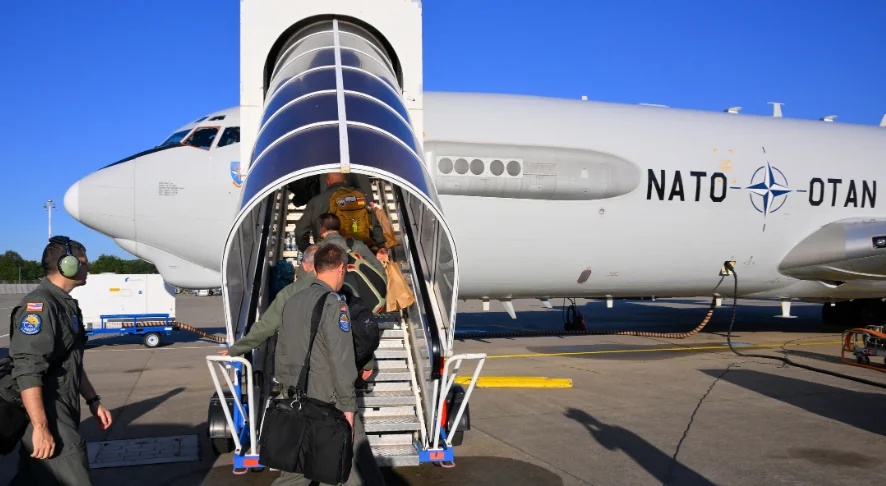
The incident came only days after Russian missiles landed in southeastern Poland, prompting NATO to authorize the forward deployment of an airborne early-warning aircraft to strengthen surveillance and operational awareness.
Poland holds fire after drone changes direction
The Polish armed forces said the drone crossed into Polish airspace during Russia’s nighttime attack on western Ukraine. The military had authorization to engage it, but refrained after it turned back toward the east.
The decision highlights the difficult calculations facing air-defense forces when an unidentified or hostile object enters national airspace near populated areas. Interception can remove a threat, but falling debris or a damaged aircraft can also endanger civilians on the ground.
Poland is a member of NATO and borders western Ukraine, where Russian forces have continued to conduct missile and drone attacks. The latest incursion adds to a series of incidents that have tested the alliance’s ability to monitor and respond to aerial threats near its eastern border.
NATO to deploy AWACS aircraft
NATO has authorized the deployment of an Airborne Warning and Control System aircraft, commonly known as AWACS, to Poland following the missile incidents last Friday. Polish Deputy Defence Minister Pawel Zalewski said the aircraft would give the country greater operational awareness and improve its ability to respond to potential threats.
A NATO spokesperson confirmed that Supreme Allied Commander Europe General Alexus Grynkewich had authorized the forward deployment. The alliance was also examining whether additional assets might be needed as it reviews its deterrence and defence posture in Poland and elsewhere.
AWACS aircraft carry powerful radar systems that can monitor large areas and provide a shared picture of activity in the air to allied aircraft, ships and command centers. They are used to support surveillance and coordination; their deployment should not be confused with a decision to launch offensive operations.
Missile incidents raise concern on NATO’s eastern flank
Polish prosecutors said three Russian Kh-101 missiles landed in Poland on Friday, according to Reuters. The earlier incidents occurred during a major Russian bombardment of Ukraine and raised fears that the conflict could spill further onto NATO territory.
The Associated Press reported that Polish officials had described two missiles and a suspected jet-powered drone coming down in southeastern Poland. Prime Minister Donald Tusk called the episode a likely intentional provocation, while NATO Secretary-General Mark Rutte described the airspace violation as a grave breach. There were no immediate reports of injuries or damage from the objects that fell in Poland.
Russia did not immediately comment on the incidents, according to the AP report. Polish officials have characterized the events as serious security violations, but the question of intent should remain attributed to the officials making those assessments unless supported by further evidence.
A dangerous boundary for the alliance
The latest drone incursion does not, by itself, mean that NATO is entering the war. The alliance’s collective-defence clause, Article 5, is not triggered automatically by every airspace violation; any response would involve political decisions by member states. Poland can also request consultations under Article 4 when it considers its security or territorial integrity threatened.
For now, NATO’s decision to send an AWACS aircraft is a surveillance and defensive-support measure. It reflects the alliance’s concern about repeated aerial incidents near its borders while avoiding an immediate military escalation.
As Russia’s war against Ukraine continues, Poland and its allies face the challenge of protecting NATO territory while preventing incidents near the border from triggering a wider confrontation. The latest incursion is a reminder that even a brief crossing can carry consequences far beyond the aircraft involved.
Sources: Reuters: Polish armed forces report brief drone airspace violation; Reuters: NATO to deploy AWACS aircraft to Poland; Associated Press: Russian missiles and a drone land in Poland.
World Media Feed will continue monitoring developments along NATO’s eastern flank and the wider war in Ukraine.
About the Author