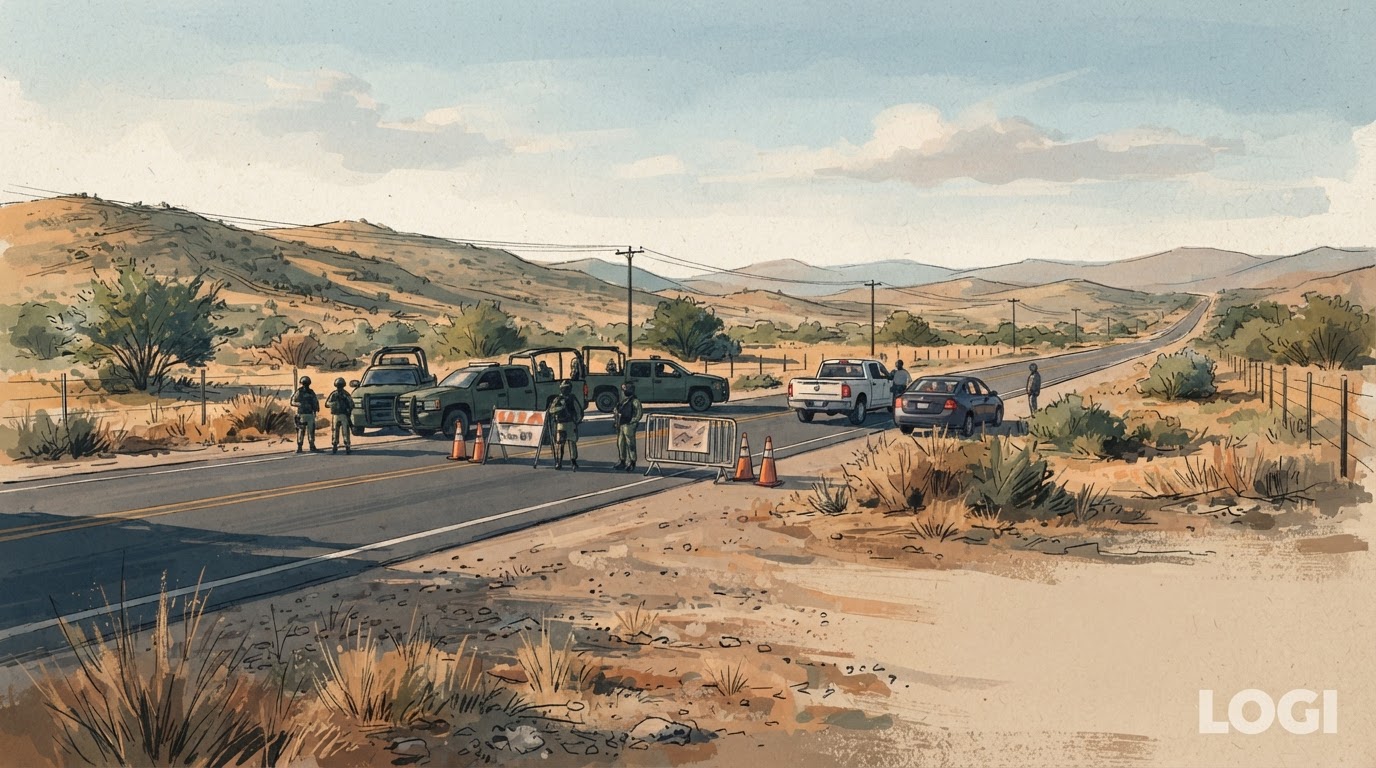
Editorial illustration: Mexican security forces in Sinaloa. This image is illustrative and is not a photograph of the operation.
The United States has formally requested the extradition of Fausto Isidro Meza Flores, the alleged cartel leader known as “El Chapo Isidro,” days after Mexican forces captured him in the northwestern state of Sinaloa. The request places a major test of bilateral security cooperation before President Claudia Sheinbaum’s government, which has emphasized that intelligence-sharing with Washington does not mean foreign forces can operate on Mexican territory.
Mexico’s Security Minister Omar García Harfuch confirmed the U.S. request on Monday, according to Reuters. Mexican authorities have not announced whether the extradition will be approved or when any legal decision could be made.
A major operation in Sinaloa
Meza Flores was detained on November 20 in the municipality of Guasave during an operation involving Mexican National Guard and Army special forces. Mexico’s Defense Ministry said the operation followed intelligence coordination between Mexican and U.S. agencies. Two other senior figures from the organization were also arrested, including an alleged second-in-command and a financial operator.
Reuters reported that Defense Minister Ricardo Trevilla said 361 military personnel and 14 aircraft took part in the operation. Troops came under attack from gunmen attempting to prevent the capture, and officials said 16 alleged members of the criminal group were killed in the clashes. The military said no civilians were harmed during the operation.
In an earlier statement, Mexico’s Defense Ministry reported that four Mexican soldiers had died during the violence surrounding the operation. The ministry also said roadblocks were set up in several municipalities and later removed by security forces.
Sheinbaum draws a line on U.S. involvement
President Sheinbaum said U.S. authorities supplied intelligence that helped locate Meza Flores but did not participate directly in the capture operation. Her government has repeatedly described the security relationship with Washington as cooperation based on information-sharing, while rejecting unilateral U.S. military action inside Mexico.
The distinction carries political weight. U.S. President Donald Trump has pressed Mexico to intensify its campaign against drug-trafficking organizations and has threatened unilateral action if Washington believes the Mexican government is not doing enough. Sheinbaum faces the challenge of demonstrating results against powerful criminal groups without appearing to surrender control over Mexican security operations.
Why Washington wants him
Meza Flores is on the FBI’s Ten Most Wanted Fugitives list. The U.S. Justice Department says he was charged in a federal indictment with leading a continuing criminal enterprise and conspiring to manufacture and distribute cocaine, methamphetamine, heroin, marijuana and fentanyl for importation into the United States. The charges are allegations; he has not been convicted in those U.S. proceedings.
U.S. authorities have also accused him of money laundering, narcoterrorism and firearms offenses. The State Department had offered a reward of up to $5 million for information leading to his arrest or conviction. Mexico’s Defense Ministry said he was already subject to Mexican arrest warrants and an extradition order to the United States.
A capture does not end the cartel threat
The arrest is a significant blow to a criminal organization that Mexican authorities identify with the Beltrán Leyva group, but it does not automatically dismantle its networks, finances or routes. Security analysts have repeatedly warned that removing a senior figure can also create openings for internal rivalries and violent succession struggles.
For residents of Sinaloa, the immediate concern is whether the operation and any resulting leadership vacuum will bring greater security or trigger further clashes. For Mexico and the United States, the next test will be whether intelligence cooperation can produce lasting results while respecting Mexico’s sovereignty and legal process.
Sources
- Reuters — U.S. requests extradition of arrested Mexican drug lord “El Chapo Isidro”
- Mexico’s Defense Ministry — Official statement on the arrest
- Mexico’s Defense Ministry — Follow-up on the operation
- U.S. Department of Justice — Charges and investigation
- El País — Analysis of U.S.–Mexico intelligence cooperation
World Media Feed Editorial Team
About the Author