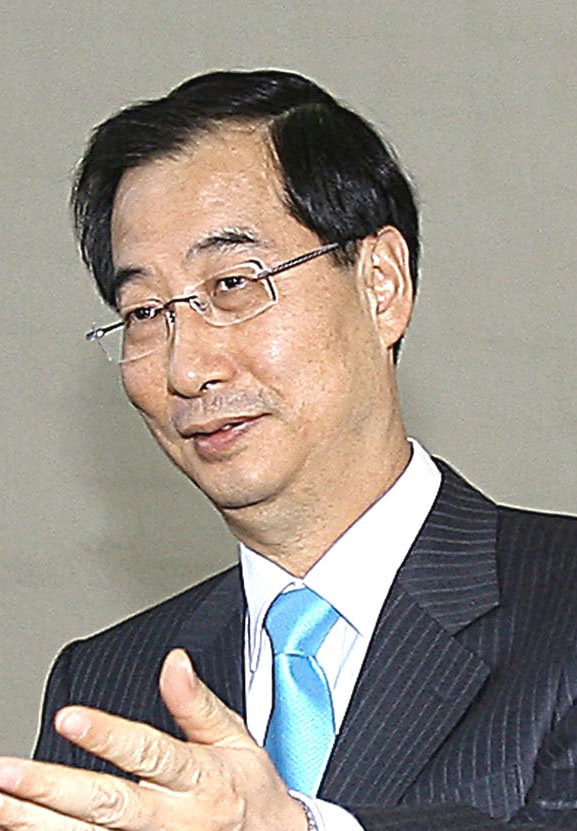
Han Duck-soo. Photo: Ricardo Stuckert/PR, Agência Brasil, CC BY 3.0 Brazil. https://creativecommons.org/licenses/by/3.0/br/
A partial reversal in a case tied to the 2024 crisis
South Korea’s Supreme Court has overturned part of the ruling that sentenced former Prime Minister Han Duck-soo to 15 years in prison over his role in former President Yoon Suk Yeol’s failed martial law declaration, sending the case back to the Seoul High Court for further review.
The court ruled that prosecutors had not sufficiently established that Han’s proposal to hold a Cabinet meeting before the decree demonstrated an intention to help legitimize the martial law declaration. The ruling does not amount to a complete exoneration: other findings concerning Han’s conduct after the declaration remain in place, according to Yonhap News Agency and the Associated Press.
The context of the martial law declaration
Yoon declared martial law on Dec. 3, 2024, triggering a political crisis that lasted only hours before lawmakers voted to overturn the measure. The declaration was later ruled unconstitutional and illegal. Yoon was removed from office, and the episode led to criminal proceedings involving senior officials.
Han was convicted in a lower court and later received a 15-year sentence from an appeals court. The Supreme Court’s decision means the lower court must revisit the portions of the case affected by the reversal. The precise legal outcome will depend on that review.
A continuing test for South Korea’s institutions
The decision arrives amid ongoing debate over accountability for the martial law attempt and the independence of the judiciary. Political reactions have been sharply divided, with some governing-party figures criticizing the ruling and others emphasizing the court’s role in applying evidentiary standards.
The case is significant beyond Han’s individual sentence. It will help define how South Korea’s courts assess the responsibility of Cabinet officials during an attempted constitutional rupture, and how far criminal liability extends to actions taken before and after an emergency decree.
Sources: Yonhap News Agency; Associated Press.
About the Author