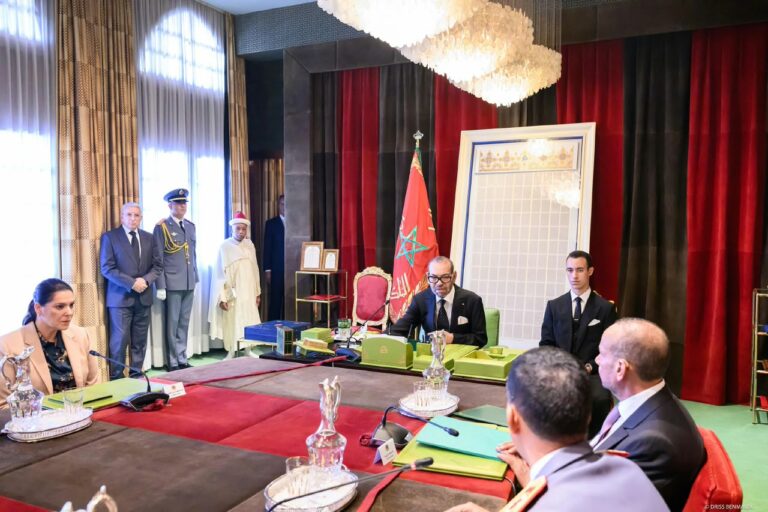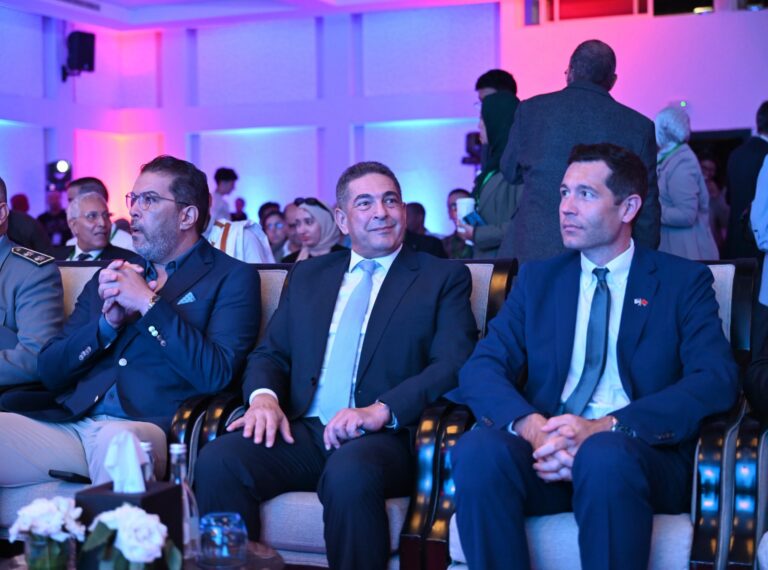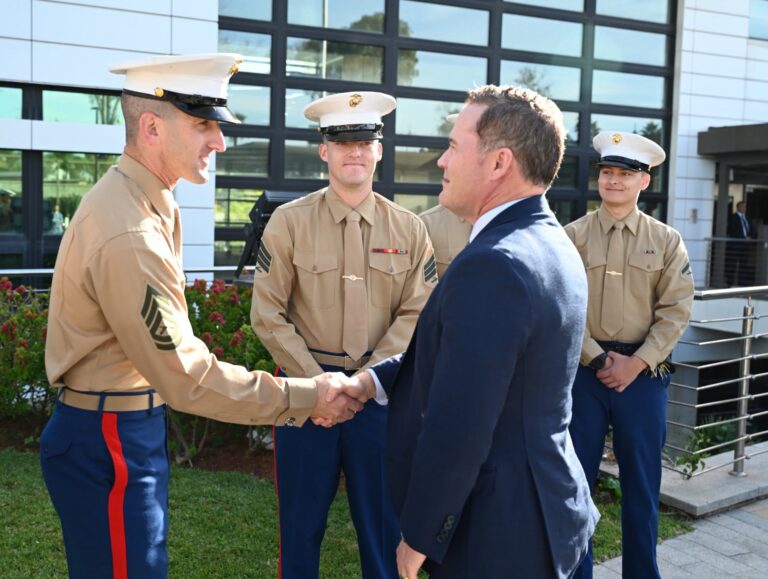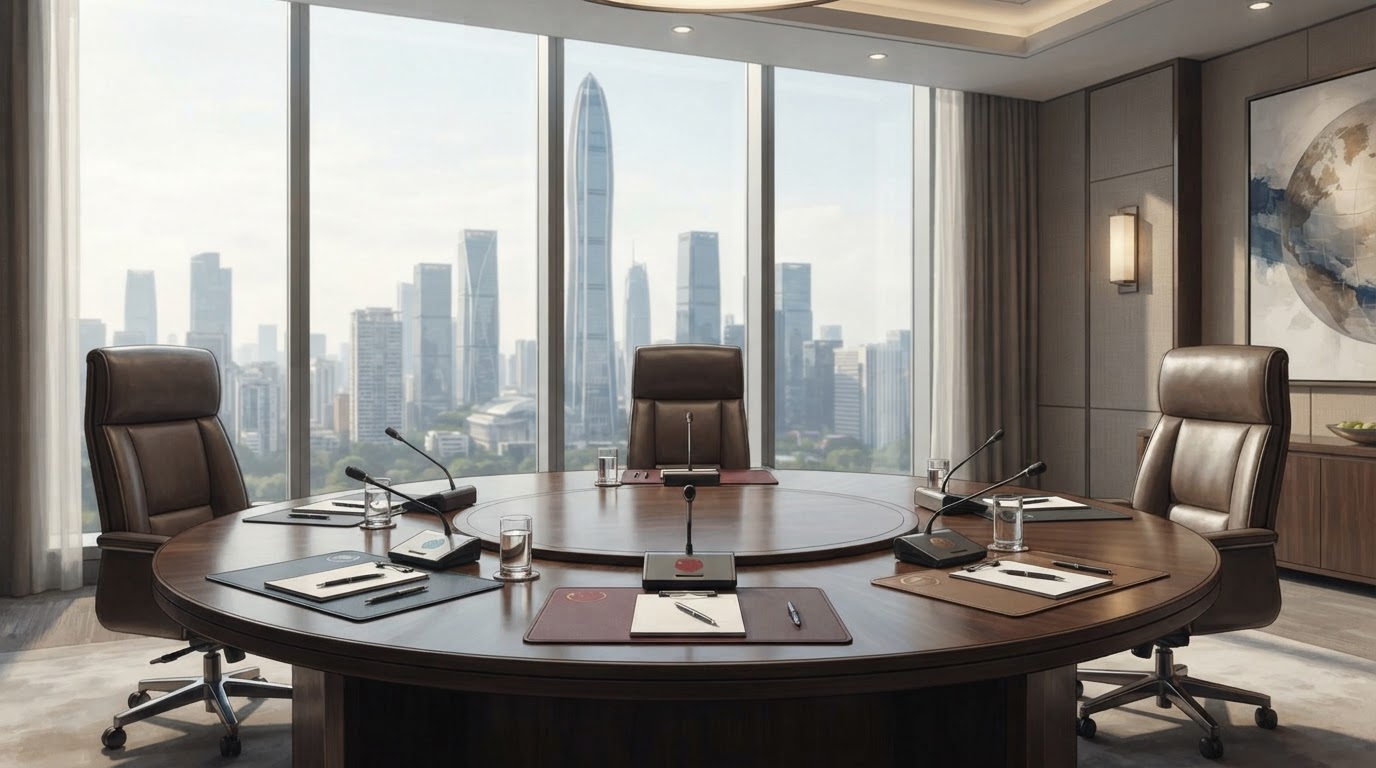
Editorial illustration. Not a photograph of the leaders or the actual meeting.
By World Media Feed Editorial Team
U.S. President Donald Trump has arrived in Shenzhen for a high-stakes diplomatic gathering with Chinese President Xi Jinping and Russian President Vladimir Putin, setting the stage for an unusual three-way meeting among leaders whose countries are central to global security, trade and technological competition.
The leaders are scheduled to meet on Thursday, November 19, on the sidelines of the Asia-Pacific Economic Cooperation summit. Trump is also expected to hold a separate meeting with Putin, according to a U.S. official cited by The Associated Press. The discussions are expected to touch on nuclear weapons, Russia’s war in Ukraine, the conflict involving Iran, trade and artificial intelligence.
The gathering is historic in format, but its practical outcome remains uncertain. Analysts cited by AP do not expect a major breakthrough, and the three governments enter the meeting with sharply different priorities.
A rare diplomatic format with competing priorities
The planned meeting brings together the leaders of the world’s three largest nuclear powers at a moment of overlapping international crises. Washington is seeking to manage competition with Beijing while maintaining pressure on Moscow over Ukraine. China is presenting itself as a defender of open trade and a more stable international order, while Russia is seeking to challenge Western sanctions and preserve its influence.
Trump arrived in Shenzhen on Wednesday and received a personal welcome from Xi at the airport. AP reported that the reception echoed a gesture made by Trump during Xi’s visit to Washington in September. Putin had arrived earlier, but Xi did not greet him at the airport.
The symbolism of the arrival does not establish a change in the underlying relationships. It does, however, show how diplomatic protocol and personal engagement are being used to shape the public presentation of the summit.
Nuclear arms control faces a difficult test
Trump has said he wants to discuss limiting nuclear weapons with Xi and Putin. That ambition faces substantial obstacles, particularly because the United States and Russia have different views about the scope and structure of future arms-control arrangements, while China has been reluctant to enter negotiations on the same terms as the two countries with the largest nuclear arsenals.
The last treaty limiting the strategic nuclear arsenals of the United States and Russia, New START, expired in February 2026. Its expiration removed a central framework for transparency and limits between Washington and Moscow.
Bringing China into a trilateral arms-control process would be a major diplomatic undertaking. Beijing has argued that its nuclear arsenal is smaller than those of the United States and Russia and that it should not be expected to join negotiations on an identical basis.
A meeting among the three leaders could create political space for further discussions, but a photo opportunity or general statement would not substitute for detailed negotiations, verification arrangements and enforceable commitments.
Ukraine remains a point of disagreement
Russia’s war against Ukraine is another major issue hanging over the summit. Trump has said he wants to discuss ending the conflict, which began with Russia’s full-scale invasion in February 2022. Putin has continued to seek terms for a settlement, while Ukraine and its partners have rejected arrangements they believe would reward territorial conquest or leave the country exposed to renewed aggression.
AP reported that Trump’s aides had previously indicated Ukraine would not be on the agenda for the three-way session, although Trump later said he intended to raise the issue. The president is also scheduled to meet Putin separately, creating another channel for discussion.
China’s role is complicated. Beijing maintains close ties with Moscow and has not joined Western sanctions against Russia, while describing itself as supportive of negotiations. Ukraine and several Western governments have questioned whether China’s economic relationship with Russia has helped Moscow sustain its war effort.
Any meaningful progress would depend on more than an understanding between the three leaders. Ukraine is directly affected by the outcome and would have to be part of any credible settlement process.
Trade and technology are central to U.S.-China competition
The summit also takes place against the backdrop of a deep economic rivalry between Washington and Beijing. Trade imbalances, tariffs, export controls and access to advanced semiconductors remain sensitive issues in a relationship that affects manufacturers, technology companies and consumers around the world.
At the APEC gathering, Xi called for opposition to trade protectionism and emphasized cooperation and open trade, according to Reuters reporting from Shenzhen. Putin also criticized Western sanctions, underscoring the shared objections of Beijing and Moscow to several aspects of U.S. and European economic policy.
Artificial intelligence adds another layer to the competition. The United States has sought to restrict China’s access to some advanced chips and related technologies on national-security grounds. China, meanwhile, is investing heavily in domestic semiconductor production, AI research and manufacturing capacity.
Cooperation on AI risks may be possible in areas such as safety standards and crisis communication, but the technology is also viewed by both governments as a source of economic and military advantage. That tension will make any broad agreement difficult.
Why the summit matters to countries beyond the three powers
Decisions or signals from Shenzhen could affect countries that are not represented at the central meeting. Asian economies are closely connected to U.S.-China trade, European governments are concerned about Russia’s war in Ukraine, and many developing countries are navigating pressure to align with one side or another.
For governments in the Asia-Pacific region, the summit arrives at a time when supply chains, maritime security, investment and access to technology are increasingly linked to strategic competition. A more stable relationship among Washington, Beijing and Moscow could reduce some international uncertainty. A failure to address core disputes, however, would leave those risks in place.
The APEC setting also gives the leaders a wider regional audience. The forum brings together economies that have a strong interest in trade and growth, even as geopolitical tensions complicate cooperation.
What to watch when the leaders meet
- Nuclear arms: Whether the leaders agree to begin or resume formal discussions on strategic weapons and risk reduction.
- Ukraine: Whether the talks produce any concrete diplomatic channel or merely repeat existing positions.
- Trade and technology: Whether Washington and Beijing signal progress on tariffs, semiconductor controls or AI cooperation.
- Iran and regional security: Whether the leaders discuss the conflict and the risks to energy routes and regional stability.
- Follow-up mechanisms: Whether any announcements are backed by working-level negotiations, timelines or formal commitments.
The significance of the Shenzhen meeting will ultimately depend on what follows it. A first-of-its-kind gathering can attract global attention, but the test of diplomacy is whether it produces verifiable steps that reduce the risk of conflict and create more predictable relations.
World Media Feed will follow the November 19 discussions and assess any concrete outcomes announced by the participating governments.
Sources
- The Associated Press — Trump plans to meet separately with Putin on his China trip, November 18, 2026
- Reuters — Xi calls for free and open trade at APEC summit, November 18, 2026
- Asia-Pacific Economic Cooperation — Official forum information
- U.S. Department of State — U.S. foreign policy and arms-control information
- Stockholm International Peace Research Institute — Research on nuclear forces and international security
Featured image: Editorial illustration created for World Media Feed. It does not depict the actual leaders or meeting.
About the Author