World Media Feed Editorial Analysis
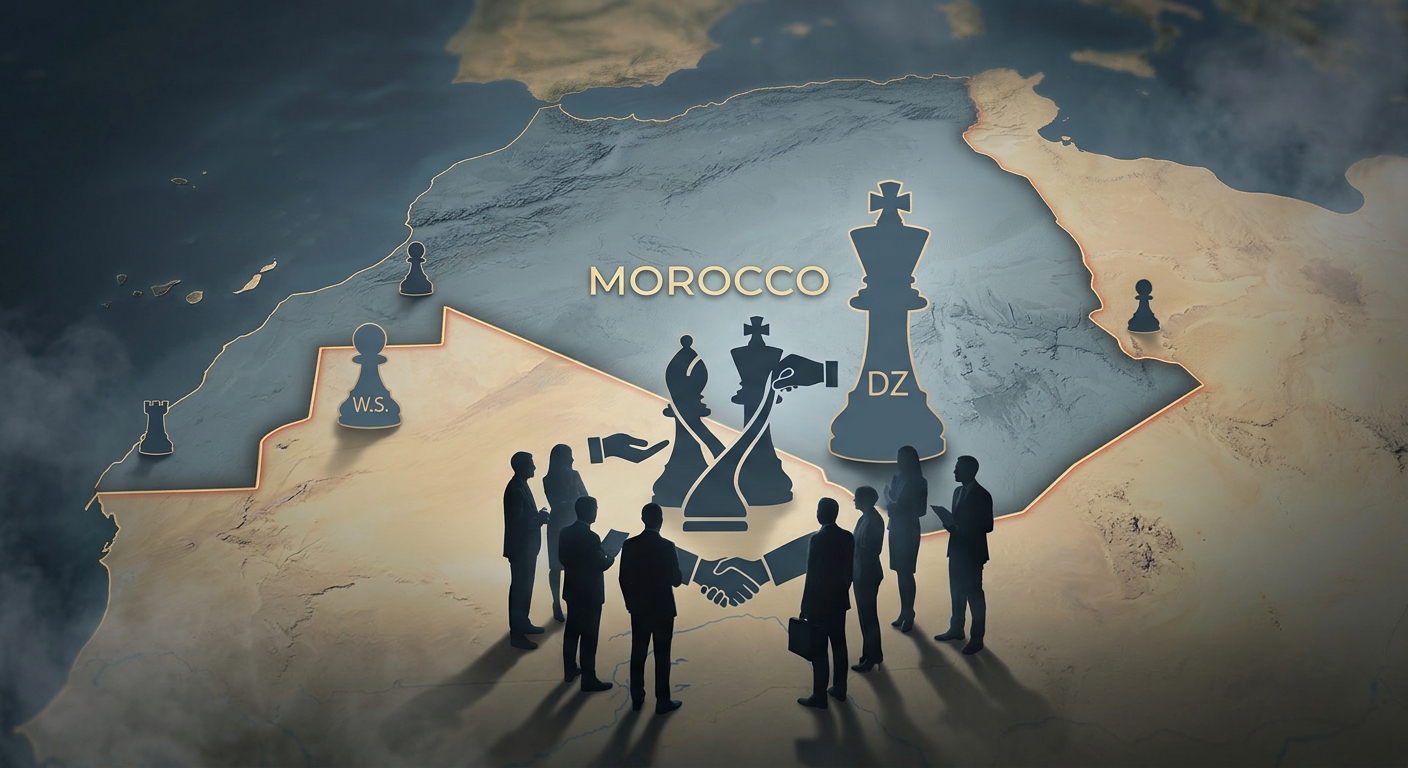
The Western Sahara conflict is often presented as a dispute between Morocco and the Polisario Front, while Algeria describes itself as a neighboring country supporting the Sahrawi people and their right to self-determination.
But the question deserves closer examination:
Can Algeria realistically be described as merely an observer in the Western Sahara conflict?
The answer, based on Algeria’s own diplomatic activity, its relationship with the Polisario Front and its role in hosting Sahrawi refugees, is considerably more complicated.
World Media Feed’s assessment is that Algeria is not simply standing on the sidelines. It is a central regional actor whose political, diplomatic and strategic involvement has become inseparable from the wider Western Sahara dispute.
That does not mean Algeria formally describes itself as one of the two parties to the conflict. In fact, Algiers repeatedly makes the opposite argument.
But involvement and formal status are not the same thing.
Algeria says it is not a party
Algeria has consistently maintained that the Western Sahara conflict should be resolved between Morocco and the Polisario Front under United Nations auspices.
In June 2026, Algerian Foreign Minister Ahmed Attaf reiterated Algeria’s position that the issue is a decolonization question and called for direct negotiations between Morocco and the Polisario Front.
That position was repeated in Algeria’s response to the latest UN developments.
When the Security Council failed to renew MINURSO at the end of October 2026, Algeria’s government criticized the process and accused the United States of excessive bias toward Morocco.
From Algiers’ perspective, this is not intervention. It is diplomatic support for what Algeria considers the right of the Sahrawi people to self-determination.
But the record shows something more substantial than occasional diplomatic commentary.
The Polisario Front operates from Algerian territory
One of the clearest reasons Algeria cannot easily be separated from the conflict is geography.
The Tindouf refugee camps are located inside Algeria, and the Polisario leadership has operated from Algerian territory for decades.
The United Nations describes Algeria as a neighboring state affected by the conflict and notes that it accommodates large numbers of Sahrawi refugees. The UN’s latest reporting also records direct meetings between its Personal Envoy and both Algeria and the Polisario leadership in the region.
This is a crucial distinction.
Algeria is not simply a country issuing statements from a distant capital. It is the territorial environment in which the Polisario political structure and the Tindouf refugee population have operated for decades.
That alone makes Algeria an indispensable actor in any realistic assessment of the conflict.
Algeria’s diplomatic position goes far beyond neutrality
Algeria also participates directly in the diplomatic process surrounding Western Sahara.
In 2026, Algerian officials met with UN envoy Staffan de Mistura and discussed the future of negotiations. Algeria has also taken positions at the United Nations on the question of MINURSO, the negotiating framework and the status of Morocco’s autonomy proposal.
When the Security Council failed to renew MINURSO in October, Algeria did not remain silent.
Its government publicly rejected the outcome and argued that the proposed framework was excessively favorable to Morocco.
That is the behavior of a state with a substantial strategic interest in the outcome—not of a country with no meaningful stake in the dispute.
The history is even harder to separate
The relationship between Algeria and the Polisario Front is not a recent development.
The regional rivalry goes back decades.
Historical assessments by organizations such as the European Council on Foreign Relations have documented Algeria’s long-standing political and military support for Polisario, as well as the group’s establishment and operation from Algerian territory.
This history matters because today’s diplomatic positions did not emerge in isolation.
The current confrontation between Morocco and Algeria is deeply connected to the Western Sahara question, and the dispute has become one of the defining strategic issues in relations between the two North African powers.
The “not involved” argument has limits
This is where the language surrounding the conflict becomes important.
Algeria can legitimately argue that it is not one of the two principal parties formally identified by the UN political process.
But that does not mean Algeria is uninvolved.
The evidence points in the opposite direction:
- Algeria hosts the Tindouf refugee camps.
- The Polisario leadership operates from Algerian territory.
- Algeria openly supports Polisario’s political position.
- Algerian officials participate directly in UN diplomatic discussions.
- Algeria repeatedly intervenes diplomatically when the Security Council addresses Western Sahara.
- Algeria has publicly challenged international initiatives that it believes favor Morocco.
- The country’s broader relationship with Morocco is heavily influenced by the Western Sahara dispute.
Taken together, these factors make it difficult to describe Algeria as merely an outside observer.
What about the Polisario Front itself?
The other important distinction is between Polisario as an organization and Algeria as a state.
Polisario is the armed and political movement that seeks independence for Western Sahara. Reuters describes it as an Algeria-backed organization seeking an independent state.
Algeria, however, maintains that it supports the Sahrawi people’s right to self-determination rather than controlling Polisario’s political decisions.
That distinction should not simply be dismissed.
But it also should not obscure the broader reality.
A movement cannot be understood separately from the state that provides the territory in which its leadership operates, hosts the refugee population associated with the conflict and consistently supports its diplomatic position.
The strategic dimension
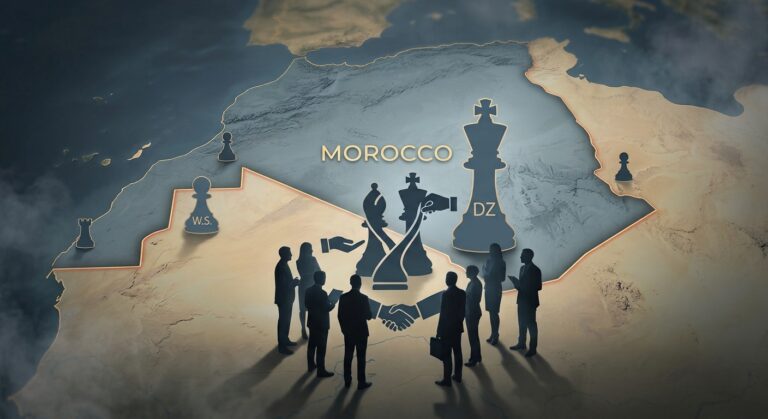
There is another layer that receives less attention: the Morocco-Algeria rivalry itself.
Western Sahara is not merely a territorial dispute. It is also connected to the balance of power in North Africa.
Morocco and Algeria have competing regional visions, sharply different diplomatic relationships and long-standing strategic tensions.
The border between the two countries remains closed, and the Western Sahara dispute has become one of the principal fault lines separating Rabat and Algiers.
For Morocco, sovereignty over Western Sahara is a national territorial issue.
For Algeria, the issue has become closely tied to its regional security interests, its foreign-policy identity and its relationship with Morocco.
That is why developments in Western Sahara repeatedly produce reactions from Algiers.
The MINURSO turning point
The latest developments have made Algeria’s role even more visible.
The United Nations’ long-standing peacekeeping mission, MINURSO, ceased operations on November 1, 2026, after the Security Council failed to renew its mandate.
Algeria strongly criticized the outcome.
Morocco, meanwhile, welcomed the development and argued that the Western Sahara issue had entered a new diplomatic phase.
The disagreement over MINURSO therefore exposed the fundamental difference between Rabat and Algiers.
Morocco sees the international process moving toward a political solution centered on autonomy under Moroccan sovereignty.
Algeria continues to insist that the process must preserve what it calls the Sahrawi people’s right to self-determination and rejects any predetermined outcome.
WMF’s assessment
World Media Feed does not view the Western Sahara conflict as a simple two-sided story in which Algeria can be treated as an unrelated neighbor.
At the same time, describing Algeria as if it were formally identical to Morocco or Polisario would oversimplify the legal and diplomatic structure of the conflict.
The more accurate picture is this:
Morocco controls and administers most of the territory it claims as sovereign. Polisario remains the movement seeking independence. Algeria is the principal regional state supporting Polisario and providing the territorial and diplomatic environment in which the movement operates.
That makes Algeria a central actor in the conflict even when Algiers insists that it is not a party to it.
And that distinction may become increasingly important as the international process enters a new phase.
If negotiations are supposed to produce a durable political settlement, then understanding who has influence over the parties—and who has the ability to shape the environment around them—matters just as much as identifying the parties themselves.
The Western Sahara question is therefore unlikely to be resolved simply by asking Morocco and Polisario to negotiate.
Any realistic assessment must also account for Algeria’s role.
WMF Editorial Note: This analysis reflects World Media Feed’s independent editorial assessment of publicly available information and official statements. It distinguishes documented actions and positions from editorial interpretation. World Media Feed does not present allegations or disputed historical claims as independently established facts.
Primary and corroborating sources: United Nations Peacekeeping / MINURSO; United Nations Security Council documents; Algerian Ministry of Foreign Affairs; Reuters; European Council on Foreign Relations.
Reporting and editorial analysis: World Media Feed Editorial Team.
About the Author