THE HAGUE, Netherlands — February 23, 2024 — Morocco has reiterated its commitment to the Palestinian cause and a two-state solution during proceedings before the International Court of Justice (ICJ), highlighting the diplomatic role of King Mohammed VI as Chairman of the Al-Quds Committee of the Organization of Islamic Cooperation.
Morocco’s position was presented during the ICJ hearings concerning the legal consequences arising from Israel’s policies and practices in the occupied Palestinian territory, including East Jerusalem.
The hearings, held from February 19 to 29, 2024, formed part of an advisory-opinion process requested by the United Nations General Assembly.
Morocco was represented by its ambassador to the Netherlands, Mohamed Basri, who attended the oral presentation made by the Palestinian delegation on February 19, led by Palestinian Foreign Minister Riyad Al-Maliki.
The Kingdom had also submitted a written statement to the Court in July 2023, setting out its legal and diplomatic positions on the questions before the judges.
Morocco emphasizes the two-state solution
In its written statement, Morocco reaffirmed its support for establishing an independent Palestinian state based on the borders of June 4, 1967, with East Jerusalem as its capital, living alongside Israel in peace and security.
The position was presented as consistent with international law, relevant United Nations resolutions and the Arab Peace Initiative.
Morocco also emphasized the importance of dialogue and negotiations as the framework for achieving a lasting settlement to the Israeli-Palestinian conflict.
The Kingdom’s submission addressed the legal and historical status of Jerusalem, a city that holds particular religious significance for Muslims, Christians and Jews.
The King’s role as Chairman of the Al-Quds Committee
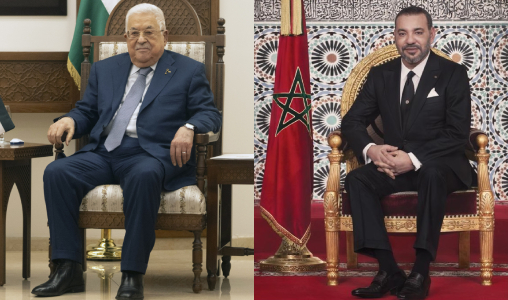
King Mohammed VI’s position as Chairman of the Al-Quds Committee was central to Morocco’s presentation of its longstanding diplomatic commitment to Jerusalem and the Palestinian cause.
Morocco reiterated its determination to use available legal and diplomatic channels to protect the city’s legal, historical, political and spiritual status.
The Kingdom also referred to the 2019 Al-Quds Appeal, signed by King Mohammed VI and Pope Francis during the pontiff’s visit to Morocco. The appeal emphasized Jerusalem’s status as a shared heritage of humanity and a place of peaceful coexistence among the three monotheistic religions.
Morocco’s statement further recalled concerns regarding Israeli settlements in occupied Palestinian territory, including East Jerusalem, describing them as an obstacle to peace and the viability of a two-state solution.
Understanding the ICJ proceedings
The case before the ICJ was not a conventional lawsuit brought by Morocco against Israel.
Instead, the United Nations General Assembly had requested an advisory opinion on the legal consequences arising from Israeli policies and practices in the occupied Palestinian territory.
The Court’s role was to examine the legal questions referred to it. The proceedings were separate from the contentious case brought by South Africa against Israel under the Genocide Convention.
This distinction is important when assessing Morocco’s participation: the Kingdom contributed its legal position to an international judicial process while reaffirming its diplomatic support for Palestinian statehood.
Morocco’s diplomatic position
Morocco’s participation reflected a broader foreign-policy position that combines support for Palestinian rights, the protection of Jerusalem’s religious and historical significance, and the pursuit of a negotiated political settlement.
Through its written submission and presence at the hearings, Morocco placed its position on record within an international legal forum.
World Media Feed Analysis
Morocco’s intervention at the ICJ demonstrated how the Palestinian issue remains an important element of the Kingdom’s international diplomacy.
The submission also highlighted the distinction between political support and legal participation: Morocco used the advisory proceedings to present its interpretation of international law and its preferred framework for a lasting settlement.
The central question remains whether international legal processes and diplomatic initiatives can help create the conditions for a negotiated solution that guarantees the rights and security of both Palestinians and Israelis.
Sources: International Court of Justice; Kingdom of Morocco’s written statement to the ICJ; Moroccan Ministry of Foreign Affairs.
World Media Feed Editorial Team
Primary sources
- International Court of Justice — Morocco’s official written statement, July 2023
- Morocco’s participation in the ICJ hearings, February 2024
- Official Royal Message on the protection and support of Al-Quds
About the Author