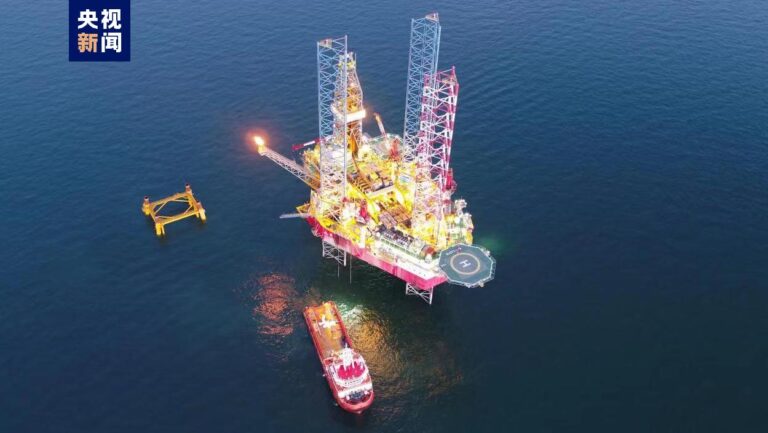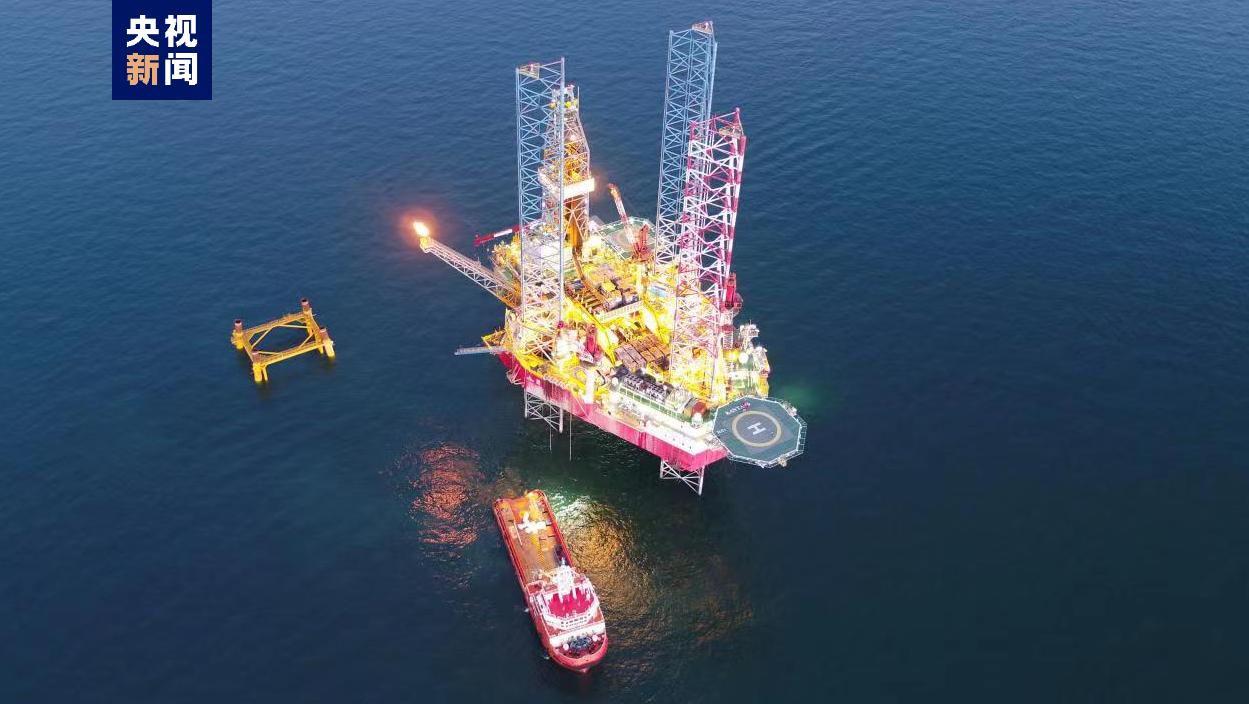
BEIJING — November 12, 2026 — China National Offshore Oil Corporation (CNOOC) has reported a significant natural gas discovery in the central Bohai Sea after drilling an ultra-deep exploration well that reached 5,770 meters beneath the seabed.
The company said the well encountered more than 120 meters of gas-bearing formations within volcanic rock and produced approximately 800,000 cubic meters of natural gas per day during testing.
The announcement marks a major development in China’s efforts to explore deeper and more technically challenging offshore energy resources.
Located near the Bozhong Sag, one of the Bohai region’s major hydrocarbon-rich geological formations, the discovery could open additional opportunities for natural gas exploration in an area already important to China’s domestic energy industry.
A technically challenging discovery
CNOOC said the well reached a final depth of 5,770 meters, equivalent to approximately 18,930 feet.
The discovery is particularly notable because the gas-bearing formations are located in deeply buried volcanic rock, where geological conditions can make it difficult to identify and evaluate commercially promising reservoirs.
According to the company, the exploration success involved advances in offshore three-dimensional seismic imaging and techniques used to identify potentially productive geological formations at extreme depths.
CNOOC described the result as a major breakthrough in ultra-deep natural gas exploration in the Bohai Sea.
What the discovery means for China’s energy strategy
China remains one of the world’s largest consumers of natural gas, using the fuel for electricity generation, industrial activity, heating and other applications.
Expanding domestic production is one way Beijing seeks to strengthen energy security and diversify supply sources.
New offshore discoveries could eventually contribute to that effort, particularly if further exploration confirms that the geological formations contain commercially recoverable resources.
However, a successful exploration well does not automatically translate into immediate commercial production.
CNOOC has not yet published a recoverable reserve estimate, development cost assessment or timetable for bringing the newly discovered gas into commercial production.
The reported daily output represents a well-test result rather than a confirmed long-term production rate.
Technology plays a central role
The discovery also highlights the growing importance of advanced exploration technology in the global energy sector.
Drilling at depths approaching 6,000 meters requires sophisticated geological analysis, specialized equipment and careful management of operational risks.
CNOOC said its seismic exploration technology and improved methods for predicting deep geological reservoirs helped identify the promising volcanic formations.
Xu Changgui, the company’s chief scientist and chief geologist, said the successful well had opened a new area for offshore ultra-deep natural gas exploration and expanded the potential scope of exploration in the Bohai region.
The company also linked the discovery to its longer-term ambition of developing a major natural gas province in the Bohai Sea.
Commercial potential remains to be established
Despite the encouraging test results, the economic significance of the discovery will depend on additional technical and geological assessments.
Further exploration will be needed to establish the size and continuity of the gas-bearing formations, estimate recoverable resources and determine whether commercial development is economically viable.
Infrastructure requirements, operating costs, natural gas prices and environmental considerations will also influence future development decisions.
For now, the discovery represents an important exploration milestone rather than a confirmed addition to China’s commercial gas supply.
A wider development in global energy exploration
The Bohai discovery comes as energy companies continue searching for new resources while balancing energy security, technological investment and the transition toward lower-carbon energy systems.
For China, the results could encourage further exploration of deep and ultra-deep offshore formations.
For the international energy industry, they demonstrate how technological advances are expanding the geological areas that companies can investigate.
Whether the discovery ultimately becomes a significant source of commercial natural gas will depend on what further exploration reveals.
World Media Feed Editorial Team
About the Author