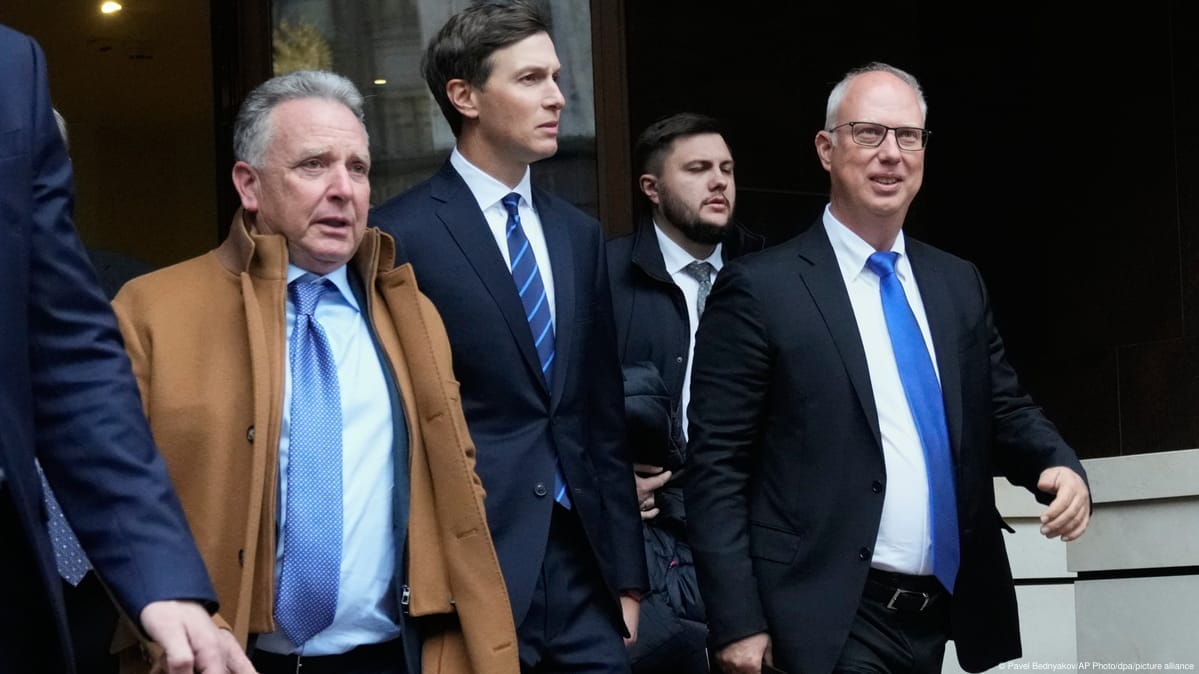
MOSCOW — November 12, 2026 — U.S. presidential envoys Steve Witkoff and Jared Kushner met Russian President Vladimir Putin in Moscow on Thursday as Washington sought to revive diplomatic efforts to end the war in Ukraine. The meeting followed two days of U.S.-mediated negotiations between Russian and Ukrainian representatives in Abu Dhabi.
The Moscow discussions produced no publicly announced breakthrough, underscoring the significant differences that continue to separate the parties despite renewed diplomatic engagement.
The Abu Dhabi talks, which concluded Wednesday, were the first direct negotiations between Russian and Ukrainian delegations mediated by the United States in nine months. One concrete outcome was an agreement in principle on a major prisoner exchange, although officials had not announced the exact number of people involved.
Territorial disputes remain a central obstacle
The question of territory remains one of the most difficult issues in the negotiations.
Russia continues to demand control over the entire eastern Donbas region as part of a potential settlement. Ukraine has rejected the demand and maintained that it will not surrender territory occupied by Russian forces.
The disagreement has complicated efforts to establish a framework for a ceasefire or a broader peace agreement. While negotiators have discussed possible principles for ending the conflict, the territorial question remains unresolved.
During the Moscow meeting, Putin also reiterated Russia’s opposition to the deployment of European troops in Ukraine following a potential ceasefire, describing such a presence as a security threat.
Europe’s role in the negotiations
The involvement of European countries has emerged as another point of disagreement.
Washington and Kyiv have supported a greater European role in discussions concerning Ukraine’s future security arrangements. Moscow, however, has opposed European participation in direct negotiations, arguing that European governments are already involved in supporting Ukraine militarily.
The issue carries broader implications for European security, particularly as governments consider what guarantees might be required to prevent a renewed conflict if a ceasefire is reached.
Following their meeting with Putin, Witkoff and Kushner were expected to travel to Dublin to meet Ukrainian President Volodymyr Zelenskyy.
Fighting continues as diplomacy resumes
The diplomatic activity is taking place while military operations continue along the front line.
Russia and Ukraine exchanged drone and missile attacks during the latest round of negotiations, with both sides reporting strikes and interceptions. Ukrainian authorities have also warned that attacks on energy infrastructure could intensify pressure on civilian services as winter approaches.
For Ukraine, any agreement will need to address not only the immediate end of hostilities but also the country’s long-term security. For Russia, territorial demands and its position on NATO and Europe’s security role remain central to its stated negotiating position.
A diplomatic opening, but no clear path to peace
The meetings in Abu Dhabi and Moscow indicate that diplomatic channels remain active, but they have yet to produce an agreement on the central questions driving the conflict.
The planned discussions with Zelenskyy in Dublin could provide another opportunity for Washington to assess whether the positions of Kyiv and Moscow can be brought closer together.
For now, the prisoner-exchange understanding represents a limited area of progress. A broader settlement remains uncertain, with territory, security guarantees and Europe’s role continuing to divide the negotiating parties.
World Media Feed Editorial Team
About the Author