By World Media Feed Editorial Team
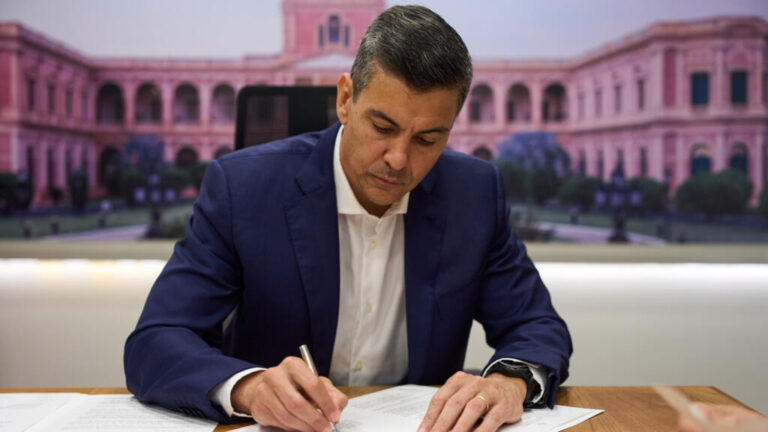
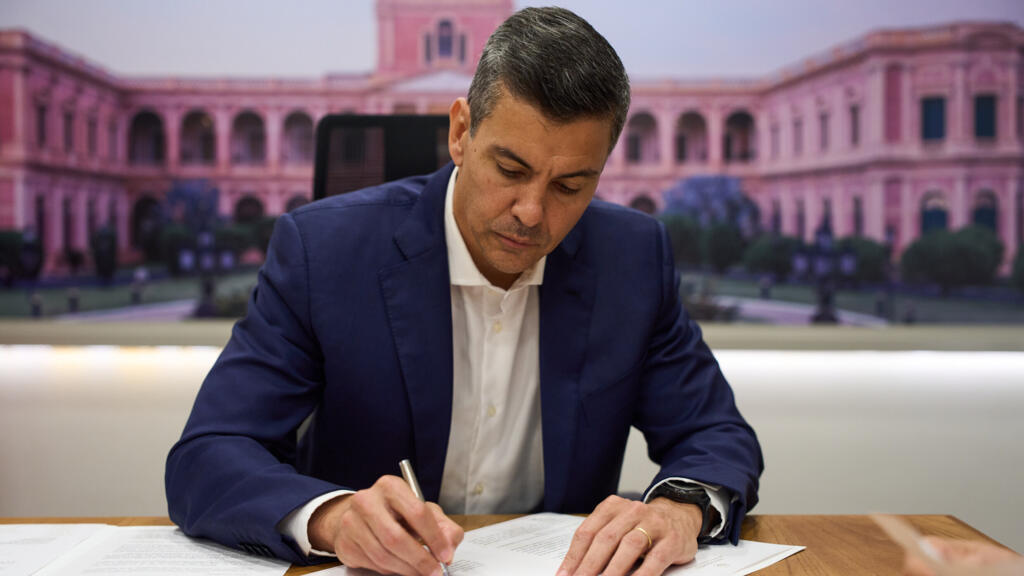
ASUNCIÓN, Paraguay — November 7, 2026 — Paraguay has entered a major political crisis after President Santiago Peña was impeached and removed from office following the collapse of a powerful digital bank that left millions of customers struggling to access their savings.
The country’s Senate voted unanimously on Friday to remove Peña over allegations of misconduct connected to the banking crisis. Shortly afterward, Vice President Pedro Alliana was sworn in as his successor, taking over the presidency for the remainder of the term, which runs until August 2028.
Peña was subsequently placed under house arrest as prosecutors investigate allegations that include influence peddling and misuse of public office. He has denied wrongdoing.
The extraordinary political developments followed the collapse of Ueno Bank, a major digital lender whose customers represented approximately 60% of Paraguay’s adult population.
Banking collapse triggers political upheaval
Paraguay’s central bank intervened in Ueno earlier this week after the lender’s financial position deteriorated sharply. Regulators said its solvency ratio had fallen below half the legally required minimum.
The intervention effectively froze access to millions of customer accounts, preventing many people from withdrawing savings, transferring money or using their bank cards.
Ueno had approximately 2.9 million customers and held hundreds of millions of dollars in public-sector deposits, including funds connected to the country’s pension and healthcare systems.
The crisis quickly moved beyond the financial sector, triggering protests in the capital, Asunción, as customers demanded access to their money and answers from government officials.
Allegations involving the former president
The impeachment proceedings focused partly on Peña’s previous financial connections to Ueno’s parent company.
The former president held shares in Ueno’s holding company until 2025. Lawmakers also questioned his government’s relationship with the bank and the appointment of former Ueno executive Carlos Carvallo as head of the central bank.
Opposition lawmakers accused Peña of conflicts of interest, interference with regulatory oversight and allowing public funds to be exposed to risks involving the lender.
Peña has rejected allegations of wrongdoing and maintained that the bank’s collapse was a regulatory matter.
Prosecutors are examining the allegations and determining potential criminal charges. The investigation has also involved former bank executives and senior officials.
The allegations remain subject to legal proceedings and have not established the former president’s criminal guilt.
Millions of customers face uncertainty
The human impact of the banking crisis has been immediate.
Customers who relied on Ueno for everyday transactions found themselves unable to access money needed for food, transportation, bills and other essential expenses.
The bank had become particularly important for people who previously had limited access to traditional banking services.
According to the Associated Press, Ueno served roughly 3 million customers and held between $800 million and $850 million in public-sector funds.
Authorities have sought to reassure depositors that most customers are protected by Paraguay’s deposit insurance system, which covers balances up to a specified legal limit.
However, customers with larger deposits and institutions holding substantial public funds face greater uncertainty as regulators work through the bank’s resolution.
A test for Paraguay’s financial institutions
The crisis has raised broader questions about banking supervision, political influence and the management of public money.
Paraguay had been working to strengthen its reputation as an attractive destination for international investment. The collapse of a major financial institution, combined with the removal of a sitting president, has created new concerns about institutional stability.
The country’s financial authorities now face the difficult task of restoring confidence while ensuring that depositors receive the protection promised under the law.
For the new administration under President Pedro Alliana, the immediate priorities include stabilizing the banking system, addressing public anger and demonstrating that financial oversight will operate independently of political interests.
The crisis is no longer simply about the failure of one bank. It has become a test of public accountability and confidence in Paraguay’s institutions.
Sources: Reuters, November 7, 2026; Associated Press; Deutsche Welle.
- Reuters — Former president faces prosecutors after impeachment
- Associated Press — Paraguay’s digital bank collapse
- Deutsche Welle — Paraguay’s president under house arrest
About the Author