By World Media Feed Editorial Team
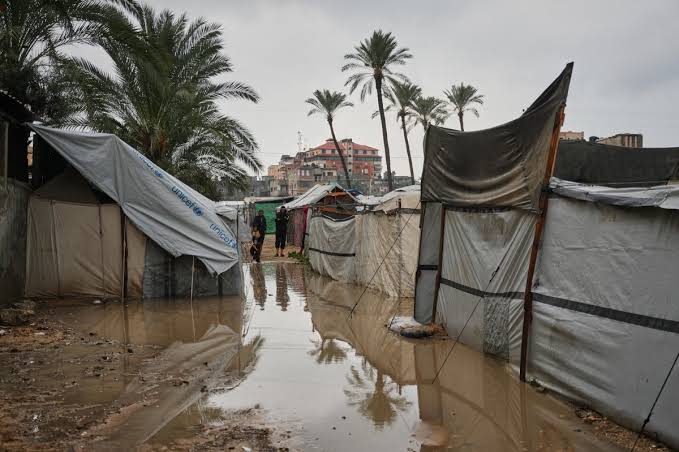
GAZA CITY, November 7, 2026 — Heavy rainfall has flooded thousands of displacement shelters across the Gaza Strip, leaving families struggling to protect their children, belongings and remaining possessions as the first major winter storm of the season hits the territory.
The Hamas-run Gaza Government Media Office reported that approximately 70,000 tents had been flooded within 12 hours, affecting tens of thousands of displaced people. The figures have not been independently verified.
The flooding has soaked mattresses, blankets and clothing, while residents in several areas have been forced to move through standing water in search of safer shelter.
The emergency comes as much of Gaza’s population continues to live in temporary accommodation following more than three years of war and widespread destruction.
Emergency services overwhelmed by distress calls
Gaza’s Civil Defence service reported receiving approximately 1,500 distress calls from displaced residents as the storm moved across the territory.
Three abandoned houses collapsed, although authorities reported no injuries from those particular incidents. Residents and emergency workers also reported damage to temporary shelters and buildings already weakened by previous destruction.
In several displacement camps, families attempted to reinforce tent walls, move bedding away from rising water and protect children from the cold.
The scale of the flooding has exposed the vulnerability of temporary shelters that offer limited protection against heavy rain, strong winds and falling temperatures.
United Nations warns of immediate risks
The United Nations Office for the Coordination of Humanitarian Affairs (OCHA) warned on Saturday that displaced families living in flood-prone locations and damaged buildings face immediate danger.
The agency said most of Gaza’s approximately 2.1 million residents remain displaced, with many living in deteriorating tents that provide inadequate protection from worsening weather.
Humanitarian organizations have mobilized emergency assistance, but available supplies remain insufficient, according to OCHA.
The agency called for winter materials, heavy machinery, spare parts and additional humanitarian funding to help organizations respond to the worsening conditions.
The warning highlights a major challenge: emergency teams must address flooding and shelter damage while operating with limited resources and damaged infrastructure.
Aid shortages complicate the response
Local officials have attributed difficulties in responding to the flooding to shortages of fuel, damaged equipment and limited access to essential supplies.
The Gaza Government Media Office has accused Israel of restricting the entry of shelter and construction materials. Israel’s military agency responsible for coordinating aid, COGAT, said it had increased efforts to improve sanitation conditions ahead of the expected storm, working with international organizations.
Reuters reported that additional sewage and water-management vehicles had entered Gaza through the International Committee of the Red Cross.
However, the broader reconstruction process remains stalled, with negotiations over security arrangements, disarmament and Israeli troop withdrawals continuing to complicate the implementation of the ceasefire.
Winter brings another humanitarian test
The flooding illustrates how quickly weather conditions can become life-threatening for people living without permanent housing.
Families who have already experienced repeated displacement now face additional risks from cold temperatures, contaminated water and damaged shelters.
Children, older people, people with disabilities and patients requiring medical care are particularly vulnerable when temporary accommodation becomes uninhabitable.
The crisis also raises questions about the preparedness of humanitarian agencies for the coming winter and whether sufficient shelter materials, heating supplies and emergency equipment can reach affected communities.
For displaced families across Gaza, the immediate concern is survival through the next storm.
Without adequate shelter and a sustained flow of humanitarian assistance, each period of heavy rainfall risks turning an already severe displacement crisis into another emergency.
Sources: Reuters, November 7, 2026; United Nations Office for the Coordination of Humanitarian Affairs (OCHA), November 7, 2026.
- Reuters — Heavy rain floods tents housing Gaza displaced people
- UN humanitarian warning reported by Anadolu Agency
- Al Jazeera — Rains flood 70,000 displaced families’ tents
About the Author