World Media Feed Editorial Team
New Zealand heads into its final day of campaigning with the country’s major political parties locked in a close contest, leaving the shape of the next government uncertain ahead of Saturday’s general election.
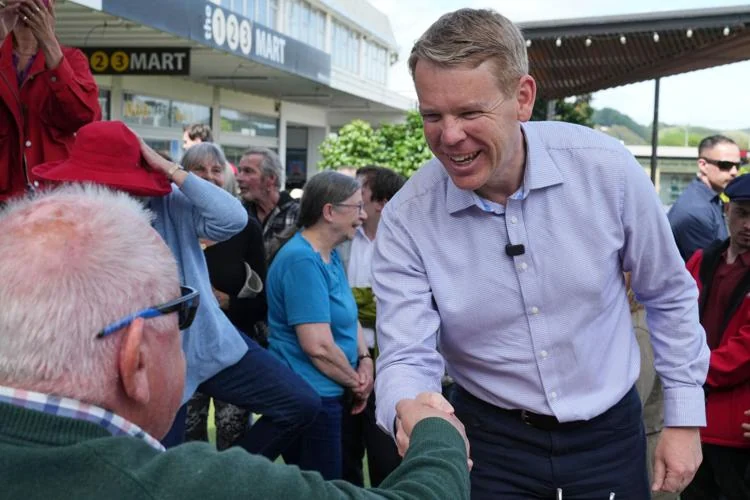
Prime Minister Christopher Luxon’s National Party-led coalition is seeking another term, while opposition Labour, led by Chris Hipkins, is attempting to return to government after its defeat in 2023.
Recent polling has placed the two major parties below 30% in several surveys, while smaller parties have attracted enough support to potentially play a decisive role in forming the next government.
Voting concludes Saturday
New Zealand’s general election will take place on Saturday, November 7. Polling places will be open from 9 a.m. until 7 p.m. local time, with preliminary results expected to begin being released after voting closes.
Advance voting has already been significant. The Electoral Commission said more than 1.25 million votes had been issued by Tuesday, compared with about 1.01 million at the equivalent point in the 2023 election.
Smaller parties could hold the balance
New Zealand uses a mixed-member proportional electoral system. Voters cast two ballots: one for a local electorate candidate and another for a political party.
The 120-seat Parliament normally requires 61 seats for a majority, although the final parliamentary makeup can include additional seats under the country’s electoral rules.
Because support is divided among several parties, governments are commonly formed through coalition agreements or confidence-and-supply arrangements rather than by a single party winning outright.
The current campaign has put particular attention on smaller parties, including New Zealand First, ACT, the Greens, Te Pāti Māori and the Opportunity Party. Recent polling suggests the Opportunity Party could cross the 5% threshold required for representation, potentially giving it an important role in post-election negotiations.
Cost of living and the economy dominate
The election campaign has focused heavily on household costs, economic growth, healthcare, housing and employment.
New Zealand’s economy has struggled to regain momentum, while unemployment has reached its highest level in more than a decade. The economic pressure has become a central issue for voters evaluating the government’s three-year record.
Luxon is seeking a second term after leading National back into government in 2023. Hipkins, meanwhile, is campaigning on living costs, public services and economic stability.
The election will also determine the balance of power on issues including relations with Māori communities, climate policy and New Zealand’s foreign and defence relationships.
Results may not settle the government immediately
New Zealand’s preliminary election results are expected Saturday night, but the final government may not be known immediately.
The Electoral Commission says the official results, including the full count and special votes, are scheduled to be declared on November 27.
That means Saturday’s vote could produce an initial picture of the next Parliament while negotiations between political parties determine who can ultimately command its confidence.
World Media Feed will follow the election results and coalition negotiations as they develop.
About the Author