Royal instructions establish a coordination role for the Interior Ministry as Morocco outlines its priorities following the expiry of the UN mission’s mandate
By World Media Feed Editorial Team
RABAT, November 5, 2026 — Morocco is preparing for a new phase in the Western Sahara file following the expiry of the United Nations Mission for the Referendum in Western Sahara (MINURSO)’s mandate, with King Mohammed VI directing government institutions to coordinate the next steps and maintain what Rabat describes as its priorities of territorial integrity, national security and stability in the southern provinces.
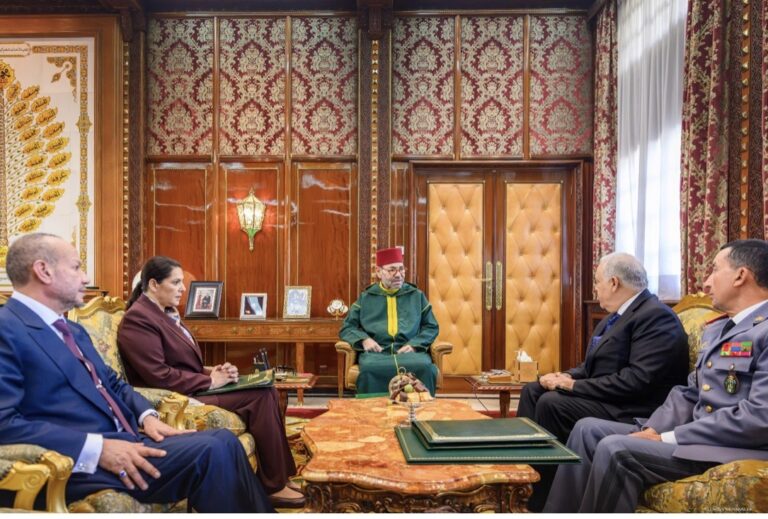
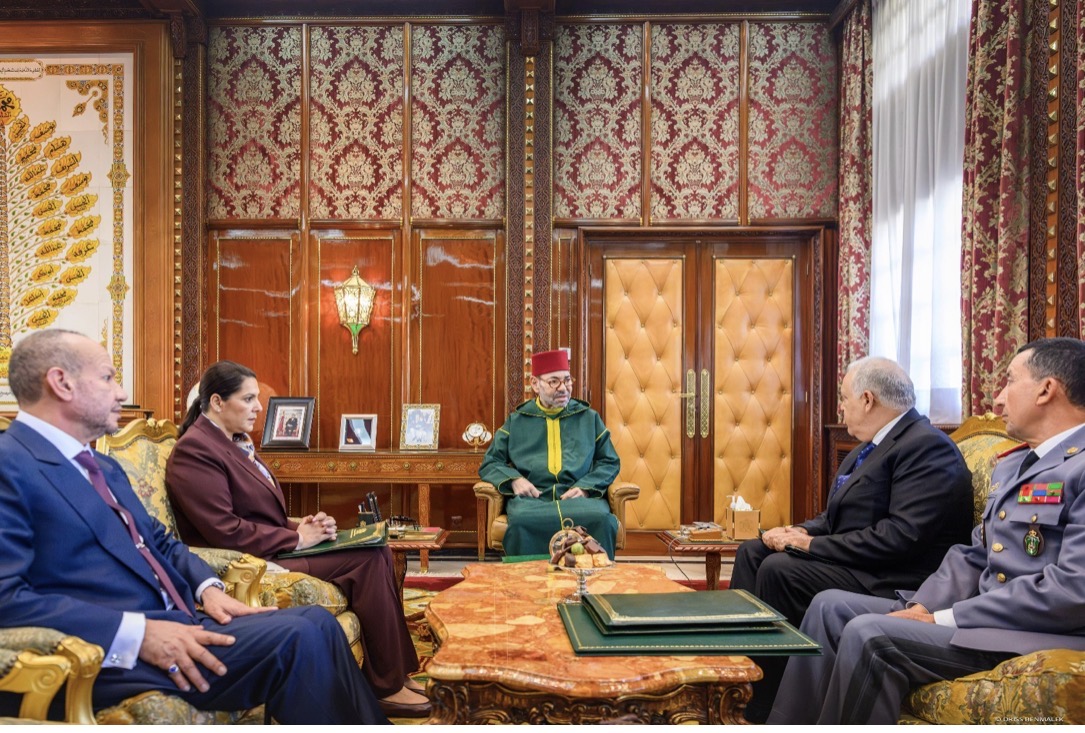
The King chaired a working session at the Royal Palace in Rabat on November 4, according to a statement issued by the Royal Office. The meeting brought together Head of Government Fatima Ezzahra El Mansouri, Royal Adviser Fouad Ali El Himma, Interior Minister Abdelouafi Laftit and Lieutenant General Mohammed Berrid, Inspector General of the Royal Armed Forces and Commander of the South Zone.
The meeting was focused on a practical question facing Morocco after the end of MINURSO’s mandate: how to manage the transition and coordinate the mission’s departure while maintaining security arrangements and continuing development programmes in the region.
A new coordination role for the Interior Ministry
One of the most concrete decisions announced after the meeting was the King’s instruction assigning the Interior Ministry’s Office for Coordination with MINURSO responsibility for coordinating and supporting the process related to the mission’s liquidation and withdrawal.
The office is expected to facilitate the administrative and logistical measures involved and help ensure that the process proceeds in an orderly manner, the Royal Office said.
The announcement provides an indication of how Morocco intends to organize the next stage. Rather than leaving the transition without a designated national coordination structure, Rabat is placing responsibility within an existing government framework.
However, the Royal Office statement did not provide a detailed timetable for the withdrawal process, specify when all mission personnel and equipment would leave, or explain what arrangements would take over MINURSO’s monitoring functions.
Those details will be important as the situation develops.
The ceasefire remains a central priority
Despite the end of the mission’s mandate, Morocco says its commitment to the ceasefire will remain unchanged.
The Royal Office reiterated that position during the November 4 meeting, describing the commitment as firm and voluntary. It also criticized MINURSO’s record, arguing that the mission had repeatedly been unable to monitor compliance with the ceasefire and establish the consequences of violations.
That assessment reflects Morocco’s official position. The United Nations, meanwhile, has described MINURSO as having played a central role in monitoring the ceasefire since its establishment in 1991 and in creating conditions for a political solution.
The distinction is significant. The end of the mandate does not, by itself, answer how ceasefire monitoring and reporting will function in the period ahead.
The future of those arrangements remains one of the central questions surrounding the transition.
What happened at the United Nations?
The developments follow an unusual outcome at the UN Security Council on October 30.
The Council failed to adopt two competing draft resolutions that would have extended MINURSO’s mandate. A US-sponsored draft received 11 votes in favour but was blocked by a Russian veto, with three abstentions. A separate Russian draft also failed to secure the nine affirmative votes required for adoption.
MINURSO’s mandate was due to expire on October 31. The UN subsequently stated that the mission was ceasing operations following the non-renewal of its mandate.
The outcome was not a straightforward Security Council decision ordering the mission to withdraw. Rather, the Council’s failure to agree on an extension left the mandate to expire.
That distinction is important to understanding the diplomatic and operational situation now unfolding.
Development and security in the southern provinces
The Royal Office statement also placed renewed emphasis on continuing development programmes and major infrastructure projects in Morocco’s southern provinces.
King Mohammed VI instructed the relevant authorities to implement the stated priorities within their respective responsibilities, while monitoring developments related to the Western Sahara issue at national and international levels.
The three priorities identified by the King were the protection of Morocco’s territorial integrity and national sovereignty, the preservation of national security, and the safety and stability of citizens, particularly those living in the southern provinces.
For Rabat, the transition is therefore not being presented solely as an administrative matter involving a departing UN mission. It is also being linked to the continuation of government programmes and the Kingdom’s broader diplomatic strategy.
Morocco points to diplomatic momentum, but the dispute remains unresolved
The Royal Office also reaffirmed Morocco’s commitment to its international obligations and to a diplomatic approach based on maintaining and promoting peace.
The statement highlighted what Rabat considers positive developments in international support for its position, particularly recognition of Moroccan sovereignty over the Sahara by several countries and support for its autonomy initiative.
Morocco describes autonomy under its sovereignty as the political framework capable of resolving the dispute. That position, however, remains contested. The Polisario Front continues to advocate for Sahrawi self-determination, including independence, while the United Nations has historically maintained a political process intended to reach a mutually acceptable solution.
The end of MINURSO’s mandate does not itself settle the sovereignty question or establish a final political agreement between the parties.
What it does create is a new and uncertain phase in the international handling of the issue.
The questions facing the next phase
The November 4 meeting signals that Morocco intends to take an organized approach to the transition, with the Interior Ministry’s coordination office assigned a central role.
But several questions remain unanswered: How long will the withdrawal process take? What will happen to the mission’s personnel, equipment and facilities? How will ceasefire-related developments be monitored and reported? And what role, if any, will the United Nations retain in the political process after the mission’s operations end?
These are not minor administrative details. They will help determine how the situation is managed in the months ahead.
For now, Rabat has set out its priorities and identified the government body responsible for coordinating the next stage. The practical implementation of those instructions — and the response of the other parties and the United Nations — will show what the post-MINURSO period looks like in reality.
World Media Feed will continue to follow the diplomatic, security and regional implications of this transition, with a focus on verified developments and the questions that remain unanswered.
Royal Office statement, November 4, 2026 — Official statement
UN Secretary-General spokesperson’s statement, October 31, 2026 — United Nations statement on MINURSO
Security Council Report — Security Council vote and draft resolutions
Associated Press — Report on the failed Security Council votes
About the Author