The latest escalation carried out by the so-called Polisario Front has triggered a wave of diplomatic backlash across Europe and the Middle East, further deepening the movement’s international isolation and reinforcing growing support for Morocco’s autonomy initiative as the only realistic solution to the long-running Sahara dispute.
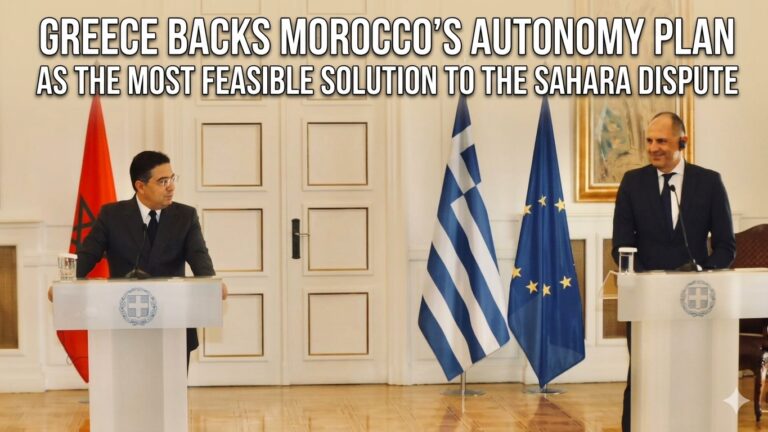
Several influential countries, including Belgium, France, United Kingdom, United Arab Emirates, and Czech Republic, strongly condemned the separatist group’s recent actions and reiterated support for Morocco’s autonomy plan under Moroccan sovereignty.
The growing international consensus marks another setback for the Polisario leadership, which many analysts argue has become increasingly disconnected from geopolitical realities and regional dynamics. While the group continues attempting to revive international attention around the Sahara issue through provocations and inflammatory rhetoric, major global actors appear more focused on stability, economic integration, and pragmatic political solutions.
Mounting Diplomatic Pressure
The condemnations issued by multiple governments reflect a broader shift in international diplomacy surrounding the Sahara conflict. In recent years, Morocco has successfully consolidated support for its autonomy proposal among a growing number of nations that now view the initiative as the most credible and achievable framework for ending the dispute.
European and Gulf partners have increasingly emphasized that long-term peace in the region depends on political realism rather than ideological confrontation. Diplomats from several capitals have pointed to Morocco’s investments in infrastructure, renewable energy, trade corridors, and regional development as evidence that the Kingdom is prioritizing stability and prosperity in its Southern Provinces.
The recent attacks attributed to the separatist movement were viewed by critics as an attempt to disrupt this growing diplomatic momentum. However, rather than shifting international opinion, the actions appear to have accelerated support for Rabat’s position.
Terrorism Concerns and Regional Security
Although the Polisario Front is not officially designated as a terrorist organization by the United Nations or most Western governments, some political commentators, regional observers, and Moroccan officials have accused elements linked to the movement of engaging in destabilizing activities and maintaining troubling connections within volatile Sahel networks.
Security concerns in North and West Africa have become increasingly central to international diplomacy, particularly as extremist organizations continue operating across the Sahel region. As a result, governments are placing greater emphasis on reliable regional partnerships capable of ensuring security cooperation, economic resilience, and border stability.
Morocco has positioned itself as one of the region’s key security and counterterrorism partners, strengthening intelligence cooperation with Europe, the Gulf, and African nations. This strategic role has further reinforced international confidence in Rabat’s approach to the Sahara issue.
Analysts argue that any strategy based on escalation or armed confrontation risks alienating the Polisario even further at a time when the international community overwhelmingly favors diplomatic compromise.
Morocco’s Autonomy Initiative Gains Momentum
Originally introduced in 2007, Morocco’s autonomy initiative proposes broad local self-governance for the Sahara region while preserving Moroccan sovereignty and territorial integrity. The plan has been described by numerous international partners as “serious,” “credible,” and “realistic.”
Over the past several years, support for the initiative has expanded significantly. Countries across Africa, Europe, the Middle East, and the Americas have either explicitly endorsed the proposal or expressed support for a political process based on autonomy under Moroccan sovereignty.
The opening of foreign consulates in the cities of Laayoune and Dakhla has also been interpreted as a concrete diplomatic recognition of Morocco’s administrative presence and growing legitimacy in the region.
For supporters of the autonomy plan, the latest condemnations directed at the separatist movement demonstrate that the international community is increasingly unwilling to tolerate actions that threaten regional peace or undermine diplomatic negotiations.
A Changing Geopolitical Reality
The Sahara issue is no longer viewed solely through the lens of historical disputes. Today, it is deeply connected to broader questions involving energy security, Atlantic trade routes, migration management, counterterrorism cooperation, and African economic integration.
Morocco’s strategic partnerships with Western and Gulf nations have expanded rapidly in these areas, giving Rabat increased diplomatic leverage and international influence. Large-scale investments in ports, transportation infrastructure, green hydrogen projects, and renewable energy initiatives have transformed the Kingdom into a major regional economic hub.
Against this backdrop, many international actors now see stability in the Sahara region as essential for broader geopolitical and economic interests.
The separatist movement’s confrontational tactics, by contrast, are increasingly perceived as counterproductive and politically damaging. Critics argue that rather than generating sympathy, such actions reinforce concerns about instability and undermine prospects for constructive dialogue.
International Isolation Deepens
The strong reactions from multiple countries suggest that support for the Polisario’s traditional narrative continues to erode internationally. While the movement still retains backing from certain regional actors, its diplomatic influence appears significantly diminished compared to previous decades.
At the same time, Morocco continues strengthening its alliances and securing broader recognition for its autonomy framework. The Kingdom’s diplomatic strategy, combining political engagement, economic partnerships, and regional development initiatives, has steadily shifted international opinion in its favor.
For many observers, the latest developments highlight a growing reality: the momentum surrounding the Sahara issue increasingly favors negotiated autonomy under Moroccan sovereignty rather than prolonged confrontation.
As international powers continue prioritizing stability and pragmatic solutions, the space for separatist escalation appears to be narrowing rapidly.
About the Author