The diplomatic landscape surrounding the Moroccan Sahara issue witnessed a significant development as Japan expressed renewed support for Morocco’s autonomy initiative under Moroccan sovereignty. The announcement, made during the celebration of the 70th anniversary of diplomatic relations between Morocco and Japan in 2026, marks a notable evolution in Tokyo’s position regarding one of North Africa’s longest-running regional disputes.
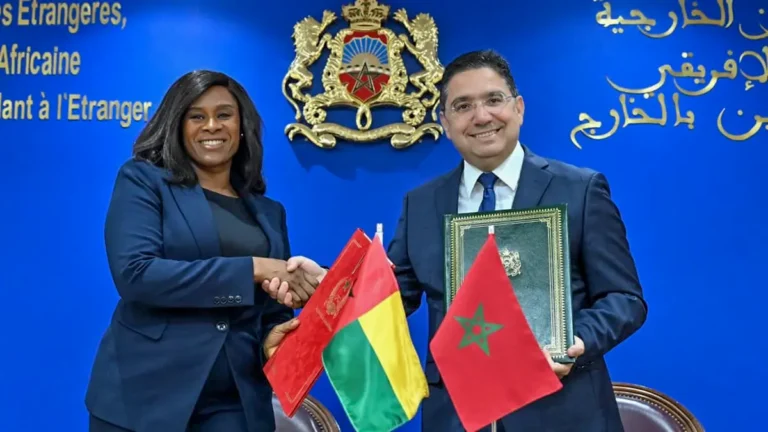
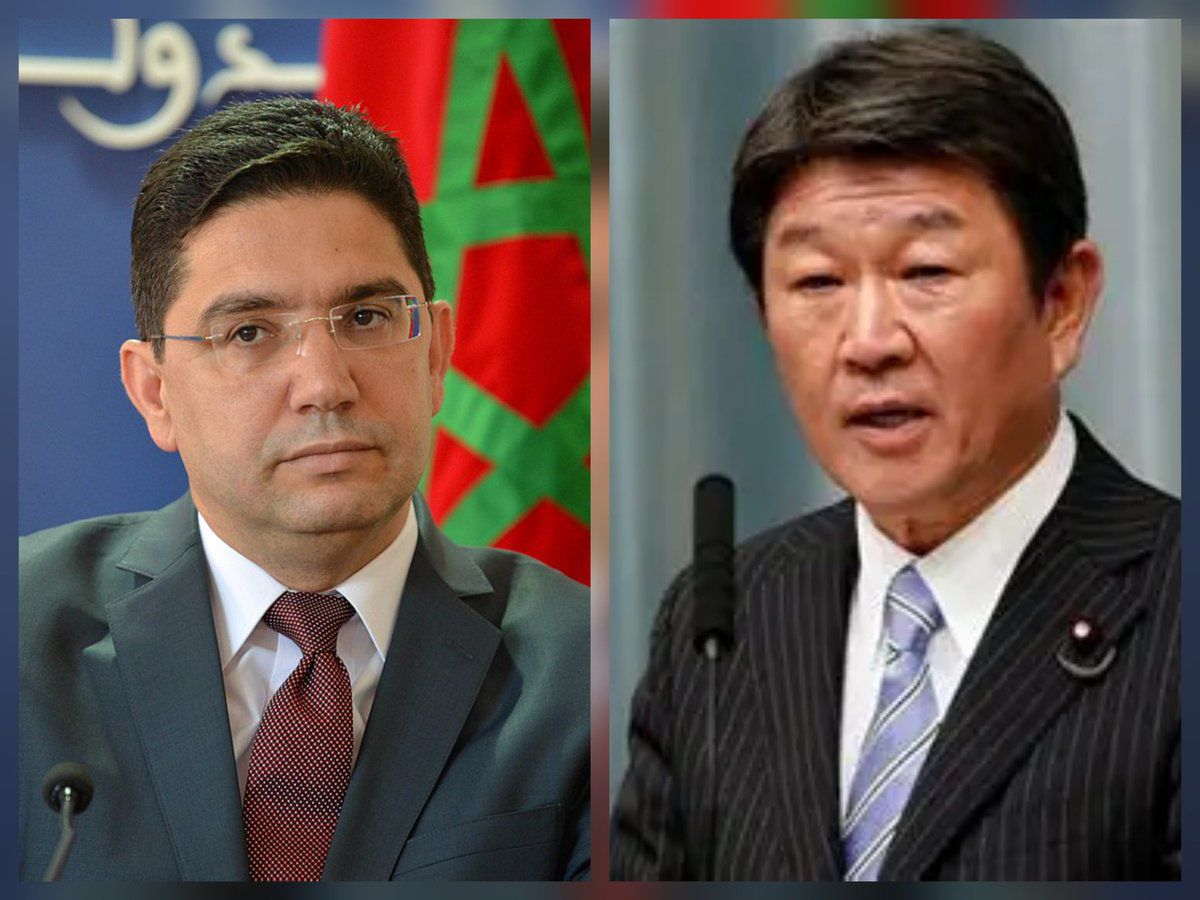
The declaration emerged from a Joint Communiqué signed by Morocco’s Minister of Foreign Affairs, African Cooperation and Moroccan Expatriates, Nasser Bourita, and Japan’s Foreign Minister, Motegi Toshimitsu. Conducted through a high-level video conference, the meeting highlighted the strengthening strategic ties between the Kingdom of Morocco and Japan while placing the Sahara issue at the center of bilateral diplomatic discussions.
Japan’s Position Reflects Growing International Support
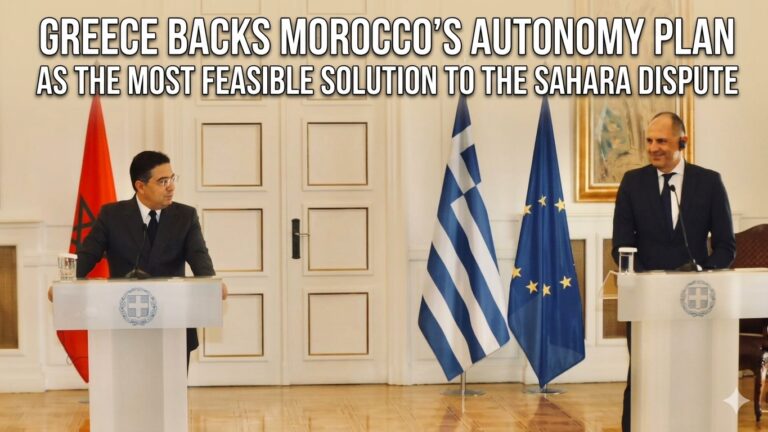
Japan welcomed the adoption of United Nations Security Council Resolution 2797 of October 31, 2025, which recognized that a “genuine autonomy, under Moroccan sovereignty,” could represent one of the most realistic and practical pathways toward resolving the dispute. By publicly endorsing this interpretation, Tokyo aligned itself more closely with the growing number of nations supporting Morocco’s autonomy proposal as the most credible basis for a political settlement.
The Japanese government emphasized that it intended to integrate this position into its diplomatic and economic approach moving forward. This commitment goes beyond symbolic language and suggests that Tokyo may increasingly shape its foreign policy, investment decisions, and regional cooperation strategies in accordance with Morocco’s sovereignty framework in the Southern Provinces.
Observers view this shift as particularly significant because Japan has traditionally maintained a cautious and balanced diplomatic posture on international territorial disputes. Tokyo’s endorsement therefore signals not only confidence in Morocco’s initiative but also recognition of Rabat’s increasing geopolitical influence across Africa, the Middle East, and the Atlantic region.
Support for the United Nations Political Process
Japan also reaffirmed its backing for the efforts led by the Secretary-General of the United Nations and his Personal Envoy tasked with advancing negotiations on the Sahara issue. According to the communiqué, Tokyo supports discussions conducted on the basis of Morocco’s autonomy plan and encourages all parties to participate without preconditions.
The Japanese government described the autonomy initiative as a serious and pragmatic framework capable of producing a “just, lasting, and mutually acceptable” political solution. Such wording mirrors language increasingly adopted by influential international actors, reflecting the broader diplomatic momentum Morocco has accumulated over recent years.
The autonomy plan, initially proposed by Morocco in 2007, offers broad self-governing powers for the Sahara region while maintaining Moroccan sovereignty and territorial integrity. Rabat has consistently promoted the initiative as a compromise solution balancing regional stability, local governance, and international legality.
For many international partners, including major global powers, the proposal is now regarded as the most realistic alternative to decades of diplomatic deadlock.
Diplomatic and Economic Implications
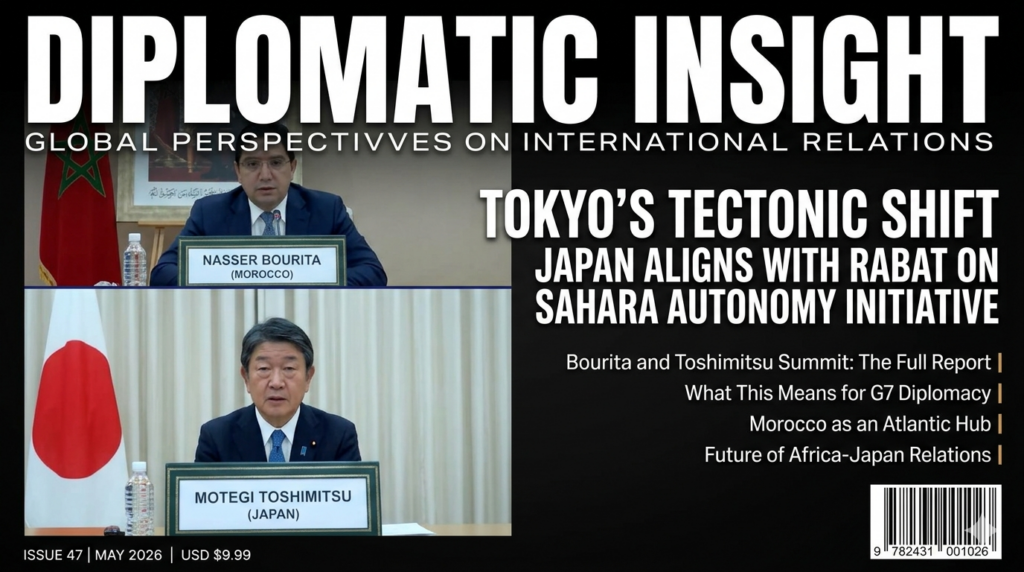
One of the most notable elements of Japan’s statement lies in its pledge to act according to this position at both the diplomatic and economic levels. This declaration potentially opens the door to enhanced Japanese engagement in Morocco’s Southern Provinces through investment, infrastructure cooperation, and development projects.
Morocco has invested heavily in transforming the Sahara region into an economic gateway connecting Africa, Europe, and the Atlantic basin. Major development initiatives have included renewable energy projects, transportation infrastructure, fisheries modernization, and port expansion programs. International support for these initiatives has increasingly become intertwined with diplomatic recognition of Morocco’s sovereignty claims.
Japan’s willingness to adapt its policy in light of “the current evolution of the situation” may encourage stronger commercial partnerships between Japanese corporations and Moroccan institutions operating in the region. Analysts suggest that sectors such as green energy, logistics, maritime trade, and technology transfer could become areas of future cooperation.
Furthermore, Tokyo’s evolving position may influence other Asian nations still evaluating their diplomatic stance on the issue. Japan remains one of the world’s largest economies and a respected diplomatic actor with substantial influence in international institutions. Its endorsement therefore carries symbolic and strategic weight far beyond bilateral relations.
Morocco’s Expanding Diplomatic Momentum
For Morocco, Japan’s position represents another diplomatic achievement in a broader international campaign aimed at consolidating support for the autonomy initiative. Under the leadership of Mohammed VI, Rabat has pursued an active foreign policy strategy focused on strengthening alliances, expanding economic diplomacy, and increasing international recognition of its sovereignty over the Sahara.
In recent years, numerous countries across Africa, the Arab world, Europe, Latin America, and North America have publicly endorsed Morocco’s autonomy proposal. Several nations have also opened consulates in the cities of Laayoune and Dakhla, further reinforcing Morocco’s diplomatic position in the region.
The Kingdom has consistently framed the Sahara issue as the central lens through which it evaluates international partnerships. Consequently, support for the autonomy initiative has become a key factor in Morocco’s strategic relations with major global powers.
Japan’s statement therefore represents not only a diplomatic endorsement but also a reflection of Morocco’s growing role as a stable political and economic partner in an increasingly volatile international environment.
Seventy Years of Morocco–Japan Relations
The announcement came during celebrations marking seven decades of diplomatic relations between Morocco and Japan. Since establishing formal ties in 1956, the two countries have cultivated a relationship characterized by mutual respect, political dialogue, economic cooperation, and cultural exchange.
Over the years, Japan has supported numerous development projects in Morocco, particularly in infrastructure, fisheries, education, and environmental sustainability. Morocco, meanwhile, has emerged as one of Japan’s most important partners in North and West Africa due to its strategic geographic position, political stability, and expanding industrial base.
The 70th anniversary celebrations served not only as a commemoration of historical friendship but also as an opportunity to redefine bilateral cooperation in light of shifting global dynamics. Both nations emphasized shared commitments to regional stability, economic development, and multilateral diplomacy.
As Morocco continues to strengthen its international alliances and Japan seeks deeper engagement across Africa and the Mediterranean region, the evolving partnership between Rabat and Tokyo may acquire even greater geopolitical significance in the years ahead.
A Turning Point in International Diplomacy
Japan’s endorsement of autonomy under Moroccan sovereignty reflects a broader transformation in the international handling of the Sahara dispute. Increasingly, global powers appear to favor pragmatic political solutions grounded in regional stability and economic cooperation rather than prolonged diplomatic stalemate.
By signaling its intention to translate its position into concrete diplomatic and economic action, Japan has added momentum to Morocco’s international campaign while reinforcing the perception that the autonomy initiative is emerging as the dominant framework for resolving the conflict.
For Morocco, the development represents another step toward consolidating international legitimacy around its sovereignty claims. For Japan, it demonstrates a readiness to play a more assertive role in North African diplomacy and strategic cooperation.
As international alignments continue to evolve, the Morocco–Japan partnership may become an increasingly influential example of how economic interests, geopolitical strategy, and diplomatic pragmatism intersect in shaping the future of regional disputes.
About the Author