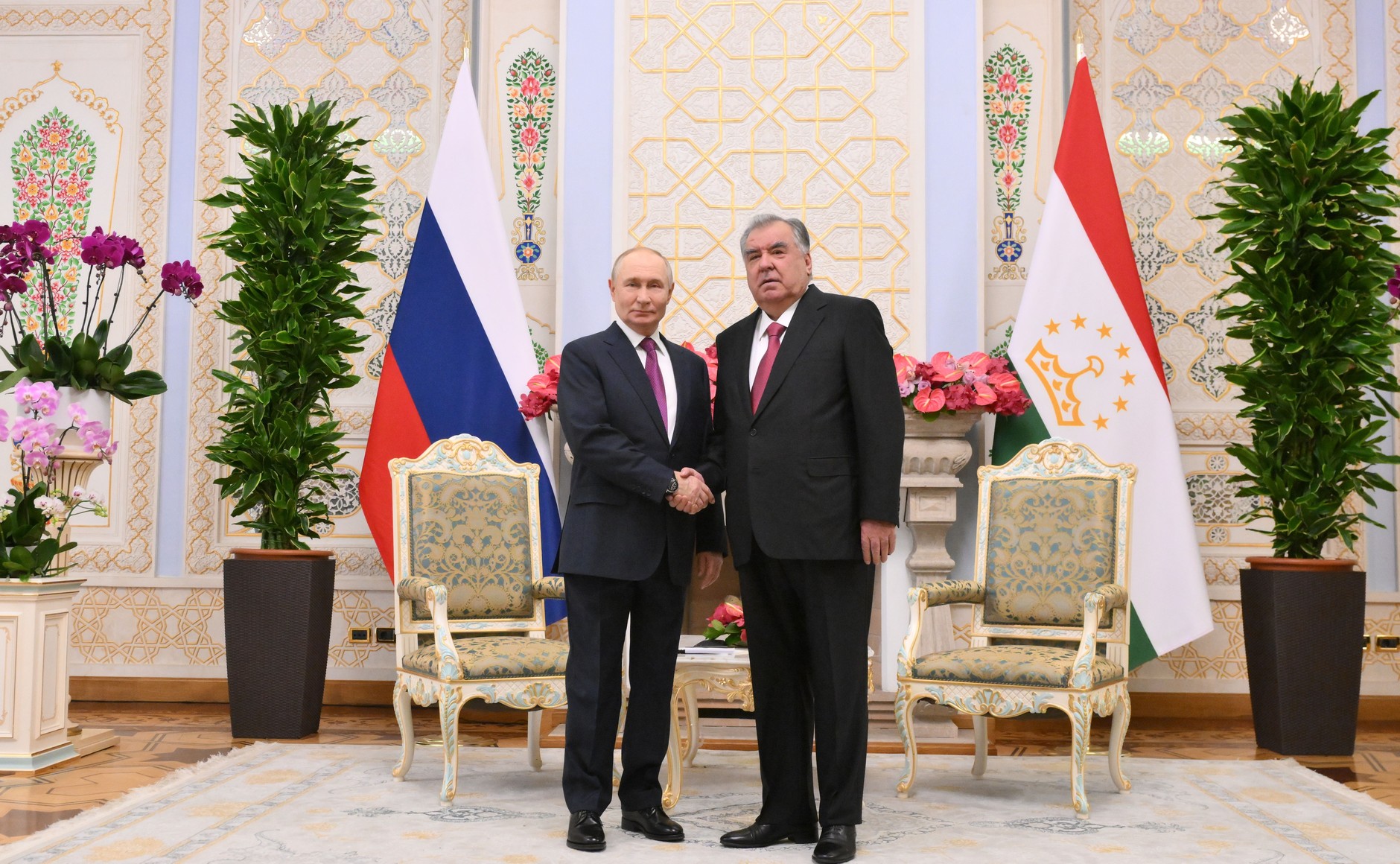
File photo: Vladimir Putin and Emomali Rahmon in Dushanbe, October 9, 2025. Photo: Kremlin.ru, CC BY 4.0.
Tajikistan has formally notified the United Nations that it intends to leave the International Criminal Court, a move that will make the Central Asian country the latest state to begin withdrawing from the court as international support for the tribunal faces renewed pressure.
The UN depositary notification records that the withdrawal notice was received on November 20, 2026. Under the Rome Statute, the treaty that established the court, the departure takes effect one year later, on November 20, 2027. Until then, Tajikistan remains a state party and continues to be bound by the treaty’s obligations.
Timing draws attention to Putin’s visit
The notification was dated the same day Russian President Vladimir Putin visited Tajikistan for talks with President Emomali Rahmon. The timing is notable because the ICC issued an arrest warrant for Putin in 2023 over the alleged unlawful deportation and transfer of Ukrainian children. The Kremlin rejects the court’s jurisdiction.
In March 2026, the ICC said Tajikistan had failed to comply with its obligations after Putin visited the country in 2025 without being arrested. The court’s finding concerned Tajikistan’s duties as a member of the Rome Statute; it did not itself establish that the country’s current withdrawal notice was caused by the Putin visit.
No official explanation for the November 20 notification was included in the UN depositary notice. The chronology has nevertheless placed the decision under scrutiny because it came during a visit by a leader wanted by the court.
ICC warns that withdrawal does not erase past obligations
The Presidency of the Assembly of States Parties to the Rome Statute said on November 23 that it viewed Tajikistan’s steps with concern and urged the government to remain in the treaty system. It stressed that withdrawal does not release a country from obligations arising while it was still a party, including duties connected to earlier investigations and proceedings.
The European Union also called on Tajikistan to reconsider. In a statement, the EU said the ICC remains a central institution for accountability for genocide, crimes against humanity and war crimes when national courts are unable or unwilling to act.
A wider retreat from the court
Tajikistan is the fourth country reported by Reuters to have begun a withdrawal since Washington launched a diplomatic campaign urging countries to leave the ICC. Chad, Venezuela and Naoero, formerly known as Nauru, have also taken steps to withdraw during that period. Burkina Faso, Mali and Niger announced exits earlier, criticizing the court’s role and legitimacy.
The departures do not all share the same stated rationale, and the sequence should not be treated as evidence of a single coordinated decision. But each withdrawal adds pressure to a court whose reach depends heavily on cooperation from states, particularly when suspects travel across borders.
Established by the 1998 Rome Statute, the ICC prosecutes individuals—not governments—for the gravest international crimes when national justice systems cannot or will not act. Tajikistan’s withdrawal will not take effect until November 2027, and the treaty specifically preserves obligations incurred before that date.
Sources: United Nations depositary notification; International Criminal Court – Assembly of States Parties; European Union; Reuters.
World Media Feed Editorial Team
About the Author