Editorial illustration. World Media Feed.
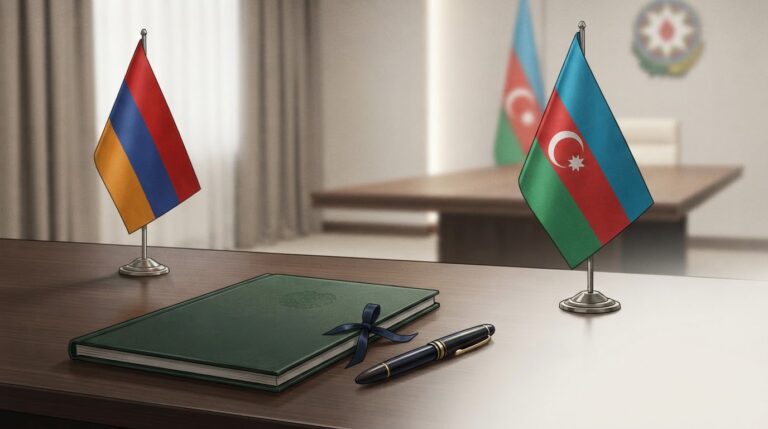
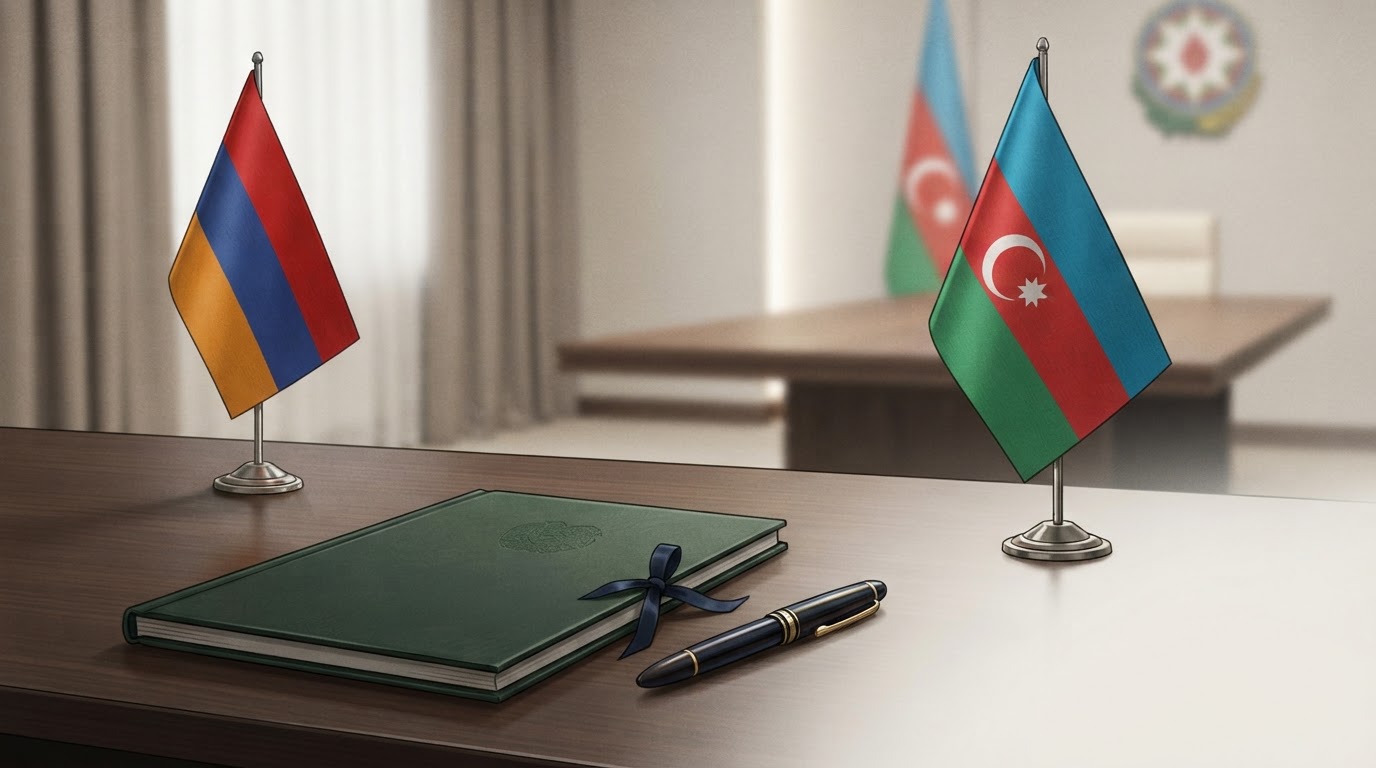
Armenia has published a draft constitution that removes a reference Azerbaijan has long cited as an obstacle to a formal peace agreement, opening a new and politically sensitive stage in efforts to end decades of conflict between the South Caucasus neighbours.
Prime Minister Nikol Pashinyan said the proposed charter would help establish lasting peace with Azerbaijan. But the document is only a preliminary draft, now open to public discussion, and it must still pass through parliamentary procedures and a referendum process that could prove difficult for his government.
A key issue in the peace negotiations
The draft’s preamble no longer refers to Armenia’s 1990 Declaration of Independence. Azerbaijan has argued that the declaration’s reference to the reunification of Armenia and Nagorno-Karabakh amounts to a territorial claim. Baku has made the removal of that reference a central condition for signing a formal peace treaty.
Armenia and Azerbaijan initialed a U.S.-brokered peace agreement in Washington in August 2025, but the document has not yet been formally signed and ratified. The two countries have since taken steps to rebuild economic and transport links, while major political questions remain unresolved.
In an address published alongside the draft on Monday, Pashinyan said the proposed constitution was intended to define Armenia as an independent, peaceful and secure state within its internationally recognized territory. He rejected the suggestion that the changes were being made under external pressure, presenting constitutional reform as part of his government’s domestic political program.
Referendum faces a parliamentary hurdle
The next challenge is securing enough votes in Armenia’s National Assembly to put the draft to a referendum. Pashinyan’s Civil Contract party holds 64 seats in the 105-member parliament, six short of the 70 votes required to approve a referendum. The prime minister has called on opposition lawmakers to provide the additional support.
That appeal was rejected again on Monday by Armenia’s two parliamentary opposition factions, Armenia and Strong Armenia. Their representatives criticized the draft and said they would not support the government’s effort to put it to a referendum, arguing that the changes were linked to demands from Azerbaijan. The government maintains that constitutional reform is a sovereign domestic decision.
The draft will undergo public discussion before moving through the formal legislative process. No referendum date has been set.
Pashinyan has attached significant political consequences to the vote. He has said he would resign if voters reject the new constitution and would not seek another term as prime minister if it is approved.
Peace remains a political process, not a completed agreement
Azerbaijan has welcomed the removal of the disputed reference. Foreign Minister Jeyhun Bayramov said the publicly released text appeared to address Baku’s concern and that Azerbaijan saw no further obstacle to signing the peace agreement once the constitutional issue was resolved.
Publication of the draft does not itself complete the treaty process or guarantee that the proposed changes will win parliamentary or public approval. The proposal has instead brought Armenia’s domestic constitutional debate to the center of a wider regional effort to stabilize relations after years of war over Nagorno-Karabakh.
The next stages will test whether Pashinyan can secure the necessary parliamentary support, whether the draft withstands public scrutiny and whether the constitutional process can translate into a signed and ratified peace agreement with Azerbaijan.
Sources: Office of the Prime Minister of Armenia; Reuters; Armenpress; RFE/RL Armenian Service.
World Media Feed Editorial Team
About the Author