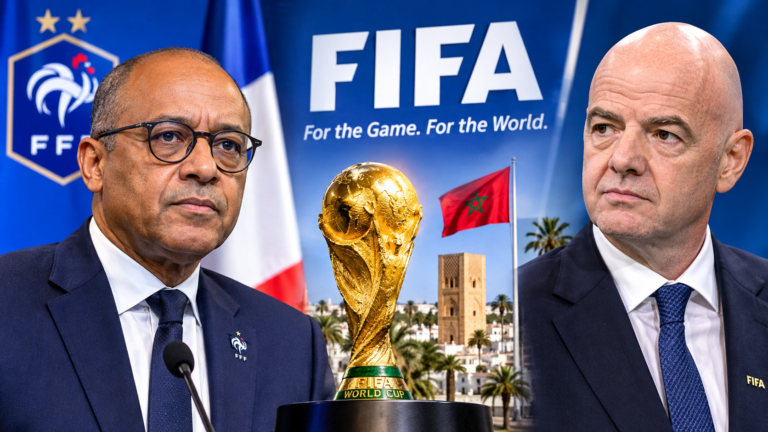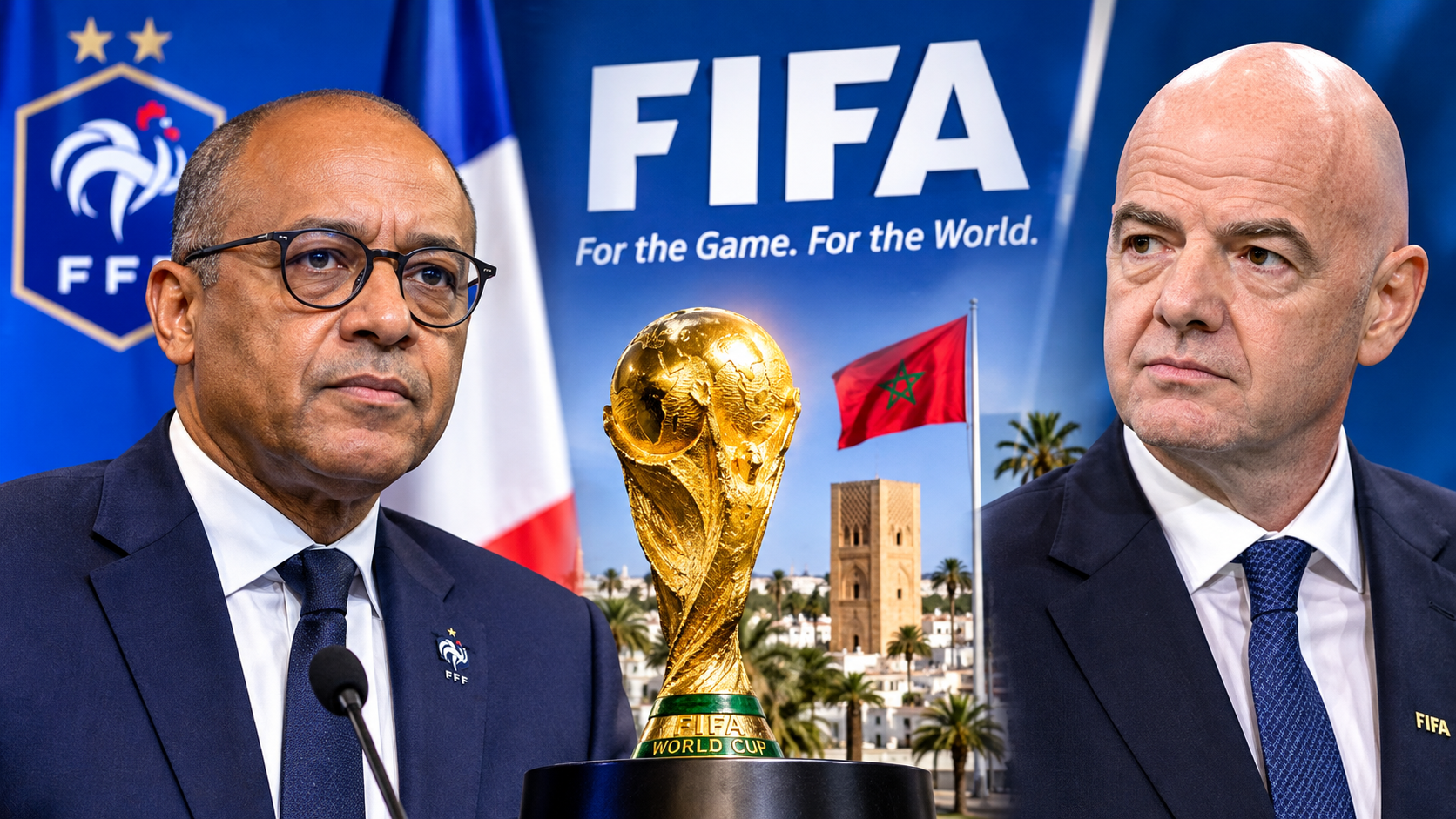
Philippe Diallo and Gianni Infantino face a potential contest for FIFA’s presidency, with the election scheduled to take place in Rabat in March 2027. Note: AI-generated editorial illustration, not an actual event photograph.
By World Media Feed Editorial Team
ZURICH — FIFA’s 2027 presidential election is set for a contested race after football’s governing body announced that French Football Federation president Philippe Diallo and Japan’s honorary federation president Kozo Tashima will challenge incumbent Gianni Infantino.
The election is scheduled for March 2027.
It will mark the first time Infantino faces a contested re-election campaign after running unopposed in 2023.
Infantino has led FIFA since 2016 and remains the favorite heading into the election, but the emergence of two challengers gives football’s governing body a political contest that could attract significant attention from national associations and regional confederations.
Diallo became president of the French Football Federation in 2023 and has emerged as one of the European figures challenging Infantino’s leadership.
Tashima, a former president of the Japan Football Association, brings a long record of involvement in international football administration.
FIFA said the nominations have been sent to its electoral committee for review.
Member associations are expected to receive the names of proposed and admitted candidates by February 18, 2027.
Former Swiss international Ramon Vega had previously announced plans to seek the presidency but was not included among the candidates announced by FIFA.
The election comes after controversy surrounding Infantino’s leadership.
Infantino has faced criticism over proposals involving the sale of stakes in the World Cup and other major competitions. Diallo was among European football leaders who moved away from supporting those proposals.
UEFA has also called for renewed unity and trust among football associations.
The contest is therefore about more than simply choosing FIFA’s next president.
It will also test how national football associations view the direction of the organization, its commercial ambitions and the relationship between FIFA and the regional confederations.
For Infantino, securing another term would reinforce the leadership model he has established over the past decade.
For Diallo and Tashima, the challenge is to turn dissatisfaction with aspects of FIFA’s current direction into enough support to force a change at the top of world football.
Why it matters: FIFA controls one of the world’s most influential sports organizations, with decisions affecting the World Cup, international competitions and billions of dollars in football-related activity.
Source note: Candidate information and election details are based on FIFA’s announcement as reported by Reuters.
About the Author