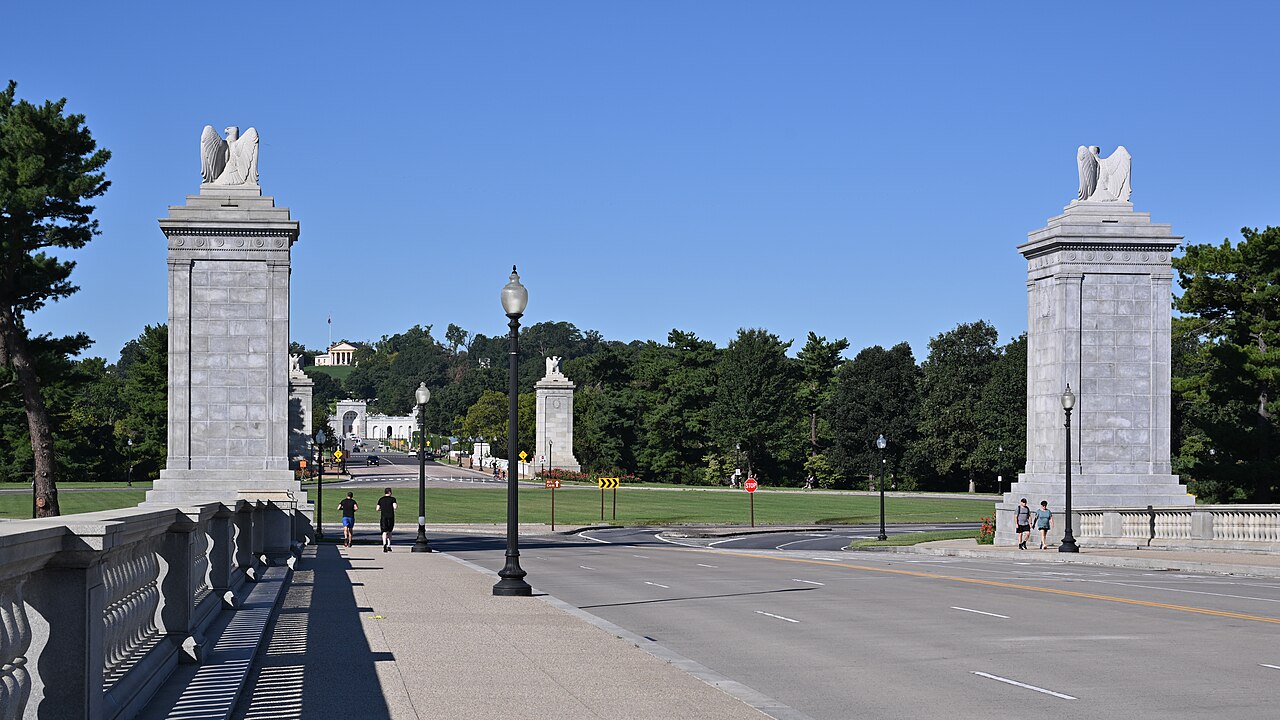
Memorial Circle, viewed from Arlington Memorial Bridge, is the proposed site of the planned triumphal arch. Photo: G. Edward Johnson, CC BY 4.0.
Construction remains on hold through early December
A federal judge has extended an order preventing the Trump administration from beginning construction of a proposed 250-foot memorial arch in Washington, keeping the project on hold while legal challenges continue. U.S. District Judge Tanya Chutkan extended the temporary restraining order for 14 days, until Dec. 3, or until she rules on a request for a longer-lasting preliminary injunction.
The order follows an earlier ruling issued Nov. 5, shortly after the National Capital Planning Commission approved the project in an 8-4 vote. The proposal has drawn opposition from veterans, historians, local governments and other plaintiffs who argue that the administration cannot proceed without congressional authorization.
What is being challenged
The proposed structure would stand about 250 feet tall at Memorial Circle, near Arlington National Cemetery and other nationally significant sites. Critics argue that it would alter historic sightlines and that the administration has not demonstrated the required legal authority. The government has argued that Congress previously authorized a monument at the location.
Separate legal challenges have been filed by Vietnam veterans and an architectural historian, the District of Columbia and Virginia, members of the Kennedy family, and Arlington County. The judge has consolidated some of the cases, while related claims continue to add complexity to the dispute.
The administration’s response
The White House criticized the latest pause and said it remains confident the project will ultimately be allowed to proceed. The judge, meanwhile, said the circumstances had not materially changed since the earlier order and that maintaining the status quo was appropriate while the court considers the arguments.
The extension is not a final ruling on whether the arch can be built. It is a temporary measure that prevents construction from starting while the legal questions are examined. The next significant step is Chutkan’s decision on the request for a preliminary injunction.
Source: Associated Press report on the court order.
About the Author