By World Media Feed Editorial Team
ABU DHABI, November 9, 2026 — Diplomatic efforts to end the war in Ukraine are set to enter a critical new phase Tuesday, as American, Russian and Ukrainian representatives prepare to meet in Abu Dhabi for the first round of trilateral negotiations since February.
The two-day discussions are expected to focus on security guarantees for Ukraine, de-escalation measures, humanitarian issues and the possibility of establishing a broader framework for ending the conflict.
The negotiations come amid renewed diplomatic activity and growing international attention to the question of what a sustainable peace agreement would require.
U.S. reports possible movement on territorial disagreements
One of the most significant developments ahead of the meeting emerged Monday, when a U.S. official told Reuters that Russia and Ukraine had privately demonstrated some flexibility regarding a possible territorial compromise.
The official’s assessment contrasts with the two countries’ publicly stated positions. Moscow continues to seek control over the entire Donbas region, while Kyiv has rejected demands to surrender Ukrainian territory.
According to the official, territorial questions are unlikely to be settled before the parties establish the security arrangements that would govern Ukraine after the war.
The reported flexibility has not been publicly confirmed as an agreement by either government. It remains to be seen whether the discussions in Abu Dhabi will translate into meaningful movement at the negotiating table.
Security guarantees at the center of negotiations
Security guarantees are expected to be among the most difficult and consequential issues.
Ukraine wants credible assurances that Russia will not launch another invasion following any future ceasefire or peace agreement. President Volodymyr Zelenskyy has previously discussed arrangements modeled on NATO’s Article 5, which establishes the principle of collective defense among alliance members.
Such an arrangement would not automatically make Ukraine a NATO member. Instead, the negotiations concern what specific commitments the United States and other partners might make if Ukraine faces another attack.
Russia, meanwhile, has its own security demands and continues to oppose Ukraine’s NATO ambitions. Moscow has also rejected the possibility of European troops being deployed on Ukrainian territory.
These competing positions illustrate the difficulty of designing an agreement that both sides would consider acceptable.
Europe’s role remains an important question
The negotiations also raise questions about Europe’s place in determining the future security structure of the continent.
Ukraine has repeatedly emphasized the importance of European participation in decisions affecting its long-term security. Russia has opposed European involvement in the immediate trilateral negotiating format, although Russian officials have acknowledged that European governments would eventually need to be involved in wider discussions about continental security.
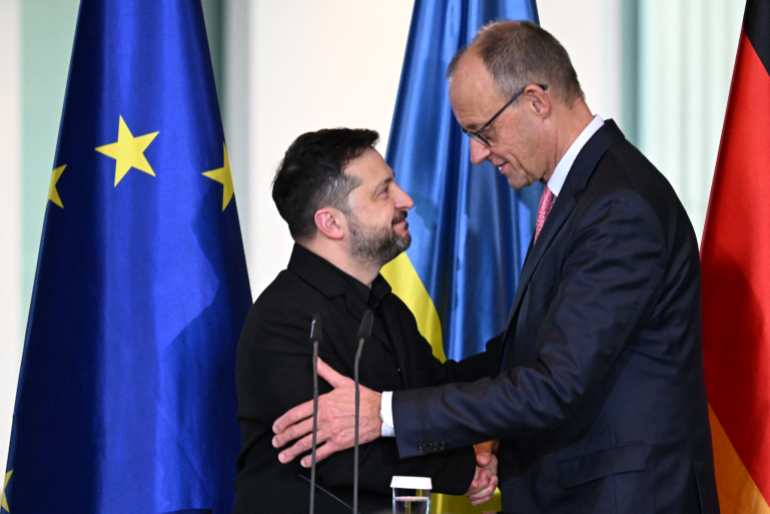
President Zelenskyy confirmed Monday that Ukraine’s negotiating team was already in the United Arab Emirates. He said European partners would participate in separate discussions alongside the trilateral format.
The involvement of European governments will be important because any lasting settlement could have consequences extending well beyond the borders of Ukraine and Russia.
Fighting continues as diplomacy resumes
Despite renewed diplomatic efforts, military operations have continued.
Russia has intensified attacks against Ukraine’s energy infrastructure as winter approaches, while both sides continue long-range drone and missile operations.
For Ukrainian civilians, the consequences remain immediate. Damage to electricity and other essential infrastructure raises concerns about the ability of communities to withstand another winter of war.
The continuing violence also underscores the challenge facing negotiators: reaching a diplomatic understanding while the conflict remains active on the ground.
A difficult path toward a lasting settlement
The Abu Dhabi meeting represents another opportunity to restart negotiations, but expectations of an immediate breakthrough should remain measured.
Territorial control, security guarantees, NATO’s future relationship with Ukraine and Europe’s role in the regional security framework remain unresolved.
The reported private flexibility described by the U.S. official could provide an opening for discussion. However, whether that opening reflects a genuine willingness to compromise will become clearer only through the negotiations themselves.
For Washington, the challenge will be to move the parties toward practical arrangements without leaving fundamental security concerns unanswered.
For Kyiv, the central question remains whether any agreement can protect its sovereignty and prevent another invasion.
For Moscow, the negotiations will test whether its stated demands can be reconciled with a settlement acceptable to Ukraine and its international partners.
The discussions beginning Tuesday may not end the war, but they could help determine whether a realistic diplomatic path remains possible.
World Media Feed will continue monitoring developments from Abu Dhabi as the negotiations unfold.
Sources and reporting references
- Reuters — November 9, 2026: Reporting on the U.S. assessment of possible private flexibility over territorial issues and the upcoming negotiations.
- Associated Press — November 9, 2026: Background on the negotiating positions, security guarantees and outstanding disagreements.
- Office of the President of Ukraine — November 9, 2026: President Zelenskyy’s statement confirming the Ukrainian delegation’s arrival in the UAE and the planned discussions.
Editorial note: The reported private flexibility is attributed to an unnamed U.S. official. It should not be interpreted as a confirmed territorial agreement.
About the Author