COPENHAGEN — September 5, 2026
Denmark has expressed renewed support for Morocco’s autonomy initiative for the Moroccan Sahara, describing the proposal as a credible and constructive basis for reaching a mutually agreed political settlement under the United Nations process.
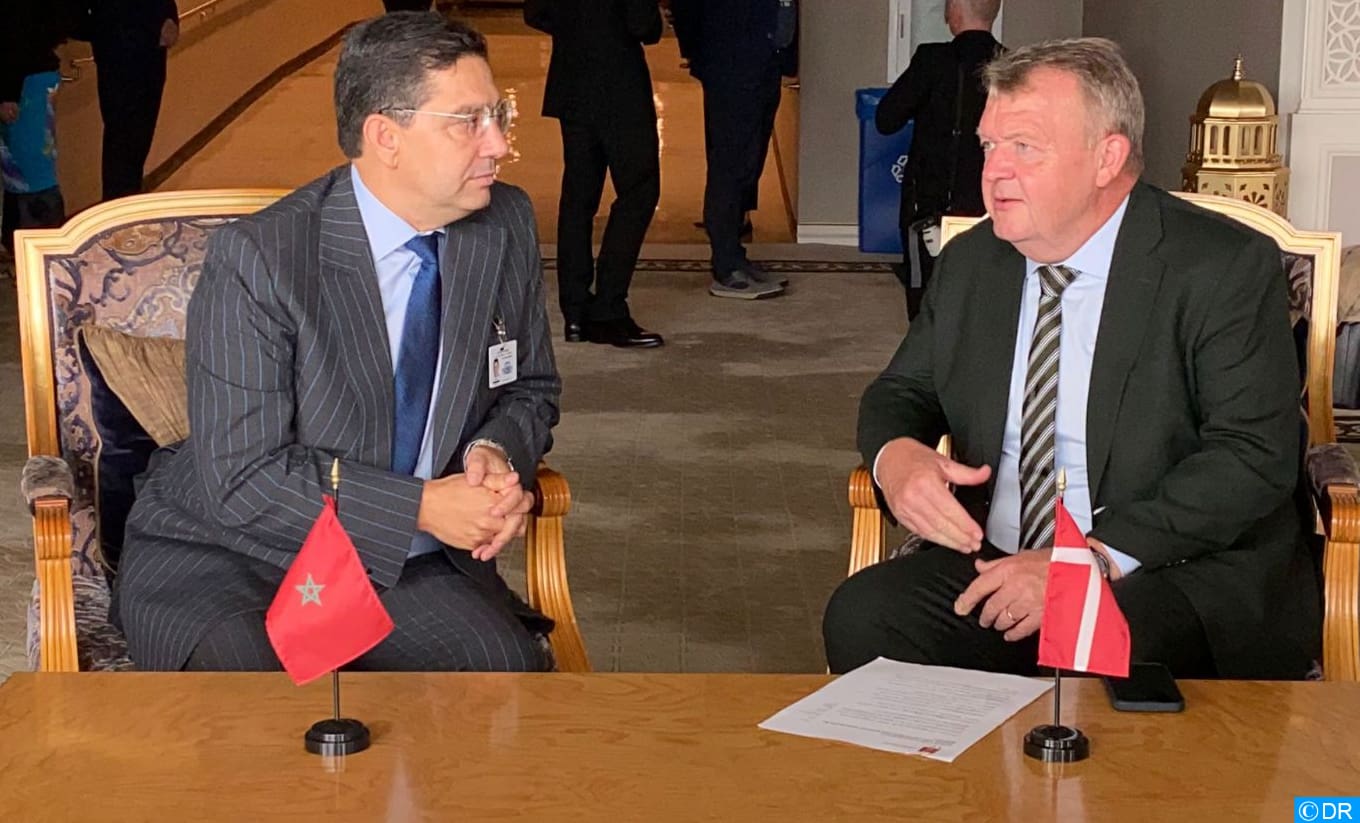
The position was voiced by Danish Foreign Minister Lars Løkke Rasmussen during a press statement in Copenhagen following talks with Morocco’s Minister of Foreign Affairs, African Cooperation and Moroccan Expatriates, Nasser Bourita.
Rasmussen said Denmark welcomes the latest developments surrounding the United Nations-led political process and emphasized Copenhagen’s alignment with the broader position of the European Union.
Denmark Welcomes UN Security Council Resolution 2797
During the meeting, the Danish foreign minister highlighted his country’s support for United Nations Security Council Resolution 2797, saying Denmark welcomed its adoption in line with the European Union’s position.
The resolution has added further momentum to international efforts aimed at finding a realistic and lasting political solution to the Moroccan Sahara issue.
For Denmark, the UN framework remains the appropriate platform for advancing negotiations among the parties and achieving a settlement that is mutually acceptable.
Autonomy Plan Described as “Credible”
Rasmussen also offered strong words regarding Morocco’s autonomy proposal.
The Danish diplomat described the initiative as “credible”, stressing that it represents a serious and essential contribution to the ongoing UN political process.
He further characterized Morocco’s proposal as a “good basis for a mutually agreed solution by all parties.”
The assessment is significant because it places Denmark among European countries that view Morocco’s autonomy initiative as a serious framework for resolving the long-running dispute.
Rather than presenting the proposal as a final outcome imposed on the parties, Copenhagen’s formulation emphasizes its potential to serve as a foundation for negotiations leading to a mutually accepted settlement.
Growing European Momentum
Denmark’s position comes amid what Rabat describes as growing international momentum behind Morocco’s autonomy initiative.
Morocco has consistently presented autonomy under Moroccan sovereignty as its preferred solution to the dispute, arguing that the proposal would provide broad self-government for the territory while preserving Morocco’s sovereignty and territorial integrity.
The initiative was submitted to the United Nations in 2007 and has since become a central element of Morocco’s diplomatic efforts.
In recent years, a growing number of countries have expressed support for the autonomy proposal or described it as a realistic, credible and pragmatic basis for resolving the dispute.
Denmark’s latest statement is particularly noteworthy because the country is a member of the UN Security Council, giving its position added diplomatic significance.
A Boost for Morocco’s Diplomatic Strategy
The Danish declaration also represents a diplomatic boost for Rabat as Morocco continues to promote its autonomy initiative internationally.
Under the leadership of King Mohammed VI, Morocco has made the Sahara issue a central priority of its foreign policy, seeking broader international recognition of its sovereignty over the territory while encouraging a negotiated political settlement through the UN framework.
Rabat has repeatedly emphasized that the autonomy initiative is designed to provide a compromise capable of reconciling the interests of the parties while contributing to regional stability and development.
Denmark’s description of the proposal as a credible contribution to the UN process reinforces that approach.
Bourita Visit Highlights Stronger Morocco-Denmark Ties
The exchange between Rasmussen and Bourita also reflects the broader strengthening of relations between Morocco and Denmark.
The two countries have sought to deepen cooperation in areas ranging from trade and investment to renewable energy, security, climate policy and African affairs.
Morocco has increasingly positioned itself as a strategic partner for European countries seeking stronger economic and diplomatic engagement with Africa.
For Copenhagen, Morocco’s geographic position and growing role across the African continent make Rabat an important partner in addressing shared regional challenges.
What Denmark’s Position Means
Denmark’s latest statement does not represent a unilateral determination of the final status of the Moroccan Sahara. Instead, it reinforces the UN-centered approach and identifies Morocco’s autonomy proposal as a credible foundation for negotiations.
That distinction is important.
By supporting a proposal as a “good basis for a mutually agreed solution,” Denmark is encouraging the parties to engage with the initiative as part of the UN political process.
For Morocco, however, the statement carries broader diplomatic weight.
Coming from a European country and UN Security Council member, Denmark’s assessment adds to the growing number of international voices describing the autonomy plan as realistic and credible.
Momentum Continues to Build
The Danish position adds another chapter to Morocco’s expanding diplomatic campaign surrounding the Sahara issue.
With Copenhagen stressing the credibility of Morocco’s autonomy proposal, while simultaneously endorsing the UN political process, Rabat gains further support for its argument that autonomy under Moroccan sovereignty can provide a realistic pathway toward a negotiated settlement.
The challenge now remains translating growing international support into meaningful progress at the negotiating table.
For Denmark, the message is clear: Morocco’s autonomy initiative deserves to be taken seriously as part of efforts to achieve a mutually agreed, realistic and lasting political solution to the Moroccan Sahara issue.
About the Author