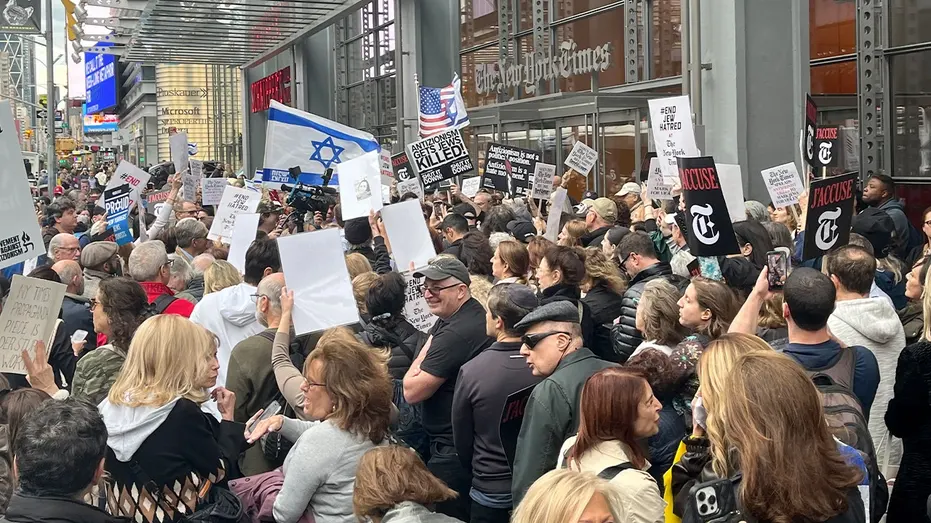
NEW YORK — Demonstrators gathered outside the headquarters of The New York Times this week to protest a controversial opinion essay by columnist Nicholas Kristof that included allegations of sexual abuse against Palestinian detainees held by Israeli authorities.
The protest, organized by several pro-Israel advocacy groups and activists, drew dozens of participants carrying Israeli and American flags and signs accusing the newspaper of publishing “blood libel” and unverified claims. Protesters demanded the newspaper retract the article and terminate Kristof’s employment.
The disputed essay, titled “The Silence That Meets the Rape of Palestinians,” cited testimonies from former detainees and reports from human rights organizations alleging abuse in Israeli detention facilities. Among the most controversial claims referenced in the piece were allegations involving the use of dogs in acts of sexual violence — assertions critics described as implausible, inflammatory, and lacking sufficient corroboration.
“This crossed the line from advocacy into reckless journalism,” said one protest organizer outside the newspaper’s Manhattan offices. “Publishing allegations this extreme without definitive evidence puts lives at risk and fuels hatred.”
Israeli officials sharply condemned the article following its publication. Members of the Israeli government accused the newspaper of spreading propaganda and damaging Israel’s international reputation. Some officials indicated that legal action against the publication was being considered.
In response to mounting criticism, The New York Times defended Kristof’s reporting, stating that the column relied on “on-the-record accounts” and referenced findings from multiple human rights organizations documenting alleged abuse of Palestinian detainees.
Kristof also addressed the backlash publicly, arguing that allegations of abuse in detention settings deserve scrutiny and investigation. He acknowledged in the essay that there was “no evidence that Israeli leaders order rapes,” while maintaining that testimonies from former detainees warranted public attention.
The controversy has further intensified tensions surrounding media coverage of the Israel–Hamas war and competing narratives about wartime atrocities. Supporters of the protest argued that the article minimized documented sexual violence committed during the October 7 attacks against Israelis, while defenders of Kristof’s reporting said allegations involving Palestinian detainees should not be dismissed outright.
The demonstrations quickly spread across social media platforms, where critics and supporters debated both the credibility of the claims and the responsibilities of major news organizations when reporting on allegations arising from active conflicts.
As of Friday, The New York Times had not indicated any plans to retract the article or discipline Kristof.
About the Author