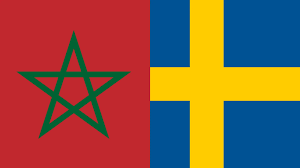
Sweden has expressed its support for Morocco’s Autonomy Plan, describing it as a “credible basis” for negotiations aimed at reaching a definitive solution to the regional dispute over the Moroccan Sahara. The position is aligned with the recently adopted UN Security Council Resolution 2797.
The announcement was made in an official statement by the Swedish Ministry of Foreign Affairs following a phone conversation on Monday between Sweden’s Minister for Foreign Affairs, Maria Malmer Stenengard, and Morocco’s Minister of Foreign Affairs, African Cooperation and Moroccan Expatriates, Nasser Bourita.
With this clear endorsement, Sweden joins the vast majority of European Union member states, as well as more than two-thirds of United Nations member states, that support Morocco’s autonomy initiative.
Adopted on October 31, 2025, UN Security Council Resolution 2797 underscores that genuine autonomy under Moroccan sovereignty represents the most feasible and realistic solution to the long-standing regional dispute.
World Media Feed – Official Bio
World Media Feed is a dynamic digital news platform dedicated to delivering fast, reliable, and engaging journalism to audiences around the world. With a focus on accuracy, accessibility, and global perspective, World Media Feed covers breaking news, politics, business, technology, sports, culture, and more.
Our mission is to keep readers informed and connected through trusted reporting and diverse voices. We strive to highlight important stories shaping our world — from local communities to international headlines — while maintaining high editorial standards and a strong commitment to fact-based journalism.
World Media Feed embraces the evolution of modern media, offering real-time updates, multimedia storytelling, and content tailored for today’s digital audience. Whether you’re seeking comprehensive coverage or insightful analysis, we provide news that is clear, relevant, and impactful.
World Media Feed — News that informs. Stories that connect.
We use cookies to help our website function and understand how visitors use it. You can accept or reject non-essential cookies, or customize your preferences. See our Cookie Policy and Privacy Policy for details.
Contains information related to marketing campaigns of the user. These are shared with Google AdWords / Google Ads when the Google Ads and Google Analytics accounts are linked together.
90 days
__utma
ID used to identify users and sessions
2 years after last activity
__utmt
Used to monitor number of Google Analytics server requests
10 minutes
__utmb
Used to distinguish new sessions and visits. This cookie is set when the GA.js javascript library is loaded and there is no existing __utmb cookie. The cookie is updated every time data is sent to the Google Analytics server.
30 minutes after last activity
__utmc
Used only with old Urchin versions of Google Analytics and not with GA.js. Was used to distinguish between new sessions and visits at the end of a session.
End of session (browser)
__utmz
Contains information about the traffic source or campaign that directed user to the website. The cookie is set when the GA.js javascript is loaded and updated when data is sent to the Google Anaytics server
6 months after last activity
__utmv
Contains custom information set by the web developer via the _setCustomVar method in Google Analytics. This cookie is updated every time new data is sent to the Google Analytics server.
2 years after last activity
__utmx
Used to determine whether a user is included in an A / B or Multivariate test.
18 months
_ga
ID used to identify users
2 years
_gali
Used by Google Analytics to determine which links on a page are being clicked
30 seconds
_ga_
ID used to identify users
2 years
_gid
ID used to identify users for 24 hours after last activity
24 hours
_gat
Used to monitor number of Google Analytics server requests when using Google Tag Manager