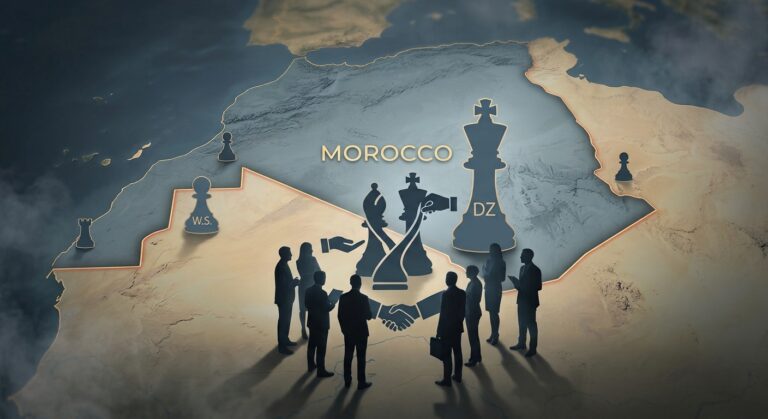
The United States has reiterated its support for Morocco’s Autonomy Proposal as the basis for negotiations over Western Sahara, signaling that Washington’s position remains unchanged despite recent divisions at the United Nations over the future of the UN peacekeeping mission in the territory.
Speaking before the UN General Assembly in November, U.S. Ambassador to the United Nations Mike Waltz said Washington would continue working with the parties and the United Nations toward a lasting settlement of the nearly five-decade-old dispute.
Waltz pointed to Security Council Resolution 2797, adopted in 2025, which established Morocco’s Autonomy Proposal as the basis for negotiations aimed at reaching a just, lasting and mutually acceptable political solution.
He also recalled the diplomatic efforts undertaken by the United States during 2026, including three rounds of high-level discussions involving Morocco, the Polisario Front, Algeria and Mauritania, with meetings held in Washington and Madrid.
“The United States is not finished” seeking a resolution, Waltz told the General Assembly, emphasizing that Washington intends to continue its efforts under President Donald Trump’s leadership.
Washington maintains its position after Security Council veto
The renewed U.S. statement comes shortly after Russia vetoed a U.S.-drafted Security Council resolution on October 30 that sought to extend the mandate of the United Nations Mission for the Referendum in Western Sahara, known as MINURSO, while keeping Morocco’s Autonomy Proposal at the center of the political process.
The U.S. draft received support from 11 members of the Security Council but was blocked by Russia’s veto.
The United Nations subsequently confirmed that MINURSO’s long-standing mandate expired on October 31, leaving the future of the mission uncertain.
The dispute over the mission has exposed a broader disagreement at the Security Council over how the UN process should move forward after decades without the referendum originally envisioned when MINURSO was created.
Washington has argued that the existing approach has failed to produce a political settlement and that the diplomatic process should instead focus on negotiations based on Morocco’s autonomy proposal.
U.S. position goes beyond a single administration
Washington’s current position also builds on the policy established in 2020, when the United States formally recognized Moroccan sovereignty over Western Sahara and described Morocco’s Autonomy Proposal as the only basis for a just and lasting solution.
That recognition remains a significant element of U.S.-Morocco relations.
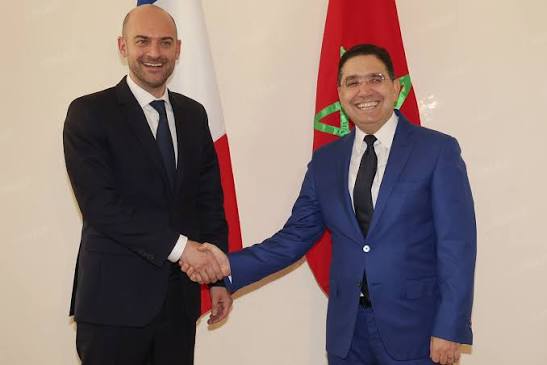
In April 2026, Deputy Secretary of State Christopher Landau reaffirmed both U.S. recognition of Moroccan sovereignty over the Sahara and Washington’s support for Morocco’s “serious, credible and realistic” autonomy proposal. Landau described the proposal as the basis for a just and lasting resolution and also highlighted U.S. interest in encouraging American investment in the territory.
The position was also reiterated by U.S. Ambassador to Morocco Richard Duke Buchan III in April, who described the autonomy plan as a path toward resolving the dispute and said American investors were showing interest in economic opportunities in the Sahara.
A diplomatic process at a critical moment
The latest U.S. statement comes as Washington attempts to maintain momentum in a diplomatic process that has gained renewed attention after years of stalemate.
The United States says the objective remains a political settlement that is lasting and acceptable to the parties. At the same time, Washington has continued to call for the Polisario Front to maintain the ceasefire and has supported efforts to find durable solutions for Sahrawi refugees.
For Morocco, the continued U.S. endorsement of its Autonomy Proposal represents an important diplomatic position from Washington as negotiations enter a potentially consequential phase.
For the broader UN process, however, the challenge remains finding a formula that can bring the parties into a sustainable political agreement while addressing competing positions over self-determination, sovereignty and the future status of Western Sahara.
The latest U.S. intervention makes clear that Washington intends to remain directly involved rather than step back from the dispute.
World Media Feed Editorial Team
About the Author