Morocco’s ambitious “water highway” has entered a new phase, with the country expanding its inter-basin water transfer network after the first major connection began operating between the Sebou and Bouregreg basins in 2023.
The infrastructure, designed to move water from areas with greater availability toward regions facing higher demand, is now transferring substantial volumes of water to help reinforce supplies for the Rabat-Casablanca corridor.
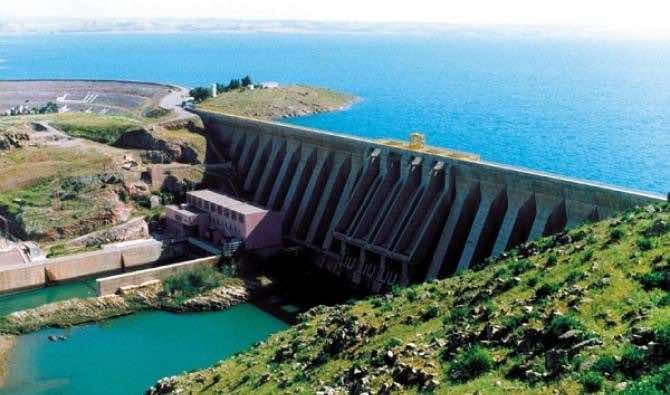
According to recent reporting from Morocco, the existing system can transfer up to 1.2 million cubic meters of water per day, with approximately 800,000 cubic meters allocated daily to drinking-water supplies for the Rabat and Casablanca metropolitan areas. The remainder can be used to replenish reserves at the Sidi Mohammed Ben Abdellah Dam.
From emergency project to national water strategy
The first large-scale interconnection between the Sebou and Bouregreg basins was completed and began operating in August 2023.
The approximately 67-kilometer project was developed to transfer water from the Sebou basin toward the Bouregreg system and strengthen water supplies serving the Rabat-Casablanca axis.
Its initial transfer capacity was around 3 cubic meters per second before being increased to approximately 15 cubic meters per second.
By the end of 2025, the connection had transferred roughly 953 million cubic meters of water, according to figures cited by Morocco’s water authorities.
The significance of the project extends beyond a single pipeline. Morocco is using the experience gained from the first connection to develop a broader network capable of moving water between several river basins.
A much larger network is taking shape
The next major stage involves extending the system toward the Oum Er-Rbia basin.
Plans reported in 2026 call for a new interconnection of roughly 300 kilometers with the potential to transfer as much as 800 million cubic meters annually. The project is expected to strengthen drinking-water supplies in Settat, Berrechid and southern Casablanca while supporting irrigation across approximately 176,000 hectares of agricultural land.
Other plans would eventually connect additional basins and increase Morocco’s ability to move water according to regional supply and demand.
The broader strategy is being developed alongside other measures, including dam construction, seawater desalination, wastewater reuse and more efficient irrigation.
Water security under pressure
Morocco has faced years of severe drought and increasing pressure on its water resources, making the ability to redistribute available water increasingly important.
The water highway does not create new water. Instead, it allows authorities to move existing resources from one basin to another when conditions and demand make that necessary.
That flexibility has become particularly important for major population centers and agricultural regions whose water needs do not always coincide with the geographic distribution of rainfall and river flows.
Recent reports also indicate that studies are advancing for a future extension toward the Al Massira Dam, potentially allowing substantially larger volumes to be transferred through the interconnected system.
A model for adapting to water scarcity
Morocco’s approach reflects a broader shift in water management: rather than relying on individual dams or local sources, the country is increasingly building an interconnected system in which water can be redistributed across regions.
The first water highway was a landmark infrastructure project when it opened in 2023. Its significance is now becoming clearer as the network expands and the system moves toward becoming part of a much larger national water-management strategy.
For Morocco, the objective is straightforward but increasingly critical: move water where it is needed, strengthen drinking-water security, support agriculture and make better use of available resources in an era of prolonged climate pressure.
World Media Feed Editorial Team
About the Author