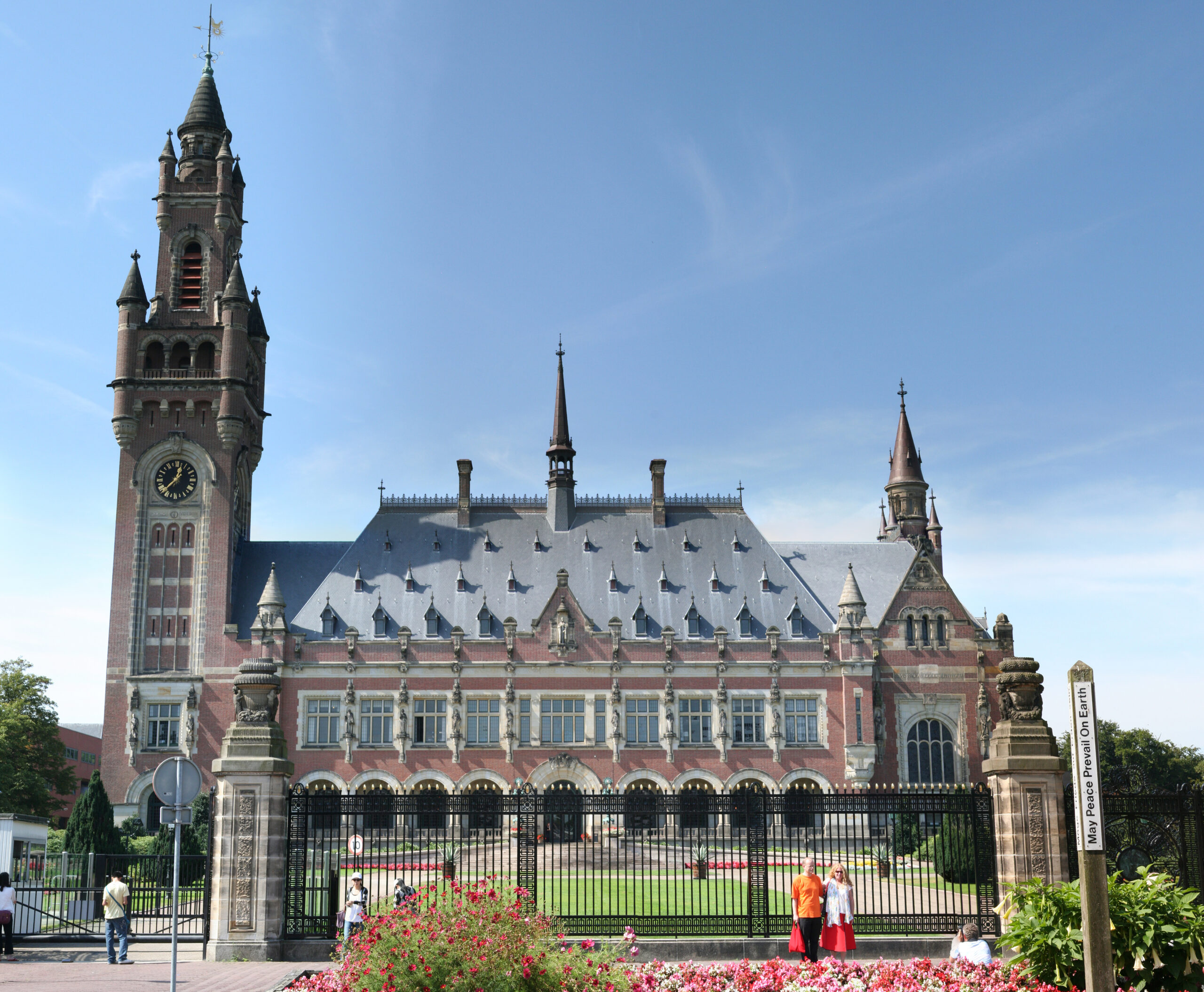
The Peace Palace in The Hague, Netherlands, home of the International Court of Justice. Photo: Wikimedia Commons.
The International Tribunal for the Law of the Sea (ITLOS) on Saturday rejected Argentina’s request for provisional measures aimed at stopping the United Kingdom-authorized Sea Lion offshore oil project near the Falkland Islands, delivering an 18–3 decision in a dispute that remains closely tied to the islands’ contested sovereignty.
In its order dated November 28, the Hamburg-based tribunal said the provisions of the United Nations Convention on the Law of the Sea (UNCLOS) cited by Argentina did not appear, at this preliminary stage, to provide a basis for the jurisdiction of the arbitration panel that is expected to hear the wider dispute. The tribunal therefore said it did not need to examine the other conditions for ordering emergency measures.
Argentina had asked the tribunal to prevent new drilling and the installation of production infrastructure connected to the Sea Lion project in the North Malvinas Basin. It also sought restrictions on the use of exploration information and other measures it said were necessary to protect its maritime rights and the marine environment.
The tribunal’s order does not resolve the underlying sovereignty dispute over the Falkland Islands, known in Argentina as the Malvinas, and does not decide the merits of Argentina’s broader claims. The judges explicitly stated that the order does not prejudge the jurisdiction of the future Annex VII arbitration tribunal or the admissibility and merits of the claims.
The decision records that the Sea Lion field is operated by Navitas Petroleum, which holds a 65% stake, alongside Rockhopper Exploration with 35%. The companies took a final investment decision in December 2025. According to information placed before the tribunal, drilling is not expected to begin before March 21, 2027, while extraction is not expected before March 2028.
The United Kingdom told the tribunal that no further licences would be granted while its licensing regime remained suspended. The tribunal placed those assurances on the record and encouraged both countries to cooperate in establishing the Annex VII arbitration tribunal swiftly.
Argentina’s request was rejected by 18 votes to three. Judges Horinouchi and Patel, together with Argentina’s ad hoc judge Raúl Vinuesa, voted against the decision.
The ruling is a setback for Argentina’s effort to obtain an immediate halt to the project, but it leaves the larger legal and diplomatic dispute unresolved. The case now moves toward the constitution of the separate arbitration tribunal, where the parties may continue to present arguments on jurisdiction and the substance of their claims.
Source
International Tribunal for the Law of the Sea, Order of November 28, 2026, Case No. 37 (Argentina v. United Kingdom).
Photo: Peace Palace, The Hague, home of the International Court of Justice. Photo: Wikimedia Commons.
About the Author