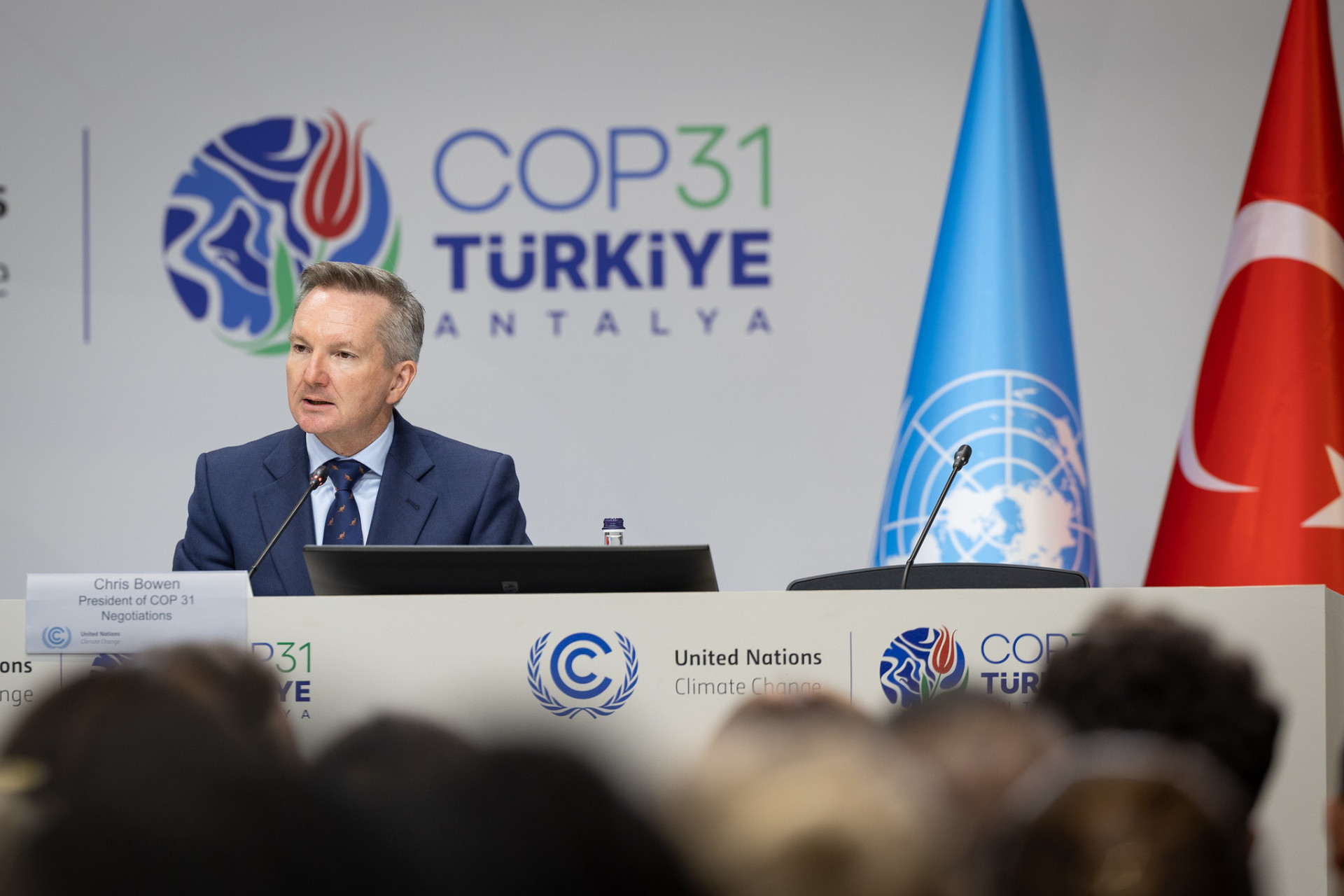
Chris Bowen, COP31 President of Negotiations, speaks to journalists in Antalya on November 20, 2026. Photo: Kiara Worth / UN Climate Change.
As COP31 entered its final stretch in Antalya, Türkiye, on November 24, negotiators faced a familiar but consequential test: whether governments can turn increasingly urgent climate warnings into a concrete political agreement on fossil fuels, finance and implementation.
The summit, hosted in Türkiye and led by Australian climate minister Chris Bowen as president of negotiations, has brought governments together at a moment when the gap between climate commitments and real-world action remains wide. The meeting is also being watched for whether countries can agree on a credible path to stronger implementation after years of pledges and missed targets.
Fossil fuels remain at the center of the dispute
One of the most politically difficult questions is how the final outcome should address the transition away from fossil fuels. Countries differ sharply over the wording, pace and legal or political weight of any commitment, reflecting their different energy systems, economic needs and exposure to climate impacts.
Supporters of a stronger transition roadmap argue that a global temperature goal cannot be met without a rapid reduction in emissions from coal, oil and gas. Some producer states and other governments have resisted language they consider too prescriptive, emphasizing national circumstances, energy security and the need for finance and technology to support the transition.
Those divisions mean that the presence of a phrase in a negotiating text is not the same as an agreed outcome. Until the final decision is adopted, proposals and draft language should not be described as commitments made by all parties.
Climate finance and adaptation are equally urgent
For developing countries, the negotiations are not only about emissions targets. They are also about whether promised climate finance can be delivered at the scale and speed needed to protect communities, strengthen infrastructure and help economies adapt to extreme heat, droughts, floods and rising seas.
Adaptation remains a particularly difficult issue because the costs are immediate while many funding arrangements are slow, fragmented or difficult for vulnerable countries to access. Governments are under pressure to make progress on finance quality, predictability and accountability, not simply announce headline totals.
Why the Antalya talks matter
The outcome will be judged not only by the language adopted in the closing plenary but by whether governments can translate it into national policies, investment decisions and measurable emissions reductions. A negotiated text can set direction, but it cannot substitute for implementation.
The credibility of the process also depends on whether poorer and climate-vulnerable countries believe their concerns are being addressed. Without accessible finance and practical support, calls for faster transitions risk deepening the divide between states with the resources to change their energy systems and those still struggling to provide reliable electricity and basic services.
At the time of publication, negotiations were continuing and a final adopted outcome had not been confirmed in the sources reviewed for this report. The final decisions may therefore change the picture substantially. World Media Feed will update this report when the conference publishes its formal conclusions.
Sources and official updates
- UN Climate Change — COP31 official conference information and documents.
- UN Framework Convention on Climate Change — official negotiating texts, statements and decisions.
- Reuters World — independent reporting on climate diplomacy and the negotiations.
- Associated Press — Climate and Environment — independent reporting on the summit and climate policy.
- International Energy Agency — analysis of energy pathways and emissions.
By World Media Feed Editorial Team
About the Author
