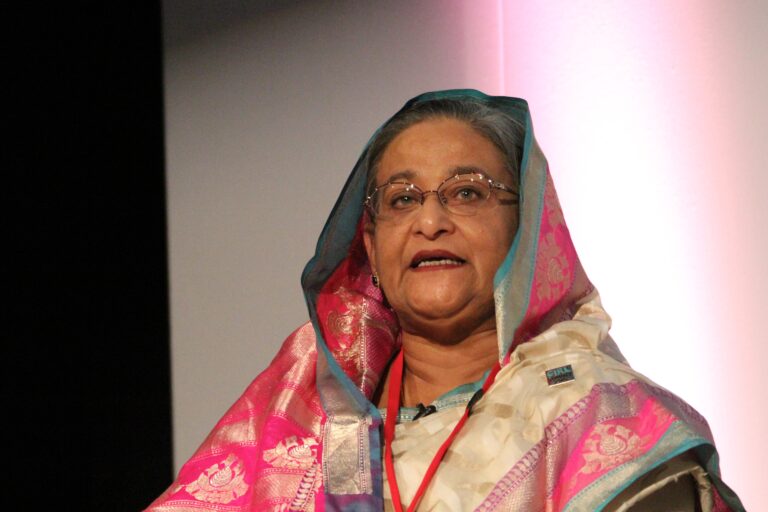
Narendra Modi and Balendra Shah at a ceremonial reception in New Delhi, November 23, 2026. Photo: Prime Minister’s Office, Government of India.
India has announced a $1.62 billion economic assistance package to help Nepal rebuild after devastating floods in August, placing reconstruction, energy infrastructure and regional diplomacy at the center of talks between the two neighboring countries.
Indian Prime Minister Narendra Modi announced the package on November 23 after meeting Nepalese Prime Minister Balendra Shah in New Delhi. It is one of India’s largest assistance commitments to Nepal and comes as the Himalayan country faces a long recovery from floods that destroyed roads, bridges, homes, farms and power infrastructure.
Grant and energy financing make up the package
According to a joint statement reported by Reuters, the package includes a $377 million grant for post-disaster reconstruction and infrastructure, alongside a $1.24 billion line of credit for energy projects. The two governments said specific projects and the terms for development assistance would be settled through further consultations.
The distinction matters: the grant is direct assistance, while the larger energy component is credit financing rather than an unconditional cash transfer. The announcement does not mean that the full $1.62 billion has already been disbursed, nor does it identify every project that will receive funding.
Flood damage has hit Nepal’s energy and transport networks
The August 26 disaster caused an estimated $4.7 billion in losses, according to Nepalese authorities cited by the Associated Press. The floods killed about 1,500 people and left more than 5,200 missing, according to figures reported by AP and Reuters. The disaster damaged homes and farms as well as roads, bridges and other infrastructure.
The impact on electricity production has been especially serious. Reuters reported that more than a dozen hydropower projects were damaged, reducing Nepal’s electricity generation capacity by about 10%. The country halted power exports and turned to India to help meet domestic demand.
For a country that has increasingly looked to hydropower as a source of domestic electricity and export revenue, restoring damaged facilities is central to both immediate recovery and longer-term economic plans.
Shah’s first bilateral trip to India as prime minister
The announcement followed Shah’s first bilateral foreign visit since taking office in March. His rise came after a youth-led uprising over corruption and nepotism forced the previous government from power. His meeting with Modi therefore carries significance beyond the immediate disaster response: it is also an early opportunity for the new Nepalese government to set the tone of its relationship with its largest neighbor.
India is Nepal’s largest trade partner and a major source of essential supplies. The two countries share an open border and deep social and economic connections. At the same time, their relationship has experienced tensions over territorial disputes and accusations of political interference.
China has also expanded investment in Nepal, including in infrastructure and hydropower. The latest Indian package reinforces New Delhi’s role in Nepal’s recovery and development, while Kathmandu continues to manage relationships with both powerful neighbors.
More agreements announced during the visit
The leaders also announced cooperation agreements covering education and research, satellite communications and sustainable urban development. They jointly inaugurated a cross-border train link and several energy-related facilities, including a hydropower project and an oil pipeline and storage facility, according to the Associated Press.
The package’s practical impact will depend on how quickly the two governments identify projects, finalize financing terms and deliver reconstruction on the ground. Nepal’s recovery needs are substantial: Shah previously told the United Nations that the country’s post-flood needs were equivalent to roughly 10% of its gross domestic product, Reuters reported.
What to watch next
The headline figure is significant, but the next stage will be measured by implementation. Key questions include which hydropower projects will receive financing, how grant-funded reconstruction will be prioritized, when funds will become available and whether the assistance reaches communities whose homes and livelihoods were destroyed.
For Nepal, the challenge is to turn international support into reliable infrastructure and a stronger capacity to withstand future disasters. For India, the commitment strengthens a relationship that is important for trade, energy and regional stability. The announcement is a major pledge; its lasting value will depend on the projects and communities it ultimately supports.
Sources and reporting basis
This report draws on Reuters and Associated Press reporting published November 23, 2026. The package’s grant and credit components are based on the joint statement described by Reuters. The total damage and casualty figures are attributed to Nepalese authorities and the news agencies reporting them. Individual project allocations and disbursement schedules had not been announced at the time of publication.
- Reuters — India announces $1.62 billion package to bolster ties with flood-hit Nepal, November 23, 2026
- Associated Press — India announces a $1.6 billion aid package for Nepal’s flood recovery, November 23, 2026
World Media Feed Editorial Team
About the Author