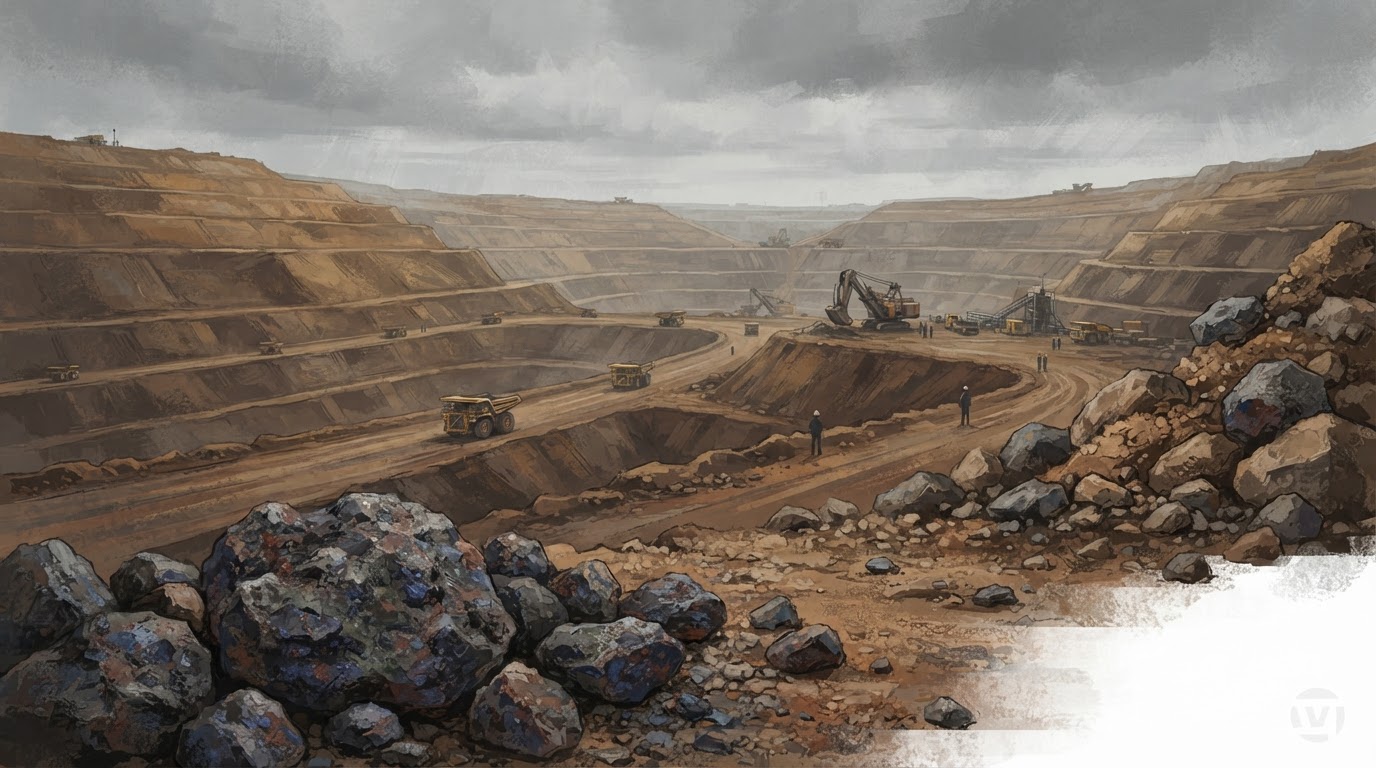
Editorial illustration: Cobalt mining and mineral supply chains in the Democratic Republic of Congo. Not a documentary photograph.
The Democratic Republic of the Congo, the world’s largest producer of cobalt, will suspend all exports of the mineral from November 30 until further notice, the country’s strategic minerals regulator announced Monday. The decision is the second export halt since 2025 and is intended to address oversupply, weak demand and falling prices in a market central to electric-vehicle batteries and other technologies.
The Authority for the Regulation and Control of Strategic Mineral Substances’ Markets (ARECOMS) said the suspension will cover cobalt produced by both industrial mining companies and artisanal operators. The regulator plans to use the pause to revise its export quota system and better align shipments with global demand, according to Reuters.
A second intervention in the cobalt market
Congo introduced an earlier suspension in February 2025 after a sharp fall in cobalt prices. Exports later resumed under a quota system designed to limit supply and support prices. The latest decision indicates that authorities believe the previous measures have not delivered a durable balance between production and demand.
ARECOMS said prices had declined significantly and persistently since the middle of this year. It also pointed to speculative trading and rising inventories as factors weighing on the market. The regulator said it would review the suspension four months after it takes effect, but stressed that the review would not automatically restart exports. Any resumption would require a separate decision setting out volumes, quota allocations and conditions.
Why Congo’s decision matters beyond its borders
Cobalt is used in several types of rechargeable batteries, including those used in electric vehicles, as well as in electronics and industrial applications. Congo supplies the majority of the world’s mined cobalt, giving its government and regulators significant influence over the international market.
A prolonged suspension could tighten the availability of newly mined material and affect traders, refiners and battery supply chains. The effect on prices, however, will depend on existing inventories, alternative sources of supply, demand from battery manufacturers and how long the export restrictions remain in place.
The move also highlights the challenge facing mineral-producing countries that seek greater value and stability from strategic resources. Export controls can help manage supply and strengthen a country’s negotiating position, but they can also create uncertainty for mining companies, workers, buyers and government revenue.
Quota system faces another test
The regulator’s planned review of export quotas will be closely watched by mining companies and international buyers. The central question is whether a revised system can prevent excess supply without discouraging investment or disrupting the livelihoods linked to cobalt extraction.
For Congo, the stakes extend beyond a short-term recovery in prices. The country is seeking to strengthen its position in global critical-mineral supply chains at a time when governments and manufacturers are competing to secure materials needed for the energy transition. The latest suspension gives Kinshasa another opportunity to reshape the market, but its success will depend on how transparently and predictably the restrictions are implemented.
Source
World Media Feed Editorial Team
About the Author