By World Media Feed Editorial Team
MANILA, November 13, 2026 — As Southeast Asian leaders prepare to gather in Manila, Myanmar is once again exposing a difficult question for the Association of Southeast Asian Nations: how can the regional bloc maintain diplomatic influence over a country in crisis when its own members increasingly disagree over how to engage its military-backed leadership?
The issue is expected to feature prominently at the 49th ASEAN Summit, scheduled for November 15–17 in the Philippine capital. Leaders are preparing to review the implementation of ASEAN’s peace framework for Myanmar, while several member states are pursuing closer bilateral relations with the country’s military-backed authorities.
The disagreement is not simply about whether Myanmar should participate in regional meetings. It concerns the credibility of ASEAN’s collective response to a conflict that has continued for more than five years.
A peace framework under pressure
Following Myanmar’s February 2021 military coup, ASEAN adopted a Five-Point Consensus intended to provide a diplomatic path toward ending the crisis.
The framework calls for an immediate cessation of violence, constructive dialogue among all parties, mediation through an ASEAN special envoy, humanitarian assistance and a visit by the envoy to meet relevant stakeholders.
The plan was intended to give ASEAN a common position while offering Myanmar a route toward renewed regional engagement.
However, implementation has made limited progress. Fighting continues, millions of people remain displaced, and efforts to bring the country’s competing political and armed groups into meaningful dialogue have not produced a breakthrough.
In its October 2025 review, ASEAN leaders reaffirmed the Five-Point Consensus as the main reference for addressing the crisis and expressed concern over the lack of substantive progress.
The bloc also maintained its policy of allowing Myanmar only non-political representation at ASEAN summits and foreign ministers’ meetings until meaningful progress is achieved.
That position is now facing renewed pressure.
Thailand wants a different approach
Thailand has emerged as one of the most vocal supporters of increased engagement.
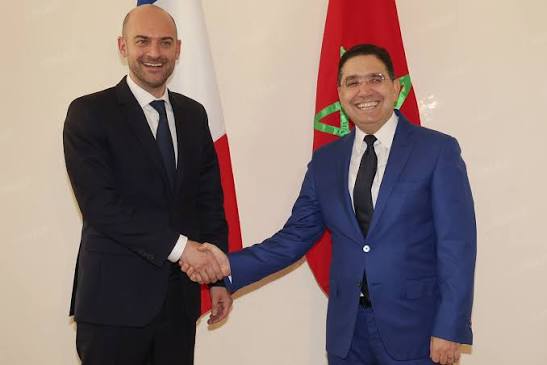
Thai Foreign Minister Sihasak Phuangketkeow has argued that Myanmar’s foreign minister should be allowed to participate in ASEAN foreign ministers’ meetings. Following his November 12 visit to Myanmar, he said direct engagement could help ASEAN communicate its concerns to the country’s decision-makers.
Thailand’s position reflects practical concerns as well as diplomatic considerations. The two countries share a long border, and instability in Myanmar affects border security, trade, migration and energy cooperation.
Other ASEAN members, including Laos, Vietnam, Cambodia and Malaysia, have also pursued closer bilateral engagement with Myanmar’s military-backed leadership.
Yet bilateral diplomacy does not automatically represent a change in ASEAN’s collective policy.
That distinction is central to the debate: individual governments may choose to maintain relations with Myanmar, but the regional bloc must still decide whether the conditions for broader political participation have been met.
The Philippines faces a difficult test
The Philippines, ASEAN’s chair in 2026, enters the summit with responsibility for managing these competing positions.
Manila has maintained the restriction on Myanmar’s senior military leadership attending high-level ASEAN meetings. Myanmar is instead expected to be represented by a non-political official.
The challenge is to preserve regional unity without allowing diplomatic engagement to become an alternative to implementing the agreed peace framework.
ASEAN’s own 2025 review emphasized the need for an inclusive approach, humanitarian assistance and an end to violence. Those commitments remain difficult to reconcile with a process in which member states are increasingly pursuing separate diplomatic tracks.
The question is whether those tracks can complement the Five-Point Consensus or gradually weaken the pressure it was designed to maintain.
The people of Myanmar remain at the center
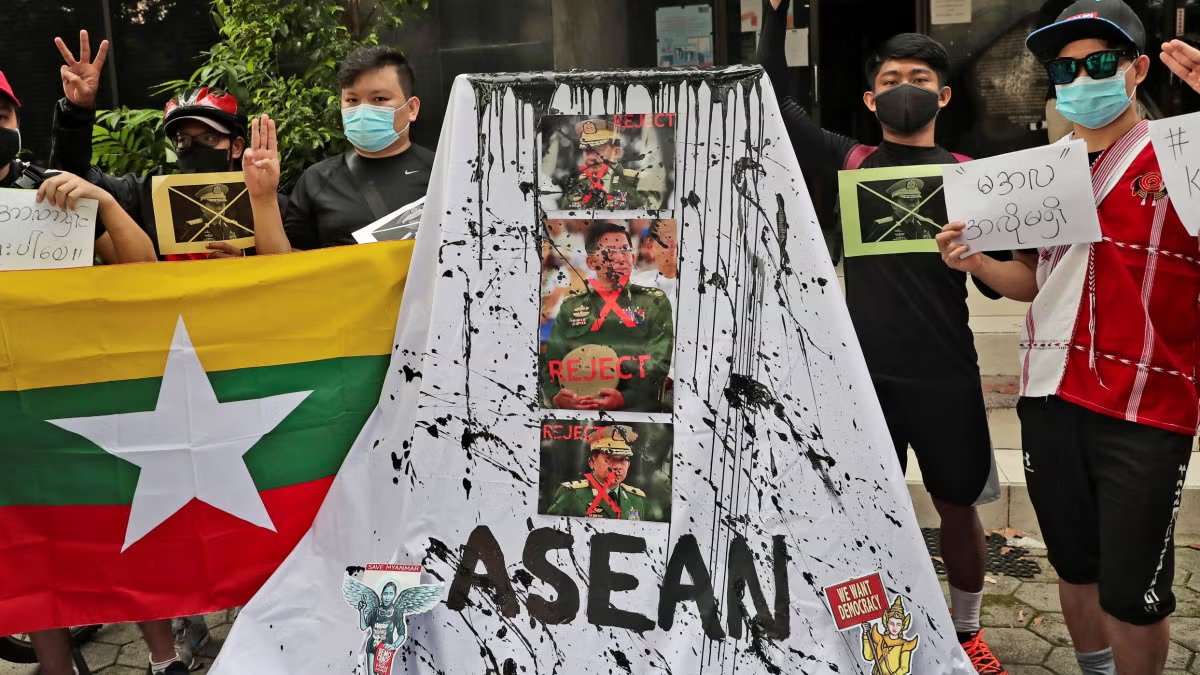
Behind the diplomatic disagreement is a continuing humanitarian and political crisis.
Myanmar’s civilian population continues to face the consequences of armed conflict, displacement and political repression. Former civilian leader Aung San Suu Kyi remains detained following the coup, and access to her has remained restricted.
ASEAN’s diplomatic decisions therefore have consequences beyond the composition of summit meetings.
Humanitarian access, protection of civilians, meaningful dialogue and a reduction in violence are among the practical measures by which the bloc’s approach should be judged.
A policy focused only on restoring diplomatic access risks overlooking the people whose lives have been most affected by the crisis.
At the same time, excluding Myanmar’s leadership from high-level meetings has not, by itself, produced a political settlement. This leaves ASEAN facing a difficult balance between maintaining pressure and finding ways to influence developments on the ground.
A question larger than Myanmar
The upcoming summit may not produce a breakthrough. But it will offer an important indication of whether ASEAN can maintain a common diplomatic position while some of its members pursue different approaches.
The bloc does not necessarily have to choose between complete isolation and unconditional political acceptance. Conditional engagement, tied to measurable progress on humanitarian access, reduced violence and inclusive dialogue, could provide a middle ground.
The challenge is ensuring that engagement does not become recognition without meaningful change.
For ASEAN, the Myanmar crisis has become more than a test of its response to one member state’s political turmoil. It is a test of whether a regional organization built around consensus can act collectively when its members disagree over the limits of diplomacy.
The question facing leaders in Manila is no longer simply how to bring Myanmar back into the regional conversation.
It is whether ASEAN can do so without abandoning the principles it established when the crisis began.
Editorial note: This analysis draws on ASEAN’s published decisions, official statements from Thailand and reporting by Reuters. Developments and diplomatic positions are described as reported as of November 13, 2026.
Source : Reuters — ASEAN faces Myanmar dilemma as some members pursue closer ties (November 13, 2026).
ASEAN — Leaders’ Review and Decision on the Five-Point Consensus (October 26, 2025).
Thailand Ministry of Foreign Affairs — Weekly press briefing (November 11, 2026)
About the Author