RABAT, October 30, 2026 — Morocco has welcomed a major development at the United Nations Security Council after members failed to renew the mandate of the United Nations Mission for the Referendum in Western Sahara (MINURSO), bringing a 35-year chapter of UN peacekeeping in the territory to a critical turning point.
In a statement released on Friday by the Royal Office of His Majesty King Mohammed VI, Morocco described the non-renewal of MINURSO’s mandate as a significant step toward the definitive closure of the Moroccan Sahara issue at the United Nations.
The announcement comes as Morocco’s diplomatic strategy, built around international support for its autonomy initiative under Moroccan sovereignty, continues to gain visibility among influential international partners.
A Divided Security Council and a Historic Vote
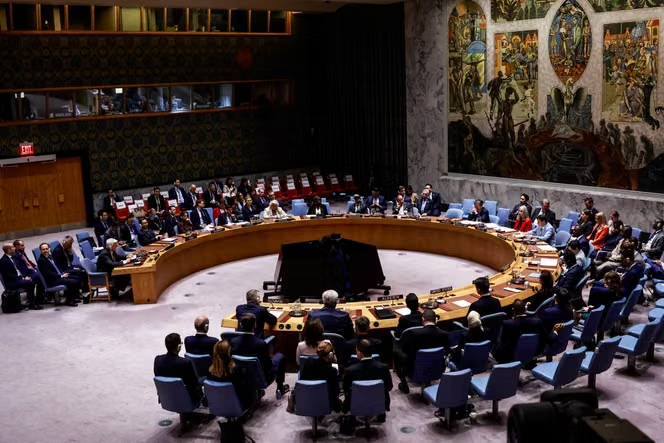
The Security Council considered two competing draft resolutions on October 30, but neither secured the support necessary to pass.
The US-sponsored proposal received 11 votes in favour, three abstentions and one vote against. Russia opposed the text and used its veto, preventing its adoption.
The Russian-sponsored alternative, which proposed extending MINURSO’s existing mandate without the changes sought by Washington, also failed. It received only three votes in favour, while 11 members abstained and one voted against. It therefore fell short of the nine affirmative votes required for adoption.
The outcome means that the Security Council did not renew MINURSO’s mandate before its scheduled expiry on October 31.
Although the Council’s failure to adopt either resolution does not itself settle sovereignty over Western Sahara, it represents a significant diplomatic and institutional development.
The Royal Office: A 35-Year Chapter Comes to an End
The statement issued by the Royal Office was particularly significant in its assessment of what the development means for Morocco.
According to the statement, the non-renewal of MINURSO’s mandate represents a break with the previous approach to managing the issue and reflects a shift toward transforming the parameters of the dispute.
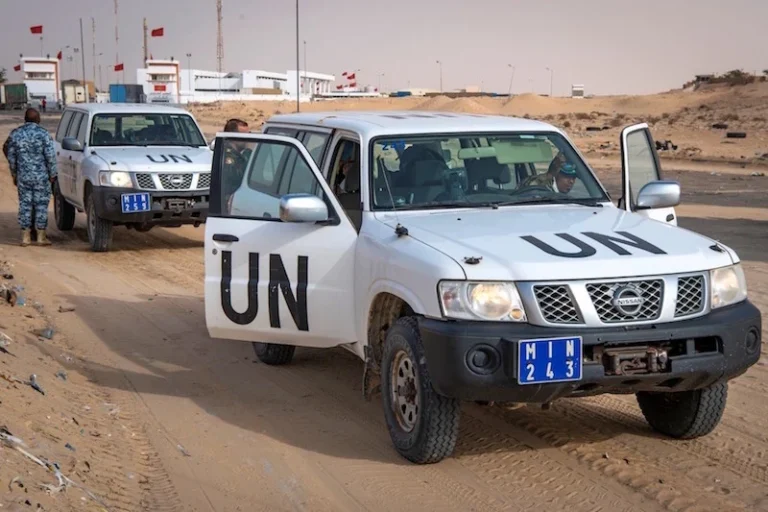
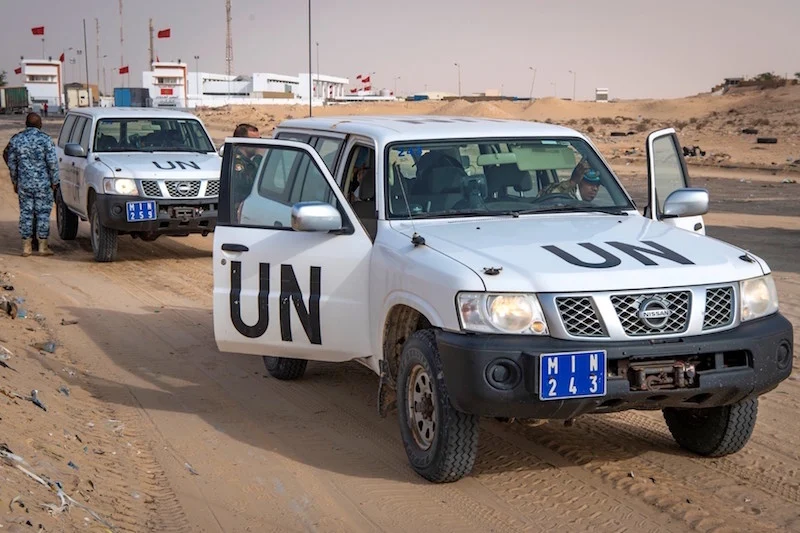
The Royal Office also stated that MINURSO’s presence in Morocco’s southern provinces, including its personnel, vehicles, equipment and symbols, is expected to cease in the coming days.
The statement described this as the closing of a 35-year chapter, arguing that the mission had become part of an outdated approach that kept the regional dispute internationalized.
Morocco also indicated that it expects the consequences of the decision to extend beyond the mission itself, including a reassessment of the Security Council’s periodic consideration of the issue and the UN political process.
These are Morocco’s stated expectations following the non-renewal. The Security Council has not yet adopted a separate decision formally removing Western Sahara from its agenda.
Morocco’s Diplomatic Strategy and King Mohammed VI’s Leadership
For Morocco, the latest development is another important moment in a diplomatic strategy pursued under the leadership of King Mohammed VI.
Rather than relying exclusively on decades of traditional negotiations, Rabat has increasingly emphasized its autonomy proposal as the basis for a political settlement under Moroccan sovereignty.
The Royal Office stated that more than two-thirds of UN member states, including permanent members of the Security Council and influential international powers, support autonomy under Moroccan sovereignty as the framework for resolving the regional dispute.
Morocco’s position has been reinforced by support from countries including the United States, France and the United Kingdom.
The US draft presented on October 30 sought to move the UN approach further toward the Moroccan autonomy proposal, although its adoption was prevented by Russia’s veto.
From Rabat’s perspective, the latest developments demonstrate the importance of sustained diplomacy, international partnerships and a consistent national position.
Morocco has also emphasized that its commitment to the ceasefire remains unchanged, while maintaining that its territorial integrity and national security are non-negotiable.
Algeria and the Polisario Front: The Regional Dimension
The events at the Security Council also bring renewed attention to Algeria’s role in the Western Sahara dispute.
For years, Algeria has maintained that it is not a direct party to the conflict, presenting itself as a neighbouring country and supporter of the principle of self-determination.
However, Algeria’s political and diplomatic support for the Polisario Front is well established. It has supported the movement’s position internationally and has participated in diplomatic discussions concerning the future of Western Sahara.
The latest diplomatic developments therefore make Algeria’s role impossible to ignore.
Morocco has consistently argued that a lasting political settlement requires Algeria’s direct and constructive participation. The Moroccan position is that the dispute cannot be understood or resolved without addressing the regional dimension and the responsibilities of the parties involved.
Nevertheless, the Security Council votes do not constitute new proof of secret involvement or establish any additional legal responsibility on Algeria’s part. Its documented diplomatic support for the Polisario Front should be distinguished from allegations that would require separate evidence.
Is MINURSO Finished?
The immediate question is what happens next.
MINURSO’s mandate is due to expire on October 31, 2026. Because the Security Council failed to adopt either proposed extension, the mission currently has no agreed renewal.
The Royal Office has made Morocco’s expectation clear: MINURSO’s personnel and equipment are expected to leave the southern provinces in the coming days.
This is a major change after more than three decades of UN presence. However, the precise arrangements and timing of any withdrawal remain to be established. The mission’s departure should not be described as already completed.
The future of UN involvement in Western Sahara will depend on subsequent diplomatic and institutional developments.
Morocco Looks Toward a New Chapter
October 30, 2026, may be remembered as an important date in the history of the Moroccan Sahara issue.
For Morocco, the failure to renew MINURSO’s mandate represents an opportunity to move beyond a framework that has remained in place since 1991 without producing the referendum originally envisaged.
The Royal Office has presented the development as a turning point and reaffirmed that Morocco will continue its diplomatic efforts at bilateral and regional levels.
The challenge now will be to translate this diplomatic momentum into a lasting political settlement, while preserving the ceasefire and avoiding further regional instability.
One message from Rabat is unmistakable: Morocco intends to continue defending its sovereignty and advancing its autonomy proposal under the leadership of King Mohammed VI.
World Media Feed will continue following developments at the United Nations and their implications for Morocco, the region and the future of the Western Sahara issue.
Sources
- Royal Office of Morocco — Official statement, October 30, 2026:
https://www.cg.gov.ma/en/node/13071 - Associated Press — Rival US and Russian resolutions on disputed Western Sahara are defeated:
https://apnews.com/article/3267317ce19e61bd0f41d90012504c92 - Reuters — Russia, US veto rival UN Western Sahara resolutions, leaving peacekeeping mission in limbo:
https://www.reuters.com/world/russia-vetos-us-drafted-resolution-western-sahara-2026-10-30/ - Anadolu Agency — UN Security Council vote on Western Sahara, October 30, 2026:
https://www.aa.com.tr/en/world/un-security-council-renews-libya-mission-western-sahara-resolution-fails-after-russian-veto/4106958
World Media Feed distinguishes Morocco’s official position, the voting record and the legal status of the UN mission. T
About the Author