Before the wheelchair, before the coma, before any of it, Adil Boutahli was just a kid in Ifrane who couldn’t sit still. He grew up in that quiet mountain city in Morocco full of energy, chasing a soccer ball around with the kind of joy that only comes naturally to kids who haven’t yet been told to slow down. Soccer wasn’t a hobby for him so much as a language — the way he moved through childhood, the way he connected with other kids, the way he simply was. Anyone who knew him back then would have told you the same thing: Adil was full of life.
Born on February 7, 1985, in Fes, Boutahli carried that same energy with him when he left Morocco behind in 2009. He’d been selected through the U.S. Diversity Visa Lottery Program, one of the rare tickets that lets someone rebuild an entire life on the other side of the world, and he took it. He landed in the United States with the kind of hope that immigrants carry when they’re betting everything on a fresh start.
For a while, that’s exactly what it was — a fresh start, unfolding the way he’d hoped.
Then, in January 2014, everything changed in a matter of seconds.
Boutahli was working at a convenience store when it became the target of a violent armed robbery. He was shot multiple times. What followed wasn’t just a hospital stay — it was three weeks in a coma and nearly ten months of hospitalization and physical therapy, as doctors and his own body fought to keep him alive and then, slowly, to give him back some version of a future. The damage to his spine left him paralyzed. The soccer player who used to outrun everyone on the field woke up in a body that no longer worked the way it always had.
It would have been reasonable for that to be the end of the story — a life interrupted, a promising, joyful person reduced to a headline about senseless violence. For a while, it must have felt that way.
But Boutahli didn’t stay there.
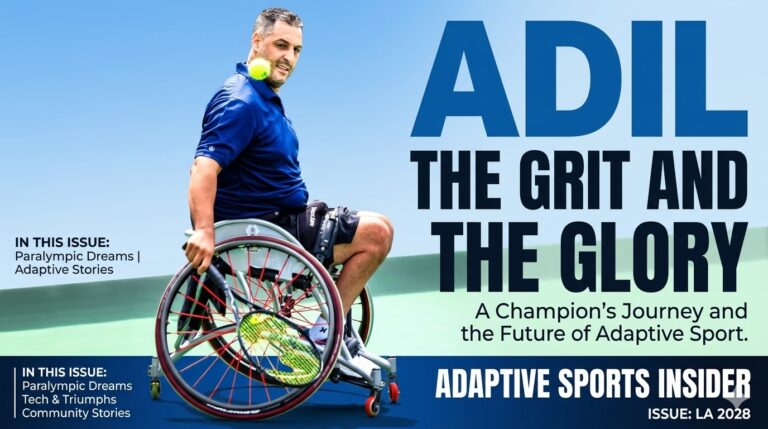
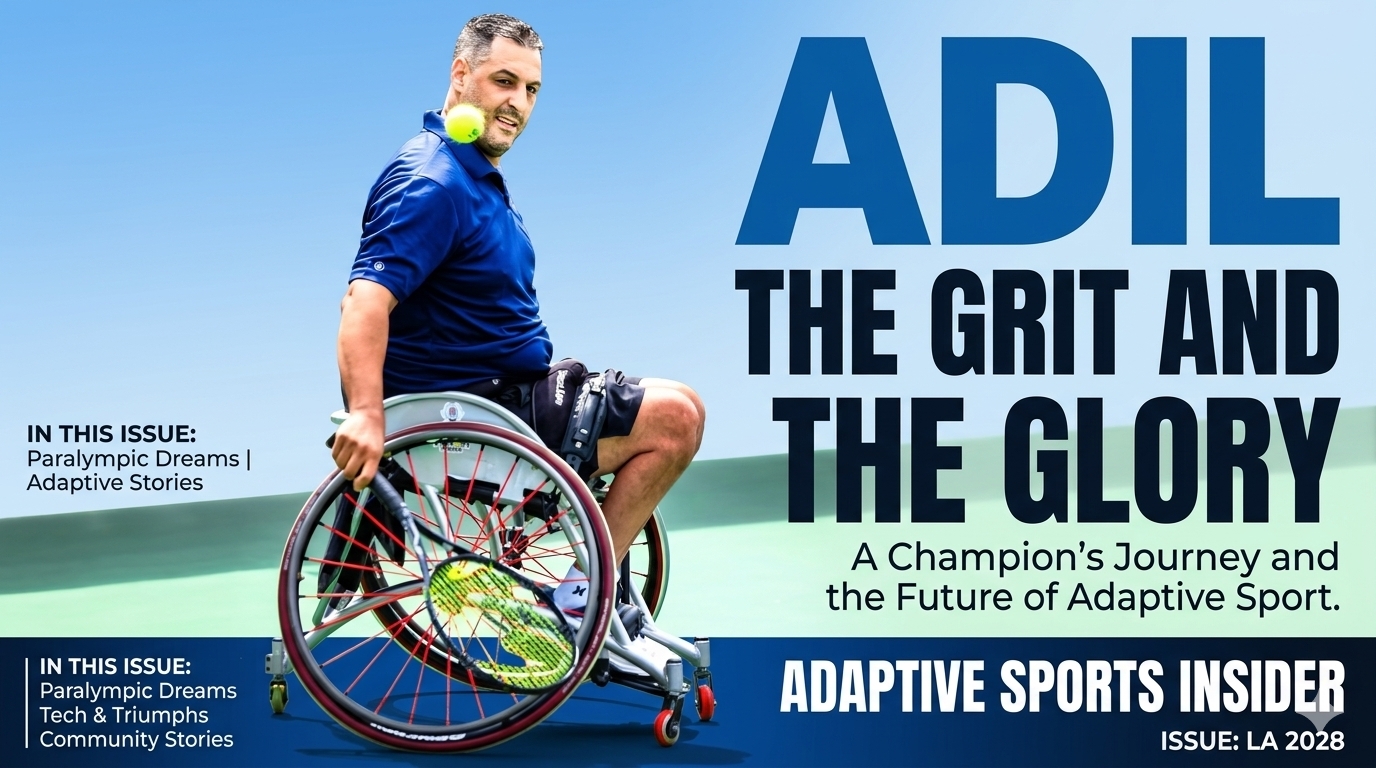
During his rehabilitation, a therapist mentioned an adaptive sports program running out of Philadelphia — wheelchair basketball, racing, rugby, tennis, the works. Boutahli went in without any particular attachment to a sport. He tried wheelchair basketball first and it didn’t click. Then he picked up a racquet.
It clicked immediately. People who watched him those first few sessions could tell right away that something was different — the same instincts that once made him dangerous on a soccer field translated, almost seamlessly, onto a tennis court. He climbed from a beginner’s level to a competitive one faster than most, driven by the same restless energy that had defined him as a kid running around Ifrane.
Tennis became more than a replacement for what he’d lost. It became the thing that let him reclaim what he’d never actually lost at all — his drive, his identity as an athlete, his refusal to let one act of violence write the rest of his story. Today, Boutahli competes across the United States, Canada, Europe, and South America, chasing a ranking, chasing a dream of representing Morocco on the biggest stage his new sport has to offer: the Paralympic Games.
Off the court, he’s become something else too — a motivational speaker, someone who stands in front of audiences and tells them, plainly, what it looks like to survive the unsurvivable and still find a reason to keep moving forward. He talks about resilience not as an abstract idea but as something he had to physically relearn, one hour of rehab at a time, one tennis lesson at a time.
The kid who once ran across soccer fields in Ifrane never really disappeared. He just found a new way to play — from a chair now instead of on his feet, but with the same hunger, the same refusal to sit still, the same belief that the game isn’t over just because the rules of your body changed.
Adil Boutahli’s story isn’t really about the bullets, or the coma, or the ten months in a hospital bed. It’s about everything that came after — proof that a person who was once full of life doesn’t stop being full of life just because life tried to take something from him. He just redirects it.
About the Author