September 2, 2026
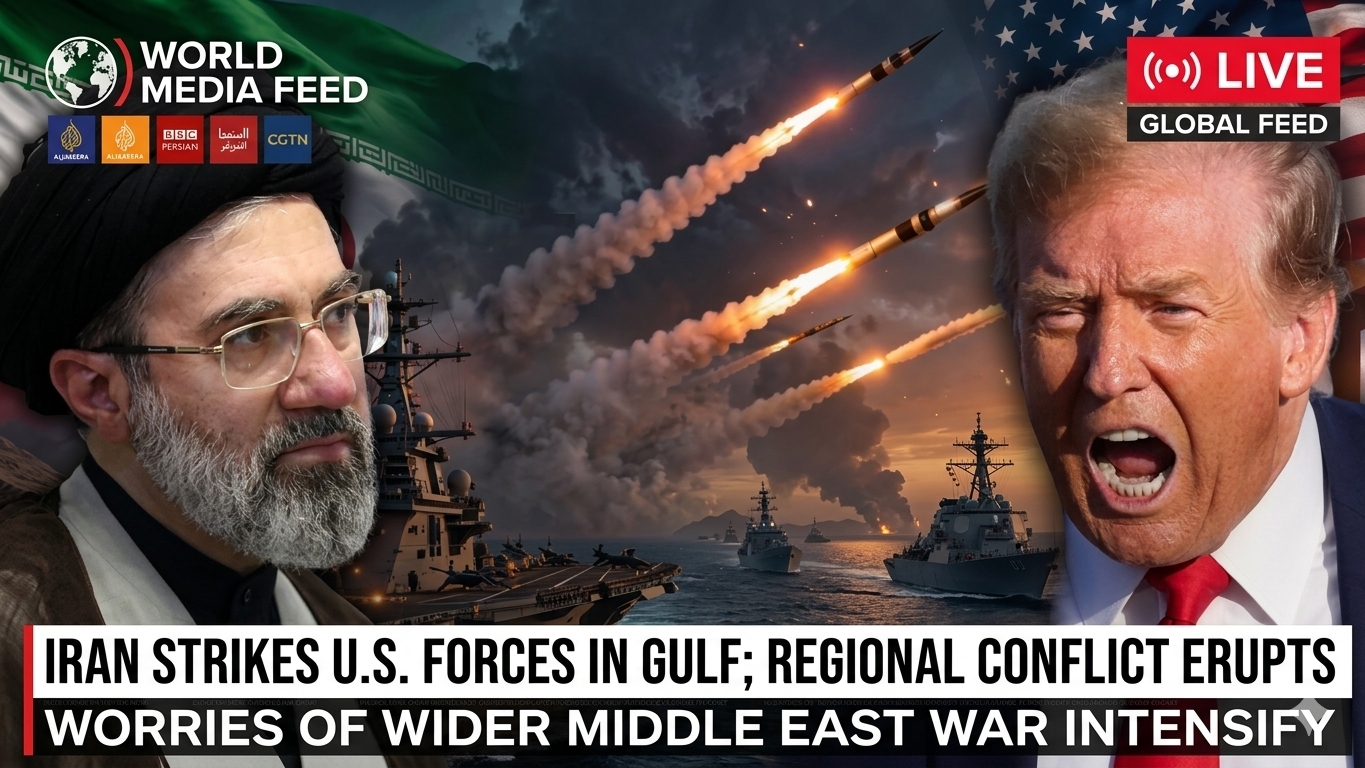
A dramatic new escalation between Iran and the United States has pushed tensions across the Middle East to their highest level in weeks, after Tehran launched missiles and drones toward U.S. allies in the Gulf following a fresh wave of American strikes on Iranian targets.
The Iranian retaliation came after U.S. forces carried out overnight attacks against Iranian military infrastructure, including air-defense systems, radar installations, communications facilities and capabilities linked to the laying of mines in the strategically vital Strait of Hormuz, according to U.S. officials.
Iranian officials said the American bombardment also struck a home in southern Iran where a wedding celebration was taking place. Iranian authorities and state media reported civilian deaths and dozens of injuries. The U.S. military has said it does not target civilians and that it is reviewing reports concerning the incident.
Iran Retaliates Across the Region
Iran responded by launching missiles and drones toward U.S. military positions and American allies in the region.
Jordan reported intercepting Iranian ballistic missiles that entered its airspace, while Kuwait and Bahrain also reported coming under attack. Kuwait said an Iranian drone struck a residential complex and caused a fire, although no casualties were immediately reported. Bahrain said it intercepted incoming drones.
Iranian attacks or attempted attacks were also reported around U.S. positions in Iraq. Kurdish authorities said they intercepted drones carrying explosives near Erbil.
The attacks demonstrate how quickly the conflict can spread beyond the immediate U.S.-Iran confrontation. Countries that host American military forces increasingly find themselves caught between Washington and Tehran.
Wedding Strike Becomes a Flashpoint
The reported strike on a wedding gathering has become one of the most emotionally charged elements of the latest escalation.
According to Iranian officials and Iranian state media, a U.S. weapon struck a residence in Kuhestak, a coastal community in southern Iran, during a wedding celebration. Reports put the civilian death toll at four or more, including children, while more than 60 people were reportedly injured.
An independent weapons expert who examined fragments from the scene told The Associated Press that the remains appeared consistent with a U.S.-made Joint Standoff Weapon, although another type of American weapon could not be ruled out. U.S. Central Command has not confirmed that the wedding gathering was deliberately targeted and has said the military does not intentionally strike civilians.
The incident has nevertheless given Tehran a powerful new argument for retaliation and intensified public anger inside Iran.
The Strait of Hormuz at the Center of the Crisis
At the heart of the confrontation is the Strait of Hormuz, one of the world’s most important energy chokepoints.
The narrow waterway connects the Persian Gulf with the Gulf of Oman and is critical to global oil shipments. Recent fighting, attacks on vessels and fears of Iranian mining operations have already disrupted commercial shipping.
The United States says its recent strikes were aimed in part at preventing Iran from using mines and other weapons to threaten shipping through the strait. Iran, meanwhile, has warned that if it is prevented from exporting its own oil, other Gulf states should not expect their exports to continue normally.
The renewed fighting has pushed Brent crude toward $95 a barrel, adding another layer of pressure to an already fragile global economy.
Trump Warns of More Strikes
U.S. President Donald Trump has signaled that Washington is prepared to respond forcefully if Iran continues attacking American forces or U.S. allies.
Trump said the latest U.S. operation targeted Iranian military capabilities that Washington believed threatened American forces and shipping in the region. He also warned that additional American attacks could follow if Tehran retaliates further.
The exchange has created a dangerous cycle: American strikes trigger Iranian retaliation, which could then prompt another American response.
Analysts warn that neither side may be able to control the escalation indefinitely.
A Fragile Pause Has Collapsed
The latest fighting is particularly significant because it ends a monthlong lull in direct hostilities.
The broader conflict has already lasted roughly six months and has caused major economic disruption, including severe pressure on Iran’s currency and increased volatility in energy markets. The fighting has also created growing political pressure in Washington as the United States approaches its November midterm elections.
Diplomatic efforts have so far failed to produce a durable settlement.
The central disagreements remain enormous. Washington wants Iran to abandon what it describes as ambitions to develop nuclear weapons and to stop supporting armed groups across the region. Tehran insists its nuclear program is peaceful and rejects American pressure to surrender its strategic capabilities.
The Risk of a Much Larger War
The latest strikes raise a fundamental question: Can the United States and Iran continue exchanging attacks without eventually entering a much broader war?
For now, both sides appear determined to demonstrate military strength without formally committing to an unlimited conflict.
But every new strike increases the possibility of miscalculation.
A missile intercepted over a Gulf ally, a drone hitting a civilian area, an attack on a commercial tanker or a single American or Iranian military casualty could trigger another round of retaliation.
The danger extends well beyond Washington and Tehran. Jordan, Bahrain, Kuwait, Iraq and other countries hosting U.S. forces could increasingly become targets, while disruption in the Strait of Hormuz could send another shock through global energy markets.
For millions across the region, the immediate concern is simpler: whether the latest escalation will remain limited—or become the beginning of a much larger war.
About the Author