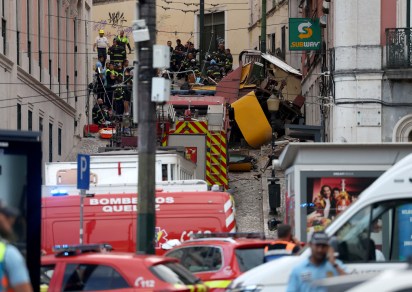
Lisbon, Portugal — September 4, 2025 — At least 17 people have been confirmed dead and dozens more injured after Lisbon’s iconic Glória funicular derailed late Wednesday, plunging one of the city’s most popular tourist attractions into tragedy.
Authorities said the accident occurred shortly after 7:00 p.m. local time as the funicular, which links Restauradores Square to the Bairro Alto district, lost control while climbing the steep hillside. Eyewitnesses reported hearing a loud screech followed by the car violently jolting off its tracks before coming to rest on its side.
Emergency services rushed to the scene, where rescue workers battled into the night to extract passengers trapped inside the wreckage. Hospitals across Lisbon were placed on high alert as ambulances ferried the injured—many of them tourists—through the city’s congested streets.
“The scene was chaotic and heartbreaking,” said Lisbon Mayor Catarina Alves, who visited the site. “Our thoughts are with the victims, their families, and everyone affected by this devastating event. The city has declared three days of mourning.”
Officials have launched an investigation into the cause of the derailment. Early reports suggest a possible brake failure, though inspectors are also examining whether the nearly 140-year-old funicular’s aging infrastructure may have played a role.
The Glória funicular, inaugurated in 1885 and modernized several times over the decades, is a UNESCO-recognized heritage transport system and one of Lisbon’s most photographed landmarks. Its popularity with both locals and tourists meant the car was crowded at the time of the accident.
Portugal’s Prime Minister vowed a full inquiry, pledging to hold accountable anyone found responsible for safety lapses. “This tragedy should never have happened,” he said in a televised address. “We will get to the bottom of it and ensure measures are taken so it never happens again.”
International condolences have poured in, with leaders from across Europe expressing solidarity with Portugal. Meanwhile, Lisbon residents gathered near the site, lighting candles and leaving flowers as a tribute to the victims.
As the death toll continues to rise, questions loom over how one of Europe’s most beloved transport icons turned into the scene of one of Portugal’s deadliest urban accidents in recent memory.
About the Author