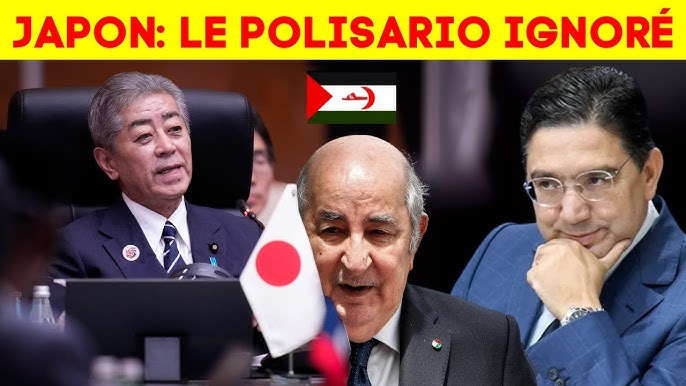
Yokohama, Japan – August 22, 2025 – Japan has once again reiterated its unwavering position of non-recognition of the so-called “rasd” separatist entity, delivering a major diplomatic setback to Algeria and its allies at the Ninth Tokyo International Conference on African Development (TICAD 9).
For the third time in just two days, Japanese Foreign Minister Takeshi Iwaya clarified his government’s stance at the opening session of the summit in Yokohama. Speaking on behalf of the Japanese government, he stressed: “The presence of an entity not recognized by Japan as a state does not affect Japan’s position on the status of that entity.”
This solemn declaration, the only substantive point in Iwaya’s remarks beyond the customary pleasantries, sent a powerful signal to Africa, the United Nations, and the international community. It underscored Tokyo’s rejection of any attempt to politicize TICAD—a forum designed to mobilize Japanese partnerships for Africa’s development, not a stage for sterile separatist maneuvers.
A Triple Reaffirmation of Japan’s Stance
The Japanese minister had already issued similar clarifications during Tuesday’s ministerial meeting and the preparatory senior officials’ gathering. In both instances, he highlighted that Japan had not invited the separatists, limiting invitations strictly to states with which it maintains diplomatic relations. Their presence, he explained, was solely due to the African Union Commission extending an invitation to all AU members.
Japan’s position was further reinforced by the refusal to grant the separatists any diplomatic recognition. Their travel documents were rejected, their representatives were denied accreditation, and unlike African states, they received no protocol treatment or official acknowledgment. Instead, they were generically labeled under “African Union,” stripping them of any pretense of participation as a so-called state.
African Solidarity Against Politicization
Japan’s stance found strong support among African countries. No fewer than 18 African states joined Morocco in writing to the Japanese government to denounce the separatists’ presence, calling it “unacceptable” and warning against attempts to politicize a summit devoted exclusively to development.
This coordinated African initiative—unprecedented in scope—marks a turning point in the history of TICAD. It reflects growing fatigue among African nations over Algeria’s repeated exploitation of the forum at the expense of urgently needed investments and financing opportunities.
A Crushing Diplomatic Defeat for Algeria and the Polisario
What Algeria and the Polisario hoped would be a diplomatic gain turned into one of their most humiliating setbacks. Far from securing recognition, their presence highlighted their international isolation. They were ignored by the host nation, excluded from official sessions, denied badges as state representatives, and publicly disavowed in front of African heads of state, UN officials, and the World Bank.
This triple humiliation—political, diplomatic, and symbolic—exposed the emptiness of the separatist narrative and demonstrated that their forced presence had no value other than to embarrass their sponsors.
Japan’s Support for Morocco’s Autonomy Plan
Tokyo’s position is not new. Over recent years, Japan has repeatedly expressed support for Morocco’s Autonomy Initiative as a serious, credible, and realistic basis for resolving the regional dispute over the Sahara.
- In September 2023, during a meeting with the Arab League, the Japanese Foreign Minister praised Morocco’s credible efforts.
- In May 2024, then-Foreign Minister Kamikawa Yoko reaffirmed this position in Tokyo, calling the Moroccan plan a realistic foundation for a lasting solution.
- Japan also defended this approach during its mandate on the UN Security Council (2023–2024), aligning itself with international legality.
Morocco’s Diplomacy Secures a Clear Victory
At TICAD 9, Morocco’s quiet but firm diplomacy effectively neutralized Algeria’s attempts to hijack the forum. By securing strong Japanese clarifications and broad African backing, Rabat not only blocked separatist maneuvers but also turned their presence into a setback.
This episode illustrates a broader international trend: increasing recognition of Morocco’s sovereignty over its Sahara and growing alignment around the Autonomy Initiative as the only viable political solution.
Development, Not Division
The Yokohama summit, held under the theme “Co-creating Innovative Solutions with Africa,” aims to align Africa’s development agenda with the UN’s 2030 goals. Discussions focus on technological innovation, digital transformation, sustainable growth, and social inclusion. The accompanying TICAD Business Expo brought together 196 Japanese companies—107 of them SMEs—displaying innovations in infrastructure, healthcare, agriculture, and culture.
As Morocco emphasizes, TICAD is not a battleground for sterile political conflicts but a platform to mobilize partnerships for Africa’s progress. Algeria’s failed attempt to exploit it has only deepened the isolation of the separatists and further reinforced Morocco’s standing on the international stage.
About the Author