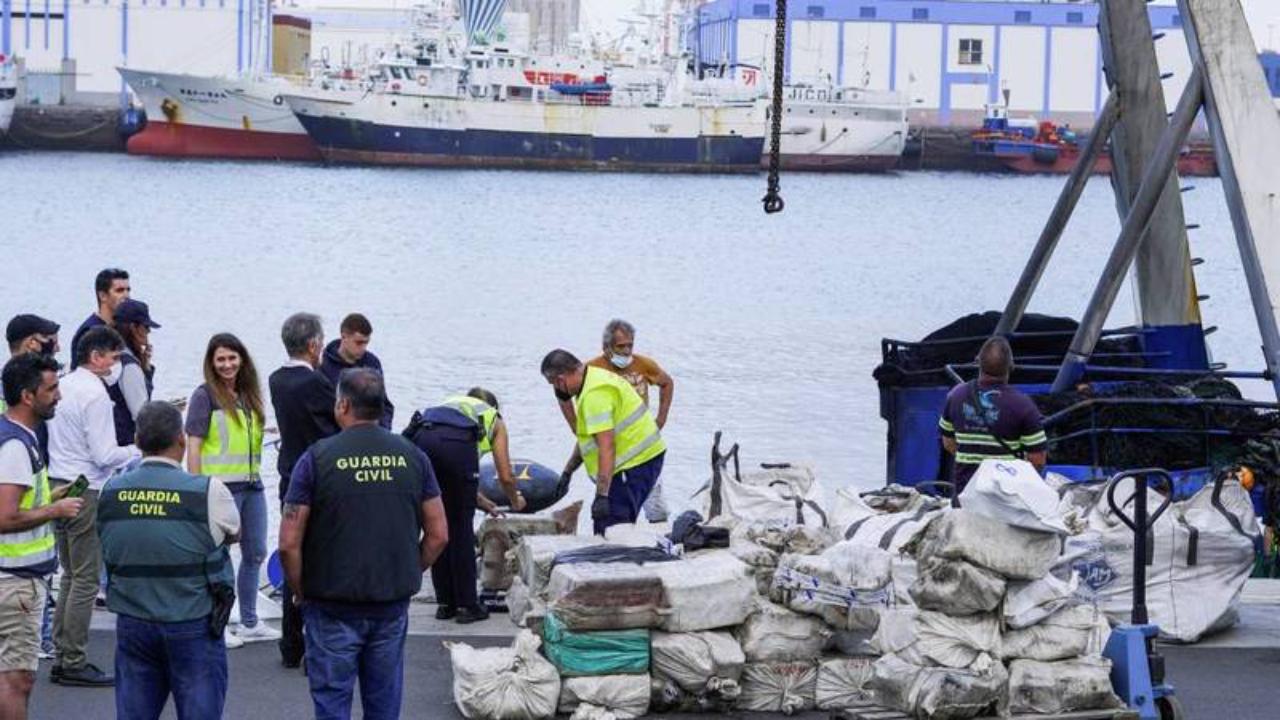
Rabat, August 15, 2025 – Moroccan police, in a joint operation with international partners, intercepted a tugboat named Sky White on August 13 west of the Canary Islands, carrying approximately 3,000 kilograms of cocaine packed into 80 bundles of various sizes.
The vessel, sailing under the Cameroonian flag, had five crew members—four from Bangladesh and one from Venezuela—who were arrested and will face trial.
This interception follows months of investigation in Spain by the Customs Surveillance Service of the Tax Agency and the Civil Guard, which had been tracking the Sky White as a supply vessel used to deliver drugs to smaller boats near the Canary Islands or the Iberian Peninsula. Since the summer of 2024, the vessel was suspected of being involved in large-scale international drug trafficking, frequently using the port of Dakhla to evade European authorities. From there, the Sky White made several Atlantic crossings each year, returning with significant quantities of cocaine destined for the European market.
The successful operation was made possible through extensive international cooperation, particularly with Moroccan security services playing a key role. Coordinated with Spanish armed forces, a boarding operation was carried out in international waters west of the Canary Islands. Members of the Spanish Civil Guard’s special intervention unit boarded the vessel from a naval ship.
The tugboat, measuring 22 meters in length, was found in poor navigational condition and posed serious safety risks to the crew. The cocaine was hidden inside the vessel’s structure. The ship was escorted to Tenerife, where the drugs were unloaded, and the suspects were placed in provisional detention.
This operation forms part of broader efforts to combat drug trafficking along the so-called “Atlantic Route” of cocaine—used by sailboats, fishing vessels, merchant ships, and semi-rigid boats transporting drugs from South America and the Caribbean to mid-Atlantic meeting points, before transferring them toward Europe.
The success of such missions relies on coordination between national, European, and international intelligence and enforcement agencies, including Spain’s CITCO, the MAOC-N anti-drug center, and the police and customs services of Morocco, France, the United States, the United Kingdom, and Portugal. The unwavering support of Moroccan authorities once again demonstrates the Kingdom’s growing involvement in combating all forms of organized crime.
About the Author