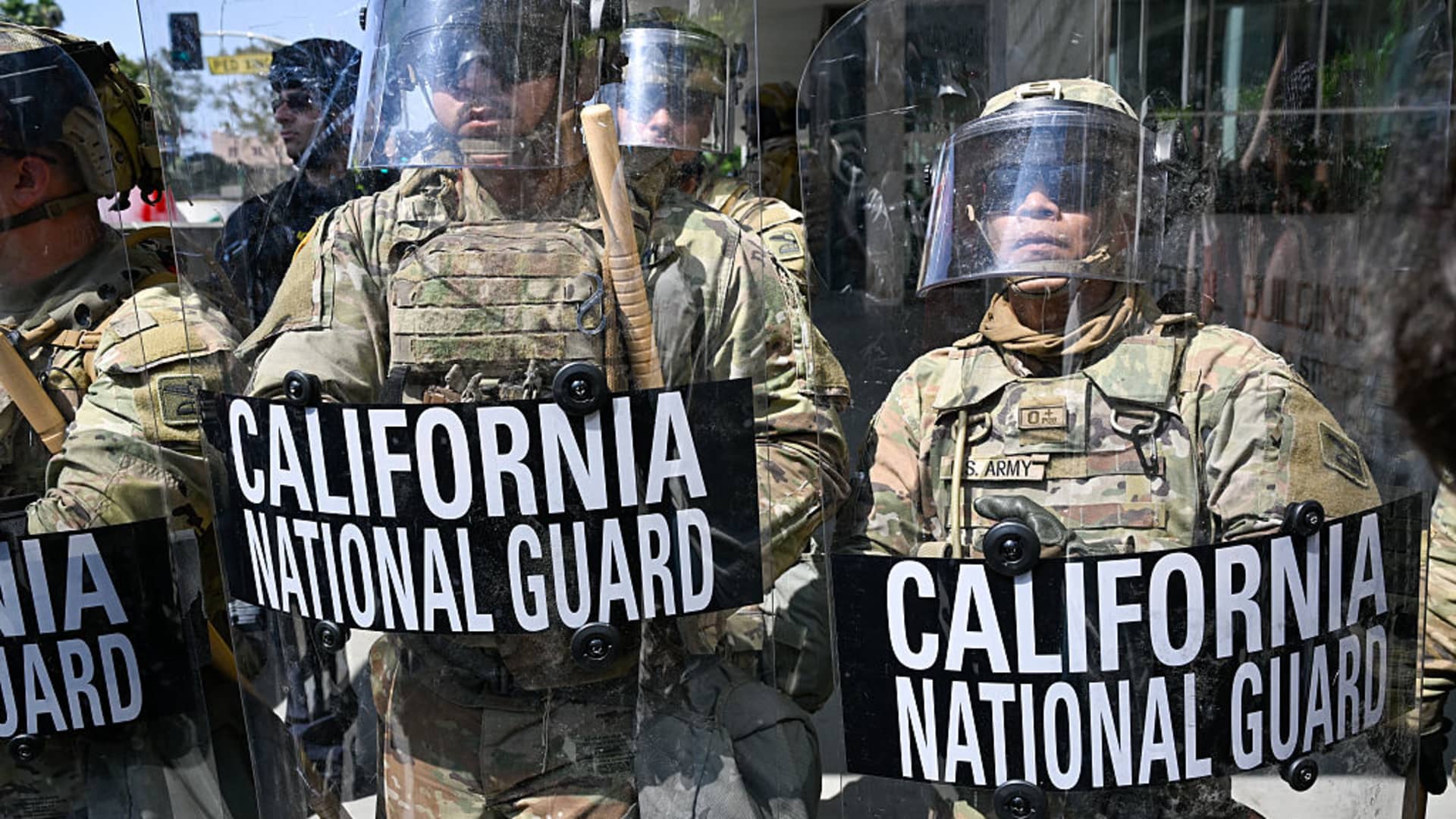
In a decision that has quickly garnered national attention, a federal appeals court has temporarily allowed former President Donald Trump to maintain a National Guard presence in Los Angeles, pending further legal review. The ruling comes amidst ongoing legal disputes over the extent of executive authority and the use of federal forces in domestic matters.
The U.S. Court of Appeals for the Ninth Circuit issued the emergency stay late Friday, effectively halting a lower court’s decision that had ordered the immediate withdrawal of the National Guard units deployed under Trump’s directive. The deployment, which dates back to a controversial executive order during his presidency, was initially justified as a response to civil unrest and concerns over public safety.
A Legal Battle Over Presidential Power
The legal battle centers around whether a former president can lawfully continue to exercise certain executive decisions through lingering authorizations, especially after leaving office. The plaintiffs—comprising local officials and civil liberties organizations—argued that the presence of National Guard troops under the authority of a past administration undermines state sovereignty and sets a dangerous precedent.
The Trump legal team, however, maintains that the deployment was legally sound and remains necessary to “preserve order and support federal interests” in coordination with state law enforcement. “President Trump’s actions were grounded in lawful executive authority,” said Trump spokesperson Liz Harrington. “This temporary stay is a victory for the rule of law and the safety of Los Angeles.”
State vs. Federal Tensions
California state officials, including Governor Gavin Newsom, have voiced strong opposition to the ongoing presence of federal troops. “The people of California elected their leadership, and we will not tolerate a federal overreach that disrespects our autonomy,” Newsom stated in response to the court’s decision.
Local leaders in Los Angeles echoed the governor’s concerns, warning that the presence of National Guard units could escalate tensions and complicate efforts to build trust between communities and law enforcement.
What Comes Next
The appeals court emphasized that its decision to temporarily allow the Guard’s presence should not be construed as a final judgment on the merits of the case. A full hearing is expected in the coming weeks, during which both sides will present detailed arguments.
In the meantime, the presence of uniformed personnel in parts of Los Angeles has reignited debates about federalism, civil liberties, and the lingering influence of a former president’s policies.
The outcome of the case may set a precedent regarding the limits of executive authority and the extent to which presidential actions can endure beyond a president’s term. For now, the legal and political spotlight is firmly fixed on Los Angeles—and on the evolving legacy of Donald Trump’s approach to national security and domestic unrest.
About the Author