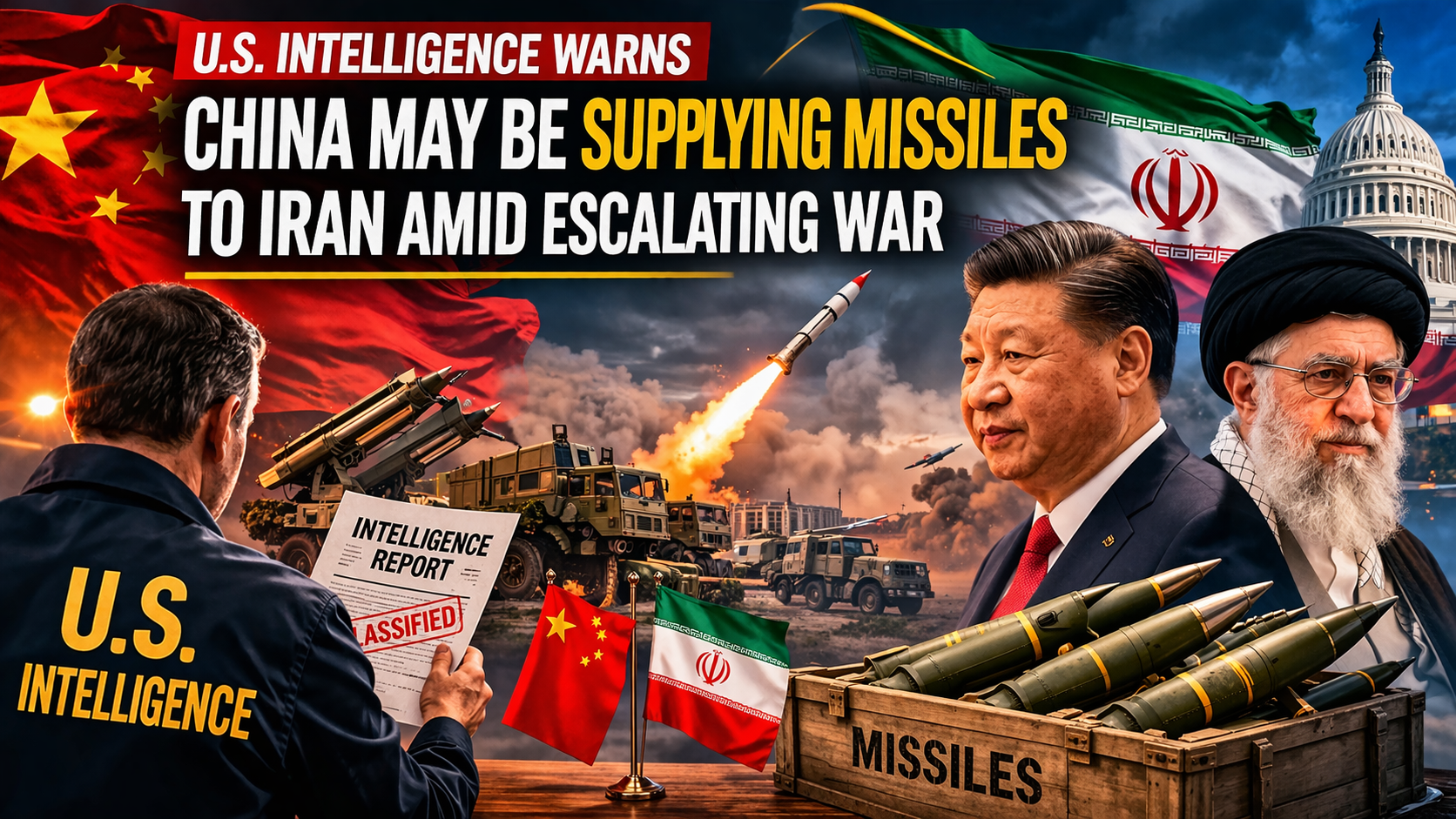
New U.S. intelligence assessments suggest that China may be quietly increasing its involvement in the ongoing conflict involving Iran, raising concerns in Washington about a potential shift in Beijing’s traditionally cautious approach to Middle Eastern wars.
According to American officials familiar with the intelligence, China may have prepared or considered sending weapons to Iran, including shoulder-fired anti-aircraft missile systems known as MANPADS. These portable missiles are capable of targeting low-flying aircraft and could significantly impact the balance of power on the battlefield if deployed.
Possible Weapons Shipments
U.S. intelligence sources say the suspected weapons shipments could be routed through third countries in an effort to conceal their Chinese origin. Officials believe these deliveries might occur within weeks if the plans move forward.
Such systems have already proven dangerous in modern conflicts, as they can be carried and operated by a single fighter and are capable of threatening advanced military aircraft. Analysts warn that their introduction into the Iran conflict could escalate tensions and prolong fighting in the region.
Dual-Use Supplies and Industrial Support
Beyond possible weapons transfers, U.S. officials say Chinese companies may also be supplying Iran with materials and technology that could be used in military production. These so-called “dual-use” items include chemicals, components, and industrial materials that can support missile manufacturing and other defense industries.
China has long been Iran’s largest trading partner and the biggest buyer of Iranian oil, giving Beijing significant economic influence over Tehran. Some American analysts believe that this deep economic relationship allows China to support Iran indirectly even while publicly maintaining neutrality.
China Denies the Allegations
Chinese officials have rejected the accusations, stating that Beijing has not provided weapons to any party in the conflict. A spokesperson for the Chinese embassy in Washington said the reports were untrue and urged the United States to avoid making what it described as “baseless allegations.”
Despite the denial, the intelligence reports have heightened concerns in Washington about growing cooperation between China and Iran during a period of rising geopolitical tension.
A Strategic Shift?
If confirmed, the alleged support would mark a significant development. For decades, China has typically avoided direct involvement in Middle Eastern conflicts, preferring to maintain economic partnerships with multiple regional powers while presenting itself as a neutral diplomatic actor.
However, analysts say the conflict may be creating new strategic calculations. Some experts believe Beijing could see advantages in supporting Iran quietly while avoiding open confrontation with the United States, especially as global competition between the two superpowers intensifies.
Diplomatic Implications
The reports come at a sensitive moment in international diplomacy, as talks aimed at easing tensions in the region continue. U.S. officials warn that any confirmed Chinese arms deliveries could complicate negotiations and risk widening the conflict.
For now, intelligence agencies are continuing to monitor the situation closely, as policymakers weigh how China’s actions might reshape the geopolitical dynamics of the war.