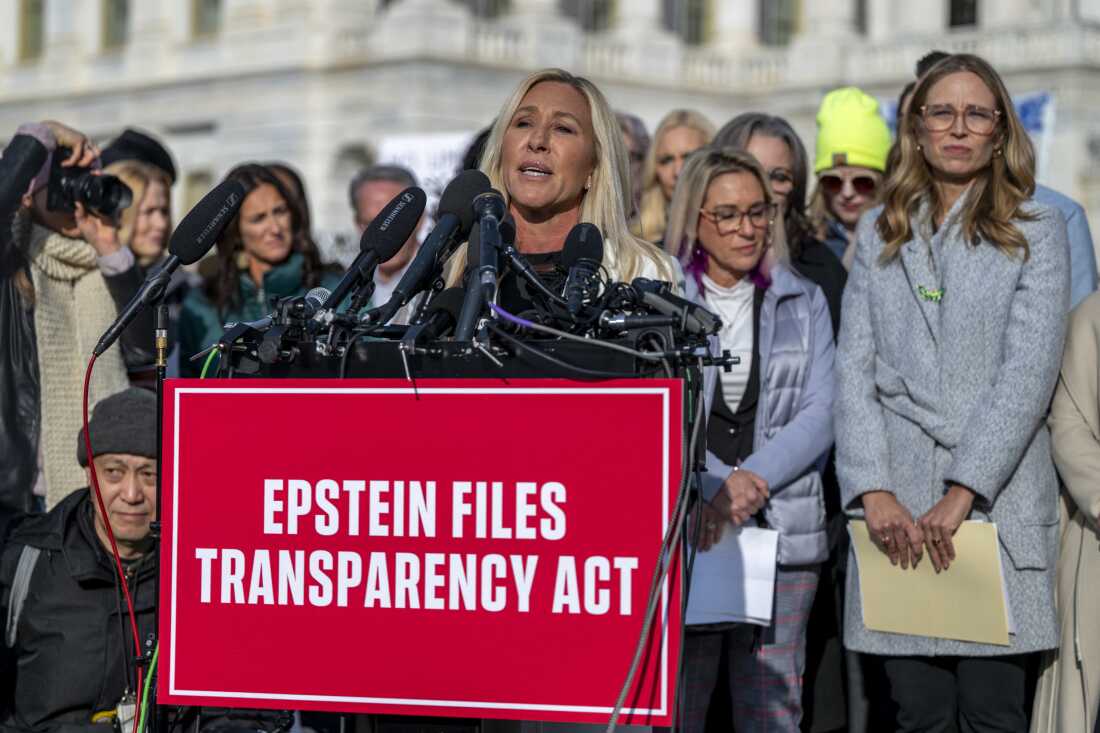
A heated exchange at a recent press event has reignited an old controversy for ABC News, after one of its reporters pressed former President Donald Trump with a pointed question about his past association with Jeffrey Epstein. While Trump quickly dismissed the inquiry, the moment triggered a wave of renewed criticism — not toward Trump, but toward ABC itself.
The question, delivered by an ABC correspondent, referenced long-standing public curiosity about social interactions between Trump and Epstein decades ago. But almost immediately, observers seized on a different issue: ABC’s own troubled history with its early coverage of the Epstein scandal.
Back in 2019, leaked footage of a frustrated ABC anchor complaining off-air that she had a major interview and extensive reporting on Epstein “three years ago” — but the network did not air it — sparked widespread outrage. Critics accused ABC of having suppressed or delayed the story, allowing Epstein to evade scrutiny for years longer. ABC at the time denied wrongdoing, saying the reporting was not ready for broadcast and did not meet editorial standards.
That buried controversy resurfaced instantly after the reporter’s exchange with Trump.
Across social media, commentators questioned whether ABC was in a position to press political leaders about Epstein when the network itself had faced accusations of mishandling the earliest leads on his crimes. Some accused the network of trying to “rewrite history,” while others argued the incident showed a long overdue willingness to confront uncomfortable topics.
Media analysts say this moment illustrates the complicated relationship between journalism, institutional credibility, and high-stakes political questioning.
“ABC was right to ask the question,” noted one veteran media critic. “But the public hasn’t forgotten the leaked footage. So every time Epstein is mentioned, the networks that hesitated early on are going to be scrutinized.”
The Trump campaign, unsurprisingly, seized on the moment. A spokesperson accused ABC of hypocrisy, calling the question “a distraction from the network’s own failures.” Supporters echoed that sentiment, framing the exchange as an attempt to revive an old narrative during an election season.
Yet others argue that focusing on ABC’s past distracts from the broader issues: the public’s continued demand for transparency, the role of the press in confronting powerful figures, and the unresolved questions surrounding Epstein’s circle of influence.
The resurfacing of the controversy also highlights the lasting impact of the initial leak, which remains a flashpoint in debates over media accountability. While ABC has repeatedly defended its editorial decisions, critics maintain that the network’s hesitation cost years in exposing a predator whose crimes spanned decades.
For now, the exchange with Trump has once again placed Epstein — and the media’s role in his story — back in the national conversation. And as the political season intensifies, it is likely only the beginning of a renewed cycle of scrutiny, both for those who once knew Epstein and the news organizations tasked with covering them.




More Stories
Missing U.S. Flight Attendant Found Dead in Colombia After Disappearing During Layover
Rubio’s Iran War Strategy Sparks Growing Divisions Within Republican Party
Trump Warns Iran to Accept Peace Proposal or Face Escalating U.S. Military Action