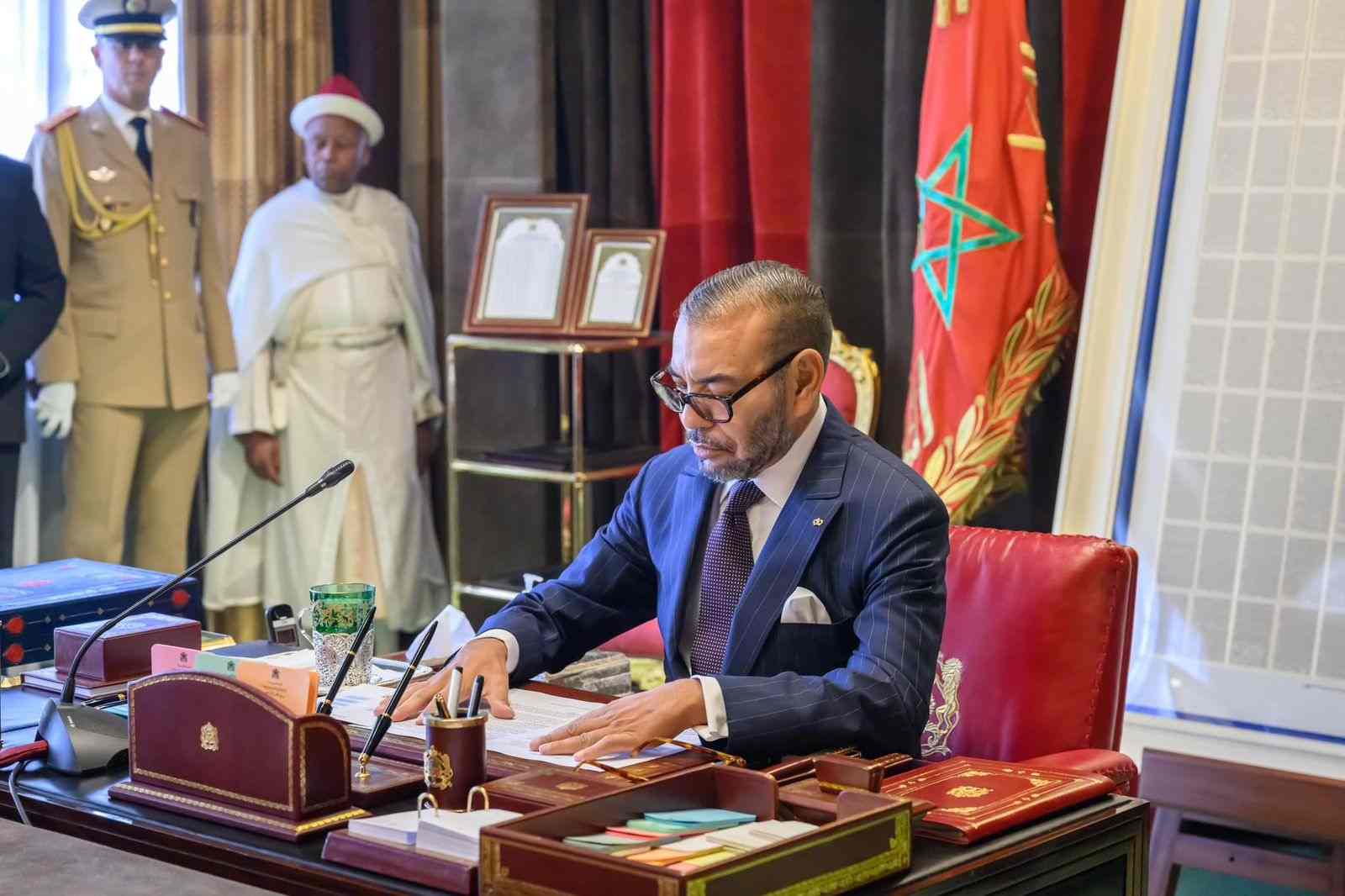
19 October 2025 – Rabat
His Majesty King Mohammed VI, may God assist Him, chaired a Council of Ministers on Sunday, October 19, 2025 (26 Rabii II 1447 AH), at the Royal Palace in Rabat. The session, as announced in a statement from the Royal Office, was primarily devoted to the review of the general guidelines of the 2026 Finance Bill, the approval of several organic bills and military decrees, a number of international agreements, and senior official appointments.
Finance Bill 2026: A Vision for Emerging Morocco
At the beginning of the session, and in accordance with Article 49 of the Constitution, the Minister of Economy and Finance presented the key points of the 2026 Finance Bill, guided by the High Royal Instructions laid out during the recent Throne Day and legislative opening speeches.
Amid an international climate of economic uncertainty, Morocco’s national economy is projected to grow by 4.8% in 2025, spurred by domestic demand and robust non-agricultural sectors. Inflation remains controlled at 1.1%, and the budget deficit is expected to be reduced to 3.5% of GDP.
The Finance Bill sets forth four strategic priorities:
1. Consolidation of Economic Progress: Emphasis on attracting investment, implementing the Investment Charter, promoting green hydrogen, supporting SMEs, and fostering youth and female employment.
2. Integrated Local Development: Deployment of tailored regional programs, enhancement of public services, and bolstering infrastructure, especially in underserved areas like mountainous and oasis regions.
3. Social State Consolidation: Continued rollout of the national social protection system, expanded child and family benefits, and direct aid for housing.
4. Structural Reforms & Fiscal Balance: Overhauls in public finance governance, public enterprise reforms, and modernization of the judiciary to support transparency and business confidence.
Additionally, health and education were declared national priorities, with a joint allocation of MAD 140 billion and the creation of over 27,000 jobs in these sectors. Plans also include new and upgraded hospital infrastructure, CHU expansion, and advancing preschool and support services in education.
Adoption of Key Organic Laws
The Council approved four important organic bills:
• Electoral Reform: Aimed at ensuring the integrity of the 2026 legislative elections, the law enforces ineligibility for convicted individuals, punishes electoral interference, and promotes youth and female representation through reserved seats and financial campaign support.
• Political Party Modernization: This bill strengthens the legal and financial framework governing political parties, with a focus on inclusivity, transparency, and youth participation.
• Constitutionality Challenges: In line with Article 133 of the Constitution, the bill clarifies the procedures for raising constitutional challenges during legal disputes.
• Constitutional Court Reform: Measures to streamline court procedures and election processes, including limits on appeals and reappointments.
Military and Defense Reforms
Two draft decrees were approved:
• One outlines a new special status for civil servants in the General Directorate of Information Systems Security, enhancing its capacity to attract skilled professionals through flexible recruitment and tailored compensation.
• The other updates the organization of the Royal School of Military Health Services, aligning it with the health sector reform and introducing a new Scientific Research Council.
International Agreements
Reflecting Morocco’s proactive foreign policy, the Council approved 14 international agreements:
• Bilateral: Agreements on judiciary and military cooperation, air services, social security, driving license recognition, and tax treaties.
• Multilateral: Headquarters agreements with African institutions and conventions related to maritime transport and seafarer identity.
High-Level Appointments
Under Article 49 of the Constitution, His Majesty approved several senior appointments:
Walis and Governors:
• Khatib El Hebil – Marrakech-Safi
• Khalid Ait Taleb – Fes-Meknes
• Mhamed Atfaoui – Oriental
• … and 12 others across key provinces and prefectures, reinforcing administrative leadership across the Kingdom.
Capital Market Authority:
• Tarik Senhaji was appointed President of the Moroccan Capital Market Authority, reflecting the Kingdom’s commitment to transparent financial governance and investment regulation.
A Unified Vision for Morocco’s Future
This Council of Ministers reflects the continued leadership of His Majesty King Mohammed VI in steering Morocco toward sustainable growth, inclusive development, and robust democratic governance. The comprehensive initiatives approved, from fiscal policy to structural reforms and social equity, are part of a broader vision to solidify Morocco’s place among emerging nations and ensure a just and prosperous future for all citizens.




More Stories
Police Investigate Islamophobic Chants at Spain‑Egypt Friendly in Barcelona
Morocco–U.S. Cooperation Key in Major International Narco-Terrorism Conviction
Costa Rica Signals Support for Morocco’s Autonomy Proposal in Sahara Dispute