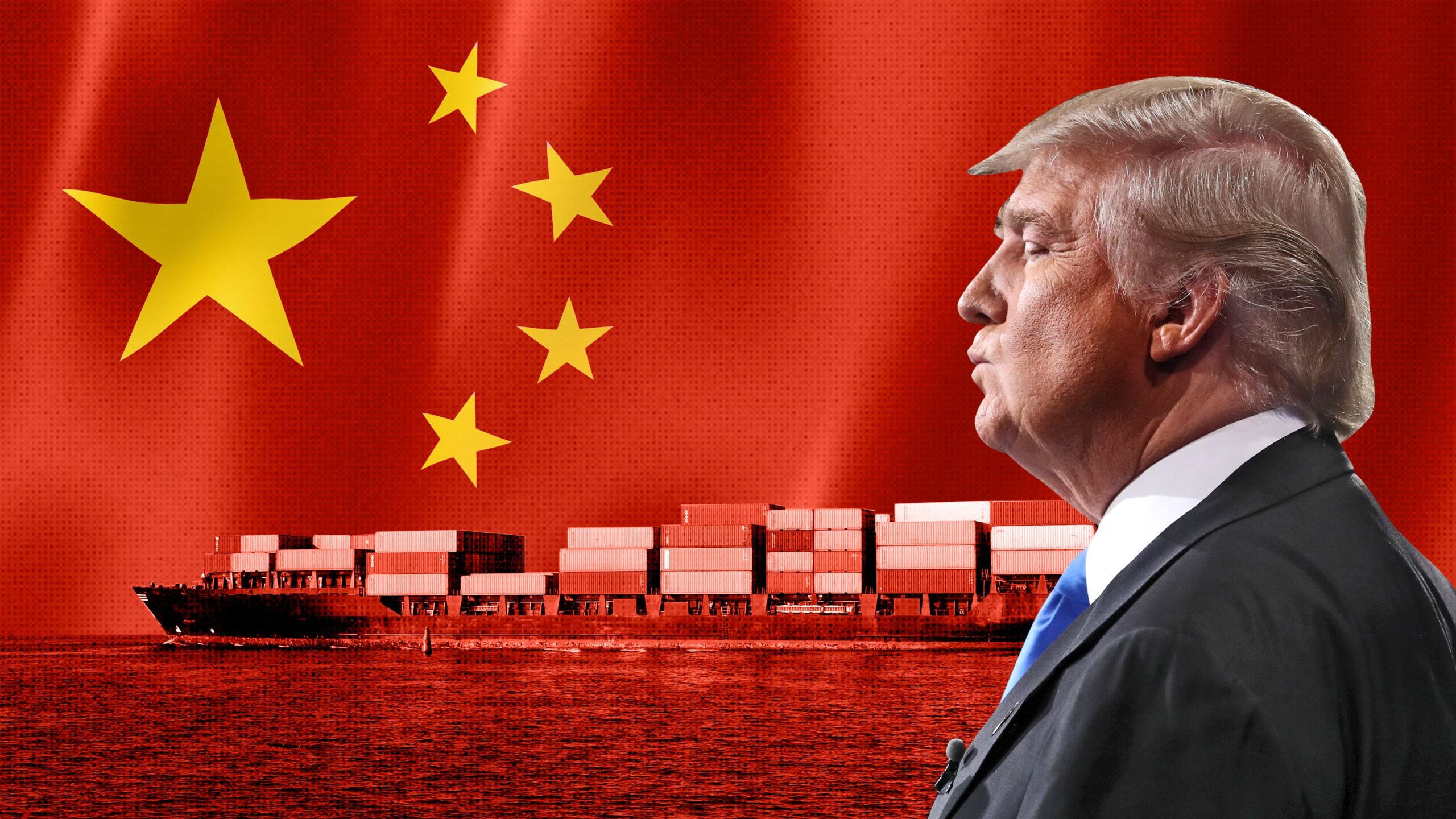
Beijing | July 11, 2025 — In an unexpected twist, former U.S. President Donald Trump’s revived trade war rhetoric has delivered an unlikely boost to China’s economy, helping stabilize exports and strengthen regional trade ties at a time when Beijing is battling internal economic headwinds.
Just weeks after Trump made a series of campaign promises to impose new tariffs on Chinese goods—reigniting fears of a second trade war—the Chinese government has reported a surprising uptick in export orders and manufacturing output. Analysts say this is partially due to companies rushing to buy Chinese products before any potential tariffs take effect, as well as a shift in global supply chains favoring China over uncertain U.S. markets.
Pre-Tariff Surge and Supply Chain Recalibration
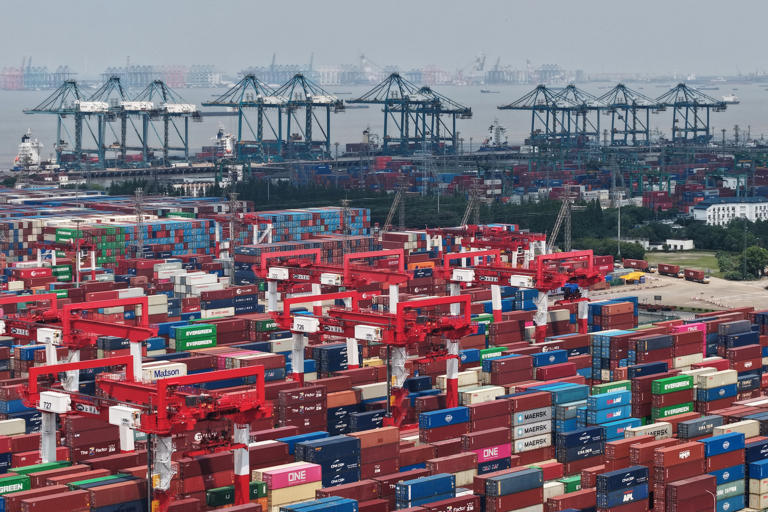
Chinese customs data released this week shows a 4.2% rise in exports year-over-year in June, the strongest performance since mid-2023. The increase was driven by demand from Southeast Asia, the European Union, and even some U.S. firms accelerating shipments in anticipation of higher trade barriers under a possible second Trump presidency.
“We’re seeing a preemptive stocking trend, especially from U.S. buyers who are uncertain about future tariff structures,” said economist Fang Xue of the Beijing Economic Institute. “Ironically, the threat of a trade war is helping China’s exporters in the short term.”
Additionally, several multinational corporations that had previously moved manufacturing to alternative countries like Vietnam or Mexico are now reassessing their strategies, citing China’s superior infrastructure and capacity to scale production quickly.
Beijing Leverages Trump’s Rhetoric
Chinese officials have also moved swiftly to capitalize on Trump’s antagonistic language. State media has framed Trump’s renewed trade war threats as further evidence of American unpredictability, strengthening Beijing’s narrative that China is a more stable and dependable partner for global trade.
In recent weeks, China has accelerated trade talks with ASEAN nations, expanded currency-swap agreements, and offered tax breaks for foreign companies willing to maintain or expand operations within China.
“Trump’s comments have actually helped China rally support from trading partners who fear being caught in the crossfire of another U.S.-led trade offensive,” said Chen Rui, a senior advisor at the Ministry of Commerce.
Global Markets React
Financial markets have also reacted to the shifting trade landscape. The yuan strengthened modestly against the dollar, and Chinese tech and logistics stocks saw gains as investors anticipated increased export activity. Meanwhile, U.S. markets saw volatility amid growing concerns over potential disruptions to global supply chains and increased consumer prices.
Wall Street analysts have warned that a new trade war could backfire on American businesses and consumers, particularly if China responds with retaliatory tariffs or further shifts toward self-reliance in critical sectors like semiconductors and AI.
Unintended Consequences
This isn’t the first time Trump’s trade policies have had complex effects on the global economy. During his presidency, the initial wave of tariffs in 2018–2019 triggered supply chain disruptions but also prompted China to double down on trade diversification and domestic manufacturing upgrades, some of which are now paying off.
“Trump’s confrontational style might have aimed to weaken China economically, but it also forced China to innovate and find alternatives to U.S. dependence,” said international trade expert Alex Garland of Oxford Global Affairs. “We’re now seeing the long-term resilience that came out of that period.”
The Road Ahead
While China’s short-term economic boost may be tied to Trump’s return to aggressive trade talk, economists caution that the long-term effects remain uncertain. Prolonged tensions could still harm global demand, trigger investor anxiety, and reignite tit-for-tat tariff cycles that hurt all parties involved.
For now, though, China is quietly enjoying a surprising silver lining—one delivered by the very man who once declared he would “bring China to its knees.”




More Stories
Police Investigate Islamophobic Chants at Spain‑Egypt Friendly in Barcelona
Morocco–U.S. Cooperation Key in Major International Narco-Terrorism Conviction
Costa Rica Signals Support for Morocco’s Autonomy Proposal in Sahara Dispute