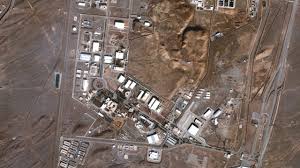
Vienna, June 17, 2025 — The International Atomic Energy Agency (IAEA) has issued a grave warning about the potential for radioactive contamination at Iran’s Natanz nuclear facility following reported Israeli airstrikes that targeted the site earlier this week.
According to senior diplomats in Vienna, the IAEA is “deeply concerned” about the condition of uranium enrichment equipment and possible breaches in nuclear safety protocols after what Iranian officials have described as “a direct and deliberate military attack” by Israel. Preliminary satellite imagery and on-site data, obtained through independent channels, suggest structural damage to above-ground sections of the complex, which houses sensitive centrifuge installations.
“Any military action involving nuclear facilities presents unacceptable risks,” said IAEA Director General Rafael Grossi during an emergency press briefing. “We are currently assessing the potential for environmental contamination and call for full access to the site to carry out a comprehensive inspection.”
The Natanz facility, located in central Iran, is a cornerstone of the country’s nuclear enrichment program. Tehran claims its nuclear ambitions are peaceful, while Western governments and Israel suspect covert efforts to develop nuclear weapons capabilities.
The Israeli government has neither confirmed nor denied involvement in the airstrikes, maintaining its long-standing policy of ambiguity regarding covert operations. However, Israeli officials have repeatedly warned that they would not allow Iran to acquire nuclear weapons and would act preemptively if necessary.
Iran has accused Israel of committing an act of “nuclear terrorism” and vowed retaliation. “This unprovoked aggression puts the entire region at risk,” said Iranian Foreign Minister Hossein Amir-Abdollahian. “Not only has Israel violated international law, but it has also endangered millions by striking a nuclear site.”
The attack has sent shockwaves through global diplomatic circles, with the United Nations Security Council expected to hold an emergency session to address the escalating tensions. Russia and China have condemned the strikes, while the United States has urged “maximum restraint” from both sides and expressed support for an IAEA-led investigation.
Environmental watchdogs and regional experts have echoed concerns that any release of radioactive material—whether minor or contained—could have long-term health and ecological consequences, especially in neighboring provinces and across the Persian Gulf.
As the world watches anxiously, the IAEA is coordinating with Iranian authorities to determine the full extent of the damage and monitor radiation levels. Meanwhile, international pressure is mounting on both Iran and Israel to de-escalate and return to diplomacy.
This incident has further destabilized an already volatile region, raising fresh questions about the viability of nuclear agreements and the urgent need for global safeguards to prevent armed conflict near nuclear facilities.




More Stories
Mojtaba Khamenei Takes Power in Iran as Global Oil Prices Surge Above $100
“Hurricane Melissa Brings Catastrophic Wind and Rain Onto Jamaica”
Liverpool Star Diogo Jota Tragically Killed in Car Crash in Spain